White HouseSenateThe HouseSupreme CourtFederal ReserveDOJState DepartmentTreasuryCensusBudget OfficeTrade Representative
WashingTone
Informed by Washington, Defined by Insight
Friday, May 15, 2026
WashingTone

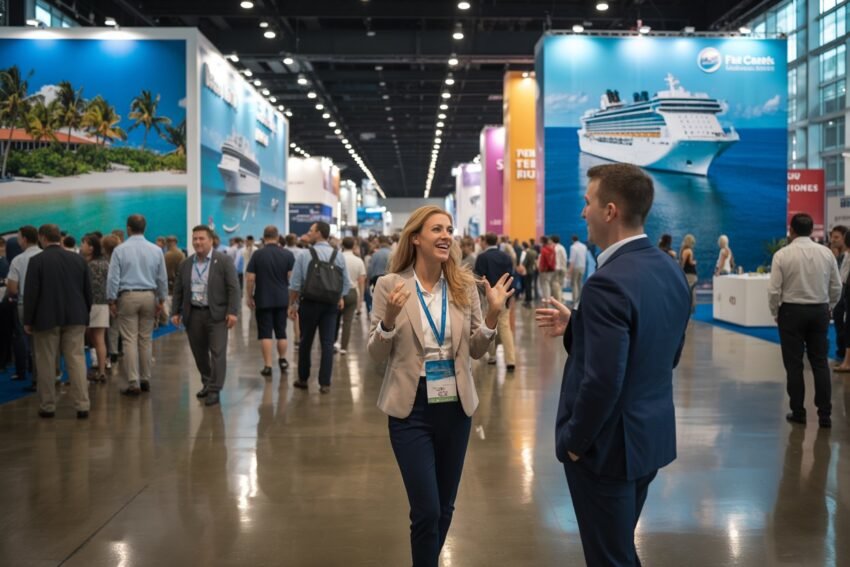
Global Business Events Industry Accelerates as International Trade Expo Draws Delegations From 55 Countries
The United States, Canada, Australia, Belgium and the Netherlands are among the countries participating in a large-scale business events gathering aimed at reviving cross-border trade, tourism and corporate dealmaking.
The global business-events industry is entering a new expansion phase as a major international trade and networking expo brings together more than three thousand attendees, over seven hundred hosted buyers and more than two hundred exhibitors from fifty-five countries.
The scale and composition of participation reflect a broader shift underway across the meetings, incentives, conferences and exhibitions sector, where governments, airlines, hotel groups, tourism agencies and event operators are competing aggressively for international business spending after several years of disruption and uneven recovery.
What is confirmed is that delegations from the United States, Canada, Australia, Belgium, the Netherlands and multiple Asian, Middle Eastern and European markets are participating in the event as countries attempt to strengthen business travel pipelines and secure long-term commercial partnerships.
Hosted buyers include corporate travel planners, convention organizers, destination-management firms and procurement executives with direct purchasing authority over conferences, exhibitions and international corporate events.
The key issue is not simply attendance numbers.
The business-events sector has become strategically important because it now sits at the intersection of tourism, trade promotion, aviation recovery, hospitality investment and geopolitical soft power.
Countries increasingly use international expos and trade gatherings to attract investment, promote infrastructure projects, fill hotel capacity and generate export contracts.
The economic mechanics are significant.
Large-scale business events generate spending far beyond exhibition floors.
Delegates purchase flights, hotel rooms, local transportation, catering, entertainment services and corporate hospitality packages.
Major conferences also create secondary commercial activity through sponsorship agreements, technology procurement, venue construction and destination marketing contracts.
Governments view the sector as a high-value form of tourism because business travelers typically spend more than leisure tourists and often return for repeat commercial activity.
The United States has intensified its participation in international business and investment forums as part of a broader effort to reinforce trade relationships and attract foreign corporate expansion.
Canada and Australia are pursuing similar strategies, particularly in sectors linked to technology, renewable energy, education, medical research and advanced manufacturing.
European participants including Belgium and the Netherlands are positioning themselves as logistics, sustainability and innovation hubs for multinational companies seeking stable operating bases.
The composition of exhibitors also illustrates how the industry itself is changing.
Traditional tourism boards and hotel operators now share floor space with event-technology companies, artificial-intelligence platforms, sustainability consultants, payment firms and data-analytics providers.
Hybrid event infrastructure, digital networking systems and AI-driven attendee management have become core commercial products rather than side services.
Sustainability has become one of the industry’s most commercially sensitive pressure points.
Large international exhibitions face growing scrutiny over aviation emissions, energy consumption and waste generation.
Organizers increasingly market carbon-reduction targets, renewable-energy partnerships and lower-emission venue operations as competitive advantages rather than public-relations exercises.
Corporate buyers are also under pressure from shareholders and regulators to justify long-distance travel spending and environmental impact.
Security and geopolitical fragmentation are reshaping the sector as well.
Visa rules, trade tensions, regional conflicts and economic sanctions now directly affect conference attendance, sponsorship flows and international exhibitor participation.
Organizers are responding by diversifying host markets, expanding regional partnerships and reducing dependence on any single national buyer base.
The competitive landscape has become especially intense across the Asia-Pacific region, where governments see business events as a way to accelerate post-pandemic economic growth and attract foreign capital.
Australia has expanded efforts to market itself as a premium convention and incentives destination.
Southeast Asian economies are increasing investment in exhibition centers, aviation connectivity and luxury hospitality infrastructure to compete for multinational conferences and corporate gatherings.
The surge in attendance and buyer participation also reflects a structural change in corporate behavior.
Companies that sharply reduced travel during the pandemic are selectively restoring in-person meetings after finding that high-value negotiations, investment discussions and large procurement deals are harder to finalize through remote communication alone.
Executives across aviation, hospitality and events industries now argue that physical gatherings remain commercially critical despite the widespread adoption of video conferencing.
At the same time, the economics of staging major international events have become more difficult.
Rising labor costs, insurance premiums, venue expenses and security requirements are forcing organizers to pursue larger sponsorship agreements and more aggressive commercial partnerships.
Smaller regional trade shows are increasingly being consolidated into larger multinational events capable of attracting global buyers and government support.
The practical consequence is that international business events are no longer treated as standalone tourism activities.
They are increasingly integrated into national economic strategy, export promotion and investment diplomacy.
Countries participating in the current expo are competing not only for visitor spending but also for long-term influence over corporate investment flows, regional headquarters decisions and future trade relationships.
The next phase of competition will center on which countries can combine infrastructure, visa access, digital connectivity, sustainability standards and political stability into a credible long-term platform for international business gatherings, and governments are already increasing spending to secure that advantage.
The scale and composition of participation reflect a broader shift underway across the meetings, incentives, conferences and exhibitions sector, where governments, airlines, hotel groups, tourism agencies and event operators are competing aggressively for international business spending after several years of disruption and uneven recovery.
What is confirmed is that delegations from the United States, Canada, Australia, Belgium, the Netherlands and multiple Asian, Middle Eastern and European markets are participating in the event as countries attempt to strengthen business travel pipelines and secure long-term commercial partnerships.
Hosted buyers include corporate travel planners, convention organizers, destination-management firms and procurement executives with direct purchasing authority over conferences, exhibitions and international corporate events.
The key issue is not simply attendance numbers.
The business-events sector has become strategically important because it now sits at the intersection of tourism, trade promotion, aviation recovery, hospitality investment and geopolitical soft power.
Countries increasingly use international expos and trade gatherings to attract investment, promote infrastructure projects, fill hotel capacity and generate export contracts.
The economic mechanics are significant.
Large-scale business events generate spending far beyond exhibition floors.
Delegates purchase flights, hotel rooms, local transportation, catering, entertainment services and corporate hospitality packages.
Major conferences also create secondary commercial activity through sponsorship agreements, technology procurement, venue construction and destination marketing contracts.
Governments view the sector as a high-value form of tourism because business travelers typically spend more than leisure tourists and often return for repeat commercial activity.
The United States has intensified its participation in international business and investment forums as part of a broader effort to reinforce trade relationships and attract foreign corporate expansion.
Canada and Australia are pursuing similar strategies, particularly in sectors linked to technology, renewable energy, education, medical research and advanced manufacturing.
European participants including Belgium and the Netherlands are positioning themselves as logistics, sustainability and innovation hubs for multinational companies seeking stable operating bases.
The composition of exhibitors also illustrates how the industry itself is changing.
Traditional tourism boards and hotel operators now share floor space with event-technology companies, artificial-intelligence platforms, sustainability consultants, payment firms and data-analytics providers.
Hybrid event infrastructure, digital networking systems and AI-driven attendee management have become core commercial products rather than side services.
Sustainability has become one of the industry’s most commercially sensitive pressure points.
Large international exhibitions face growing scrutiny over aviation emissions, energy consumption and waste generation.
Organizers increasingly market carbon-reduction targets, renewable-energy partnerships and lower-emission venue operations as competitive advantages rather than public-relations exercises.
Corporate buyers are also under pressure from shareholders and regulators to justify long-distance travel spending and environmental impact.
Security and geopolitical fragmentation are reshaping the sector as well.
Visa rules, trade tensions, regional conflicts and economic sanctions now directly affect conference attendance, sponsorship flows and international exhibitor participation.
Organizers are responding by diversifying host markets, expanding regional partnerships and reducing dependence on any single national buyer base.
The competitive landscape has become especially intense across the Asia-Pacific region, where governments see business events as a way to accelerate post-pandemic economic growth and attract foreign capital.
Australia has expanded efforts to market itself as a premium convention and incentives destination.
Southeast Asian economies are increasing investment in exhibition centers, aviation connectivity and luxury hospitality infrastructure to compete for multinational conferences and corporate gatherings.
The surge in attendance and buyer participation also reflects a structural change in corporate behavior.
Companies that sharply reduced travel during the pandemic are selectively restoring in-person meetings after finding that high-value negotiations, investment discussions and large procurement deals are harder to finalize through remote communication alone.
Executives across aviation, hospitality and events industries now argue that physical gatherings remain commercially critical despite the widespread adoption of video conferencing.
At the same time, the economics of staging major international events have become more difficult.
Rising labor costs, insurance premiums, venue expenses and security requirements are forcing organizers to pursue larger sponsorship agreements and more aggressive commercial partnerships.
Smaller regional trade shows are increasingly being consolidated into larger multinational events capable of attracting global buyers and government support.
The practical consequence is that international business events are no longer treated as standalone tourism activities.
They are increasingly integrated into national economic strategy, export promotion and investment diplomacy.
Countries participating in the current expo are competing not only for visitor spending but also for long-term influence over corporate investment flows, regional headquarters decisions and future trade relationships.
The next phase of competition will center on which countries can combine infrastructure, visa access, digital connectivity, sustainability standards and political stability into a credible long-term platform for international business gatherings, and governments are already increasing spending to secure that advantage.