White HouseSenateThe HouseSupreme CourtFederal ReserveDOJState DepartmentTreasuryCensusBudget OfficeTrade Representative
WashingTone
Informed by Washington, Defined by Insight
Tuesday, May 12, 2026
WashingTone

Claims of Saudi Pushback on U.S. Hormuz Strategy Highlight Gulf Security Fault Lines
Reports and commentary around the Strait of Hormuz reflect heightened regional tension, but no verified evidence shows Saudi Arabia rejecting a U.S. operational plan to “open” the waterway
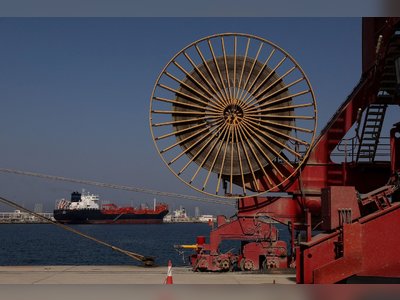
The Strait of Hormuz is one of the most strategically sensitive maritime chokepoints in the world, carrying roughly a fifth of global oil trade through a narrow corridor between Iran and Oman.
Any discussion of “opening” or securing the strait is inherently tied to long-standing military deterrence, naval patrols, and the balance of power between the United States, Gulf Arab states, and Iran.
The claim that a U.S. initiative to “open the Strait of Hormuz” was rejected by Saudi Arabia on the grounds that Washington was not worth the risk is not supported by any verified public record of policy decisions or official statements.
What is confirmed is that Saudi Arabia has, for decades, coordinated closely with the United States on regional security, while also managing a parallel effort to reduce exposure to direct confrontation with Iran.
The United States maintains a naval presence in the Gulf through its Fifth Fleet, based in Bahrain, which is explicitly tasked with protecting commercial shipping routes in and around the Strait of Hormuz.
This presence is not a temporary initiative but a standing military posture shaped by repeated historical crises, including tanker attacks, sanctions enforcement, and tensions linked to Iran’s nuclear program.
Saudi Arabia’s strategic position is more complex.
While it depends on secure maritime export routes, it has in recent years pursued diplomatic de-escalation with Iran, including a normalization agreement brokered with Chinese mediation.
This shift reflects a broader regional recalibration in which Gulf states increasingly seek to avoid direct military confrontation that could threaten energy infrastructure or foreign investment.
The idea that Riyadh would explicitly reject a U.S. operational plan to secure the strait suggests a level of policy rupture that is not reflected in known defense cooperation frameworks.
Instead, what is consistently documented is a pattern of cautious alignment: Gulf states rely on U.S. security guarantees while simultaneously pursuing diplomatic channels to reduce escalation risk.
Tensions around the Strait of Hormuz remain structurally embedded in global energy markets.
Iran has periodically threatened to disrupt shipping through the corridor, while Western naval forces continue escort and surveillance operations to deter interference.
These dynamics create a persistent risk environment, but one managed through long-standing military protocols rather than episodic political decisions.
In this context, narratives suggesting a sudden Saudi rejection of U.S. strategic action appear to reflect interpretive framing rather than confirmed policy divergence.
The underlying reality is a stable but fragile security arrangement in which both Washington and Gulf capitals prioritize continuity of oil flows and avoidance of escalation, even amid broader geopolitical friction.
The Strait of Hormuz therefore remains less a site of abrupt strategic rupture and more a continuously managed pressure point in global energy security, where deterrence, diplomacy, and naval presence operate simultaneously to prevent disruption of one of the world’s most important trade arteries.
Any discussion of “opening” or securing the strait is inherently tied to long-standing military deterrence, naval patrols, and the balance of power between the United States, Gulf Arab states, and Iran.
The claim that a U.S. initiative to “open the Strait of Hormuz” was rejected by Saudi Arabia on the grounds that Washington was not worth the risk is not supported by any verified public record of policy decisions or official statements.
What is confirmed is that Saudi Arabia has, for decades, coordinated closely with the United States on regional security, while also managing a parallel effort to reduce exposure to direct confrontation with Iran.
The United States maintains a naval presence in the Gulf through its Fifth Fleet, based in Bahrain, which is explicitly tasked with protecting commercial shipping routes in and around the Strait of Hormuz.
This presence is not a temporary initiative but a standing military posture shaped by repeated historical crises, including tanker attacks, sanctions enforcement, and tensions linked to Iran’s nuclear program.
Saudi Arabia’s strategic position is more complex.
While it depends on secure maritime export routes, it has in recent years pursued diplomatic de-escalation with Iran, including a normalization agreement brokered with Chinese mediation.
This shift reflects a broader regional recalibration in which Gulf states increasingly seek to avoid direct military confrontation that could threaten energy infrastructure or foreign investment.
The idea that Riyadh would explicitly reject a U.S. operational plan to secure the strait suggests a level of policy rupture that is not reflected in known defense cooperation frameworks.
Instead, what is consistently documented is a pattern of cautious alignment: Gulf states rely on U.S. security guarantees while simultaneously pursuing diplomatic channels to reduce escalation risk.
Tensions around the Strait of Hormuz remain structurally embedded in global energy markets.
Iran has periodically threatened to disrupt shipping through the corridor, while Western naval forces continue escort and surveillance operations to deter interference.
These dynamics create a persistent risk environment, but one managed through long-standing military protocols rather than episodic political decisions.
In this context, narratives suggesting a sudden Saudi rejection of U.S. strategic action appear to reflect interpretive framing rather than confirmed policy divergence.
The underlying reality is a stable but fragile security arrangement in which both Washington and Gulf capitals prioritize continuity of oil flows and avoidance of escalation, even amid broader geopolitical friction.
The Strait of Hormuz therefore remains less a site of abrupt strategic rupture and more a continuously managed pressure point in global energy security, where deterrence, diplomacy, and naval presence operate simultaneously to prevent disruption of one of the world’s most important trade arteries.