White HouseSenateThe HouseSupreme CourtFederal ReserveDOJState DepartmentTreasuryCensusBudget OfficeTrade Representative
WashingTone
Informed by Washington, Defined by Insight
Tuesday, May 12, 2026
WashingTone

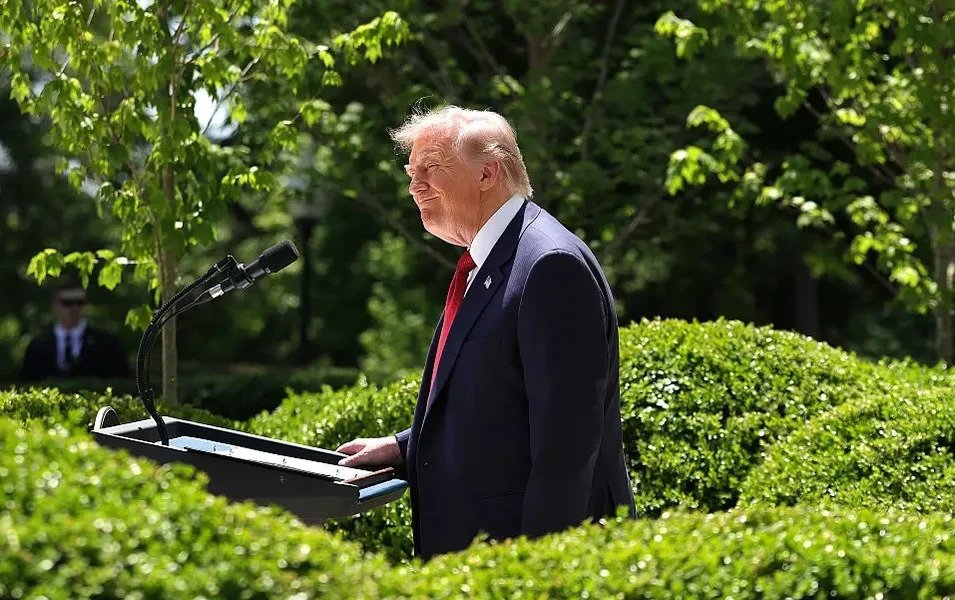
Trump Hosts Angel Moms and Gold Star Mothers at White House Mother’s Day Event
A Rose Garden luncheon brought together families who lost children in service or through violent crime, highlighting immigration, border security, and national remembrance themes.
A White House ceremonial event marking Mother’s Day brought together President Donald J. Trump and two groups of bereaved mothers known as Angel Moms and Gold Star Mothers, underscoring how personal loss has become embedded in U.S. political messaging around immigration, national security, and military service.
The luncheon, held in the White House Rose Garden, gathered families of service members killed in combat as well as parents whose children were killed in crimes linked by the administration to illegal immigration.
The event combined recognition of maternal loss with a broader policy narrative focused on border enforcement and public safety.
What is confirmed is that Gold Star Mothers are a formally recognized group whose children died while serving in the United States Armed Forces, while Angel Moms is an informal term used for parents whose children were killed in incidents that have been politically associated with immigration enforcement debates.
The two groups have frequently been invited to political events in Washington over the past several years, particularly during periods of heightened immigration policy discussion.
President Trump used the event to emphasize themes of remembrance, national sacrifice, and security policy.
His remarks linked the personal stories of invited families to broader arguments about border control and crime prevention, a framing that has been central to his political messaging on immigration throughout his public career.
The White House setting, particularly the Rose Garden, is traditionally used for formal receptions and policy announcements, but it has also increasingly served as a stage for symbolic events that blend personal testimony with political messaging.
The Mother’s Day timing reinforced the emotional framing of the gathering, focusing attention on maternal loss as a unifying narrative element.
Gold Star Mothers organizations have historically maintained a nonpartisan identity centered on military sacrifice, though individual members may hold varied political views.
Their participation in public ceremonies is typically framed as recognition of service and sacrifice rather than endorsement of policy positions.
The inclusion of Angel Moms has been more politically contentious, as their stories are often cited in debates over immigration enforcement.
Supporters of stricter border policies argue that these cases illustrate systemic failures, while critics caution against using individual tragedies to generalize about broader populations or policy categories.
The event reflects a broader pattern in which presidential administrations use symbolic gatherings at the White House to reinforce policy themes through personal storytelling.
These events can carry significant political weight, shaping public perception by linking abstract policy debates to individual experiences of loss.
As the administration continues to prioritize immigration enforcement and national security messaging, events like the Rose Garden luncheon function as both commemorative ceremonies and extensions of policy communication strategy, reinforcing the intersection between personal grief and political agenda-setting in the public sphere.
The luncheon, held in the White House Rose Garden, gathered families of service members killed in combat as well as parents whose children were killed in crimes linked by the administration to illegal immigration.
The event combined recognition of maternal loss with a broader policy narrative focused on border enforcement and public safety.
What is confirmed is that Gold Star Mothers are a formally recognized group whose children died while serving in the United States Armed Forces, while Angel Moms is an informal term used for parents whose children were killed in incidents that have been politically associated with immigration enforcement debates.
The two groups have frequently been invited to political events in Washington over the past several years, particularly during periods of heightened immigration policy discussion.
President Trump used the event to emphasize themes of remembrance, national sacrifice, and security policy.
His remarks linked the personal stories of invited families to broader arguments about border control and crime prevention, a framing that has been central to his political messaging on immigration throughout his public career.
The White House setting, particularly the Rose Garden, is traditionally used for formal receptions and policy announcements, but it has also increasingly served as a stage for symbolic events that blend personal testimony with political messaging.
The Mother’s Day timing reinforced the emotional framing of the gathering, focusing attention on maternal loss as a unifying narrative element.
Gold Star Mothers organizations have historically maintained a nonpartisan identity centered on military sacrifice, though individual members may hold varied political views.
Their participation in public ceremonies is typically framed as recognition of service and sacrifice rather than endorsement of policy positions.
The inclusion of Angel Moms has been more politically contentious, as their stories are often cited in debates over immigration enforcement.
Supporters of stricter border policies argue that these cases illustrate systemic failures, while critics caution against using individual tragedies to generalize about broader populations or policy categories.
The event reflects a broader pattern in which presidential administrations use symbolic gatherings at the White House to reinforce policy themes through personal storytelling.
These events can carry significant political weight, shaping public perception by linking abstract policy debates to individual experiences of loss.
As the administration continues to prioritize immigration enforcement and national security messaging, events like the Rose Garden luncheon function as both commemorative ceremonies and extensions of policy communication strategy, reinforcing the intersection between personal grief and political agenda-setting in the public sphere.