White HouseSenateThe HouseSupreme CourtFederal ReserveDOJState DepartmentTreasuryCensusBudget OfficeTrade Representative
WashingTone
Informed by Washington, Defined by Insight
Tuesday, May 12, 2026
WashingTone

A No-Bid Federal Contract Raises Questions Over the Discoloration of Washington’s Reflecting Pool
The sudden blue-green hue of one of Washington’s most visible landmarks has drawn scrutiny over maintenance decisions, procurement practices, and oversight of federal site management.
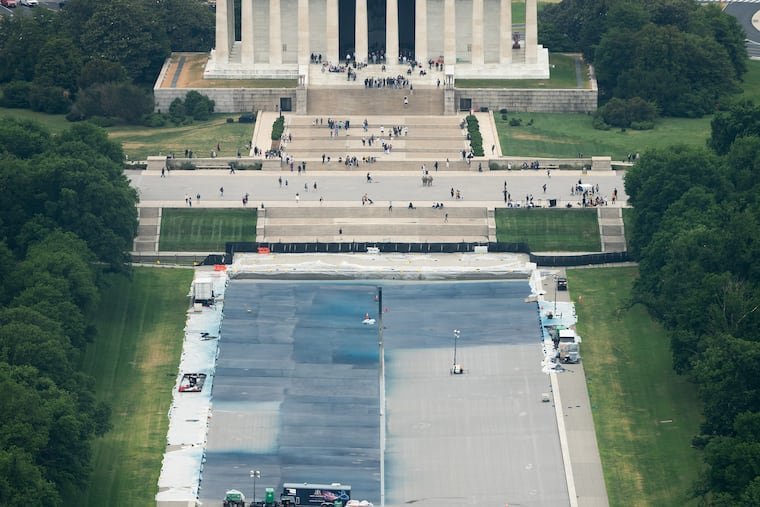
A SYSTEM-DRIVEN infrastructure and procurement issue is at the center of growing scrutiny in Washington after the Reflecting Pool, a key ceremonial landmark on the National Mall, began displaying an unusual blue-green coloration following maintenance work carried out under a no-bid federal contract.
What is confirmed is that the Reflecting Pool, located between the Lincoln Memorial and the Washington Monument, recently underwent chemical treatment and cleaning as part of routine maintenance managed by federal park authorities responsible for the National Mall.
Shortly after these operations, the water in the pool changed color in a way that was visible to visitors and widely shared on social media, prompting public concern and questions about water quality, treatment methods, and oversight procedures.
The maintenance work was carried out under a contract arrangement that did not involve open competitive bidding.
In federal procurement practice, no-bid contracts are typically used when agencies determine that only a limited number of vendors can perform specialized work, or when time-sensitive conditions require expedited action.
However, such contracts often draw scrutiny because they reduce competitive pricing pressure and can limit transparency in vendor selection.
The Reflecting Pool is not a natural body of water but a carefully engineered structure that requires constant filtration, algae control, and chemical balancing.
Its water system is designed to prevent stagnation and maintain clarity, especially during warmer months when biological growth can accelerate.
Maintenance teams typically use a combination of filtration systems and chemical treatments to control algae and microbial buildup.
In this case, the visible discoloration has raised questions about whether recent treatment protocols were altered, whether chemical concentrations were adjusted, or whether a reaction occurred between treatment agents and existing conditions in the water system.
Authorities responsible for the site have maintained that the pool remains under standard maintenance protocols, but detailed technical explanations of the color change have not been publicly provided.
The broader issue extends beyond aesthetics.
The Reflecting Pool is one of the most photographed civic spaces in the United States and a symbolic site for national ceremonies, demonstrations, and memorial events.
Any visible alteration to its condition tends to attract public attention and political scrutiny, especially when linked to federal contracting practices.
The procurement aspect of the case has become a focal point because no-bid contracts, while legal under federal rules, are often criticized for limiting accountability.
Oversight bodies and watchdog groups typically argue that competitive bidding helps ensure cost efficiency and technical quality, while exceptions should be narrowly defined and well documented.
At the same time, federal maintenance agencies argue that specialized infrastructure such as large-scale reflecting pools requires contractors with specific technical expertise, particularly for water chemistry management in open-air urban environments.
In such cases, procurement decisions are often justified on the basis of continuity, safety, and operational reliability rather than price competition.
The immediate consequence of the situation has been increased public attention on how visible federal landmarks are maintained and how contracting decisions are communicated to the public.
While the discoloration itself does not necessarily indicate a structural problem, it has exposed a gap between technical maintenance processes and public understanding of those processes.
The development is now part of a broader debate in Washington over transparency in federal contracting, especially for high-profile civic infrastructure where even routine maintenance outcomes are highly visible and politically sensitive.
The Reflecting Pool’s condition has become a case study in how procurement policy, technical maintenance, and public perception intersect in real time.
What is confirmed is that the Reflecting Pool, located between the Lincoln Memorial and the Washington Monument, recently underwent chemical treatment and cleaning as part of routine maintenance managed by federal park authorities responsible for the National Mall.
Shortly after these operations, the water in the pool changed color in a way that was visible to visitors and widely shared on social media, prompting public concern and questions about water quality, treatment methods, and oversight procedures.
The maintenance work was carried out under a contract arrangement that did not involve open competitive bidding.
In federal procurement practice, no-bid contracts are typically used when agencies determine that only a limited number of vendors can perform specialized work, or when time-sensitive conditions require expedited action.
However, such contracts often draw scrutiny because they reduce competitive pricing pressure and can limit transparency in vendor selection.
The Reflecting Pool is not a natural body of water but a carefully engineered structure that requires constant filtration, algae control, and chemical balancing.
Its water system is designed to prevent stagnation and maintain clarity, especially during warmer months when biological growth can accelerate.
Maintenance teams typically use a combination of filtration systems and chemical treatments to control algae and microbial buildup.
In this case, the visible discoloration has raised questions about whether recent treatment protocols were altered, whether chemical concentrations were adjusted, or whether a reaction occurred between treatment agents and existing conditions in the water system.
Authorities responsible for the site have maintained that the pool remains under standard maintenance protocols, but detailed technical explanations of the color change have not been publicly provided.
The broader issue extends beyond aesthetics.
The Reflecting Pool is one of the most photographed civic spaces in the United States and a symbolic site for national ceremonies, demonstrations, and memorial events.
Any visible alteration to its condition tends to attract public attention and political scrutiny, especially when linked to federal contracting practices.
The procurement aspect of the case has become a focal point because no-bid contracts, while legal under federal rules, are often criticized for limiting accountability.
Oversight bodies and watchdog groups typically argue that competitive bidding helps ensure cost efficiency and technical quality, while exceptions should be narrowly defined and well documented.
At the same time, federal maintenance agencies argue that specialized infrastructure such as large-scale reflecting pools requires contractors with specific technical expertise, particularly for water chemistry management in open-air urban environments.
In such cases, procurement decisions are often justified on the basis of continuity, safety, and operational reliability rather than price competition.
The immediate consequence of the situation has been increased public attention on how visible federal landmarks are maintained and how contracting decisions are communicated to the public.
While the discoloration itself does not necessarily indicate a structural problem, it has exposed a gap between technical maintenance processes and public understanding of those processes.
The development is now part of a broader debate in Washington over transparency in federal contracting, especially for high-profile civic infrastructure where even routine maintenance outcomes are highly visible and politically sensitive.
The Reflecting Pool’s condition has become a case study in how procurement policy, technical maintenance, and public perception intersect in real time.