White HouseSenateThe HouseSupreme CourtFederal ReserveDOJState DepartmentTreasuryCensusBudget OfficeTrade Representative
WashingTone
Informed by Washington, Defined by Insight
Tuesday, May 12, 2026
WashingTone

Washington National Guard Expands Wildfire Preparedness as Risk Season Intensifies
State military forces increase training, equipment deployment, and coordination with civilian agencies as climate-driven wildfire threats grow more severe
System-driven emergency preparedness is shaping how Washington State is preparing for an increasingly volatile wildfire season, with the Washington National Guard expanding its operational readiness in coordination with state and local agencies.
The focus is on improving response speed, logistics capacity, and interagency coordination as wildfire risk intensifies due to hotter, drier seasonal conditions.
The Washington National Guard serves as a state military reserve force that can be activated by the governor during emergencies, including natural disasters such as wildfires.
Its role typically includes firefighting support, evacuation assistance, transportation logistics, and aerial reconnaissance when civilian firefighting resources are overwhelmed or stretched across multiple incidents.
What is confirmed is that state-level preparedness efforts are being strengthened ahead of peak wildfire conditions.
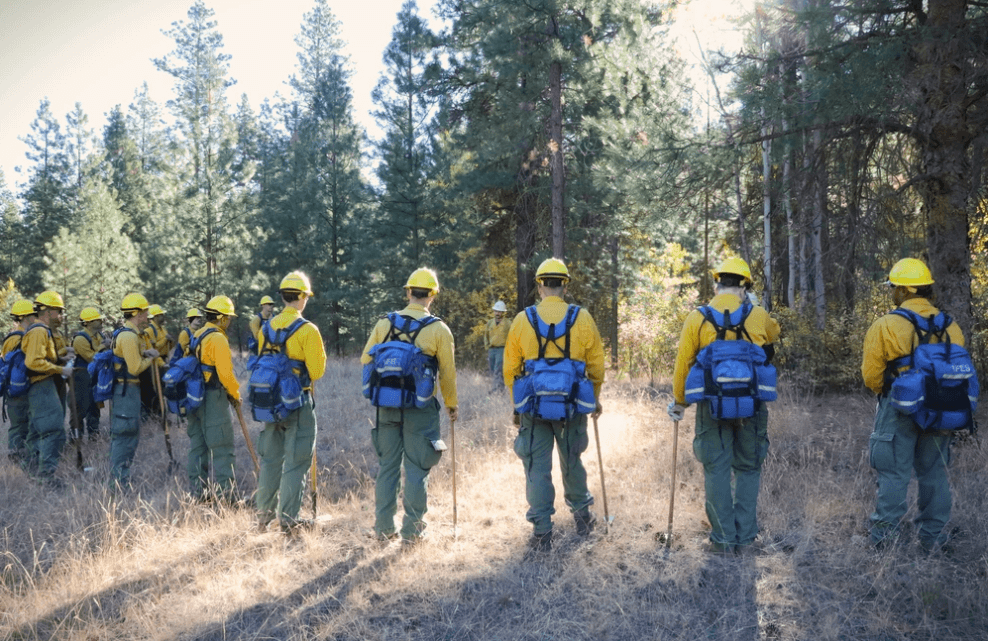
These efforts include additional training exercises focused on wildfire suppression support, improved coordination protocols with the Washington State Department of Natural Resources, and increased readiness of aircraft and ground units that can be deployed rapidly when fire outbreaks occur.
Wildfire response in Washington operates through a layered system in which local fire departments handle initial suppression, state agencies provide reinforcement, and the National Guard is deployed when incidents escalate beyond civilian capacity.
This structure has become increasingly important as wildfire seasons in the western United States have grown longer, more intense, and more unpredictable over the past decade.
The mechanism driving the current preparedness push is the increasing frequency of extreme fire weather conditions, including prolonged drought, higher average temperatures, and reduced snowpack, which contribute to drier forests and more combustible landscapes.
These conditions increase the likelihood of fast-moving fires that can exceed the containment capacity of local responders within hours.
The stakes extend beyond immediate fire suppression.
Wildfires in Washington regularly threaten residential communities, critical infrastructure, power transmission lines, and transportation corridors.
They also generate widespread air quality impacts that can extend far beyond burn zones, affecting public health across large regions for extended periods.
The National Guard’s expanded readiness posture includes ensuring that personnel are trained for rapid deployment into hazardous environments, often in coordination with civilian firefighters who retain operational command over suppression activities.
Military assets are typically used for support roles such as helicopter water drops, clearing access routes, and transporting supplies to remote areas.
This preparedness effort reflects a broader structural shift in wildfire management across the western United States, where states increasingly rely on military support as fires exceed historical response thresholds.
The integration of military and civilian systems is now a recurring feature of disaster response planning rather than a rare contingency.
The practical implication is that Washington is positioning itself for a fire season in which rapid escalation is more likely and simultaneous incidents across multiple regions could strain conventional response systems.
By increasing readiness in advance, state authorities aim to reduce deployment delays and improve coordination during the most critical early hours of wildfire outbreaks.
The focus is on improving response speed, logistics capacity, and interagency coordination as wildfire risk intensifies due to hotter, drier seasonal conditions.
The Washington National Guard serves as a state military reserve force that can be activated by the governor during emergencies, including natural disasters such as wildfires.
Its role typically includes firefighting support, evacuation assistance, transportation logistics, and aerial reconnaissance when civilian firefighting resources are overwhelmed or stretched across multiple incidents.
What is confirmed is that state-level preparedness efforts are being strengthened ahead of peak wildfire conditions.
These efforts include additional training exercises focused on wildfire suppression support, improved coordination protocols with the Washington State Department of Natural Resources, and increased readiness of aircraft and ground units that can be deployed rapidly when fire outbreaks occur.
Wildfire response in Washington operates through a layered system in which local fire departments handle initial suppression, state agencies provide reinforcement, and the National Guard is deployed when incidents escalate beyond civilian capacity.
This structure has become increasingly important as wildfire seasons in the western United States have grown longer, more intense, and more unpredictable over the past decade.
The mechanism driving the current preparedness push is the increasing frequency of extreme fire weather conditions, including prolonged drought, higher average temperatures, and reduced snowpack, which contribute to drier forests and more combustible landscapes.
These conditions increase the likelihood of fast-moving fires that can exceed the containment capacity of local responders within hours.
The stakes extend beyond immediate fire suppression.
Wildfires in Washington regularly threaten residential communities, critical infrastructure, power transmission lines, and transportation corridors.
They also generate widespread air quality impacts that can extend far beyond burn zones, affecting public health across large regions for extended periods.
The National Guard’s expanded readiness posture includes ensuring that personnel are trained for rapid deployment into hazardous environments, often in coordination with civilian firefighters who retain operational command over suppression activities.
Military assets are typically used for support roles such as helicopter water drops, clearing access routes, and transporting supplies to remote areas.
This preparedness effort reflects a broader structural shift in wildfire management across the western United States, where states increasingly rely on military support as fires exceed historical response thresholds.
The integration of military and civilian systems is now a recurring feature of disaster response planning rather than a rare contingency.
The practical implication is that Washington is positioning itself for a fire season in which rapid escalation is more likely and simultaneous incidents across multiple regions could strain conventional response systems.
By increasing readiness in advance, state authorities aim to reduce deployment delays and improve coordination during the most critical early hours of wildfire outbreaks.