White HouseSenateThe HouseSupreme CourtFederal ReserveDOJState DepartmentTreasuryCensusBudget OfficeTrade Representative
WashingTone
Informed by Washington, Defined by Insight
Monday, May 11, 2026
WashingTone

White House Correspondents’ Dinner Faces Scrutiny After Renewed Concerns Over Attacks on Media Institutions
Debate grows over whether the annual press gala remains appropriate amid heightened political tension, security risks, and criticism of media–political relations in Washington
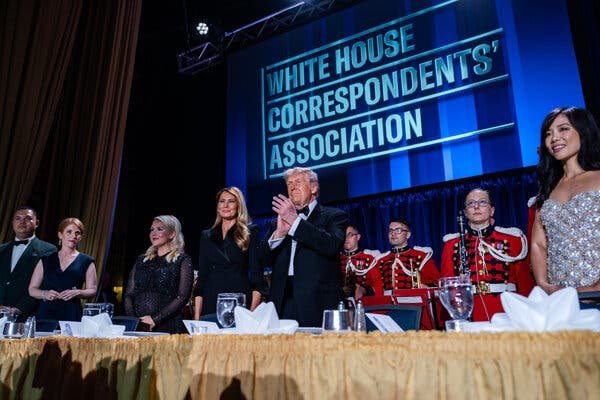
The debate over the future of the White House Correspondents’ Dinner, a long-running annual event bringing together journalists, politicians, and public officials in Washington, is increasingly shaped by concerns over the safety, symbolism, and political function of high-profile media gatherings in an environment marked by rising hostility toward news organizations.
What is confirmed is that the dinner remains one of the most visible intersections between the U.S. political press corps and the executive branch, traditionally combining awards for journalism with public speeches by the president and senior political figures.
It is organized by the White House Correspondents’ Association, an independent body representing journalists who cover the presidency.
The current controversy reflects broader tensions over how public-facing media events should operate in a climate where journalists, political figures, and public institutions face heightened security concerns and intensified political polarization.
Recent years have seen increased attention to threats against journalists, disruptions at public political events, and broader debates about trust in mainstream media institutions.
The key issue is not a single incident but whether a celebratory, entertainment-focused gala remains appropriate at a time when political violence, harassment of reporters, and distrust of institutions have become central features of the public environment.
Critics of the event argue that it can appear disconnected from the realities facing journalists who cover political conflict, including security risks and online harassment.
Supporters argue that the dinner serves as a rare public forum that reinforces transparency, accountability, and the relationship between the press and elected leadership.
Discussions intensified following recent concerns about attacks and threats involving media environments, which have prompted reassessments of security protocols at public political gatherings.
While no formal decision has been made to cancel or fundamentally restructure the dinner, the event has increasingly become a focal point in broader debates about press safety and political norms in Washington.
The White House Correspondents’ Dinner also carries symbolic weight beyond its immediate audience.
It reflects the relationship between the executive branch and the press corps at a moment when that relationship is frequently strained.
The president’s participation, or lack of participation, is often interpreted as a signal of engagement or distance from the press.
As the debate continues, the core question centers on whether tradition-driven political events can remain unchanged in an era defined by heightened security concerns and deep institutional mistrust.
The outcome of that discussion will influence not only the future of the dinner but also how political media institutions balance visibility, safety, and credibility in the public sphere.
What is confirmed is that the dinner remains one of the most visible intersections between the U.S. political press corps and the executive branch, traditionally combining awards for journalism with public speeches by the president and senior political figures.
It is organized by the White House Correspondents’ Association, an independent body representing journalists who cover the presidency.
The current controversy reflects broader tensions over how public-facing media events should operate in a climate where journalists, political figures, and public institutions face heightened security concerns and intensified political polarization.
Recent years have seen increased attention to threats against journalists, disruptions at public political events, and broader debates about trust in mainstream media institutions.
The key issue is not a single incident but whether a celebratory, entertainment-focused gala remains appropriate at a time when political violence, harassment of reporters, and distrust of institutions have become central features of the public environment.
Critics of the event argue that it can appear disconnected from the realities facing journalists who cover political conflict, including security risks and online harassment.
Supporters argue that the dinner serves as a rare public forum that reinforces transparency, accountability, and the relationship between the press and elected leadership.
Discussions intensified following recent concerns about attacks and threats involving media environments, which have prompted reassessments of security protocols at public political gatherings.
While no formal decision has been made to cancel or fundamentally restructure the dinner, the event has increasingly become a focal point in broader debates about press safety and political norms in Washington.
The White House Correspondents’ Dinner also carries symbolic weight beyond its immediate audience.
It reflects the relationship between the executive branch and the press corps at a moment when that relationship is frequently strained.
The president’s participation, or lack of participation, is often interpreted as a signal of engagement or distance from the press.
As the debate continues, the core question centers on whether tradition-driven political events can remain unchanged in an era defined by heightened security concerns and deep institutional mistrust.
The outcome of that discussion will influence not only the future of the dinner but also how political media institutions balance visibility, safety, and credibility in the public sphere.