White HouseSenateThe HouseSupreme CourtFederal ReserveDOJState DepartmentTreasuryCensusBudget OfficeTrade Representative
WashingTone
Informed by Washington, Defined by Insight
Monday, May 11, 2026
WashingTone

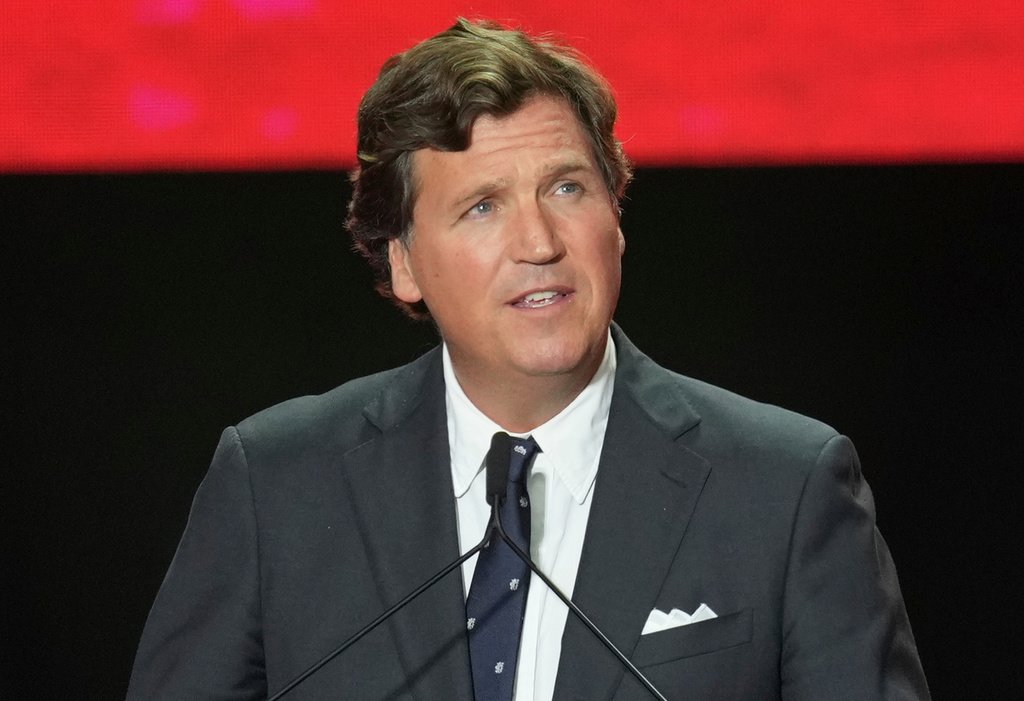
Tucker Carlson and the Future of Republican Power: Influence, Limits, and the 2028 Question
How a media-driven political ecosystem has reshaped the GOP—and why Carlson’s influence is being tested against party structure, donor power, and presidential politics
The question of whether Tucker Carlson could reshape the Republican Party or even position himself for a presidential bid sits at the intersection of media power and modern American political organization.
Carlson, a high-profile conservative commentator with a large and politically engaged audience, represents a broader shift in U.S. politics where influence increasingly flows through media platforms rather than traditional party institutions.
What is established is that the Republican Party has, over the past decade, become more responsive to media-driven figures who can mobilize voter attention outside formal party structures.
This transformation accelerated in the era of fragmented media consumption, where television commentary, digital video platforms, and social media distribution can rival or exceed the influence of elected officials and party committees in shaping voter sentiment.
Carlson’s role in this ecosystem is defined by reach rather than formal political authority.
He does not hold elected office or party leadership positions, but his commentary has repeatedly demonstrated the ability to set agendas within segments of the conservative base.
This type of influence can shape debates, pressure elected Republicans, and amplify specific policy narratives, particularly on issues like immigration, foreign policy skepticism, and cultural conflict.
The idea that such a figure could “hijack” a political party depends on a specific mechanism: converting media influence into organizational control, donor alignment, and electoral infrastructure.
Modern U.S. parties, however, are not centralized institutions that can be easily taken over.
They are coalitions of state parties, donor networks, elected officials, and activist groups, all of which exert independent power.
Even highly visible media personalities must translate attention into these structures to achieve durable political control.
Historically, transitions from media influence to formal political power in the United States have produced mixed outcomes.
Some figures successfully leveraged public recognition into elected office, but sustaining influence required institutional adaptation—building campaign organizations, policy teams, and alliances with existing party actors.
Without that transition, media influence tends to remain powerful but indirect.
Within the current Republican landscape, presidential politics is still shaped by a combination of electoral viability, donor confidence, and party endorsements.
Media figures can influence the field by shaping voter preferences or framing debates, but the pathway to nomination or executive power still depends on state-by-state electoral mechanics and primary coalition-building.
The broader stakes extend beyond one individual.
The underlying issue is whether political parties in the United States are becoming more porous to media ecosystems that operate independently of traditional accountability structures.
If so, influence may increasingly shift toward personalities who can sustain attention economies rather than those who build institutional political careers.
In practical terms, Carlson’s significance lies less in a direct pathway to formal party control and more in his role as a force multiplier within Republican discourse.
His impact is measured in narrative shaping, voter mobilization among specific factions, and pressure on elected officials rather than organizational command.
That distinction defines both the reach and the limits of his political power within the GOP.
The Republican Party therefore remains shaped by competing centers of influence—elected leadership, donor networks, activist movements, and media figures—none of which can fully dominate the system on their own, but each of which can significantly alter its direction when aligned.
Carlson, a high-profile conservative commentator with a large and politically engaged audience, represents a broader shift in U.S. politics where influence increasingly flows through media platforms rather than traditional party institutions.
What is established is that the Republican Party has, over the past decade, become more responsive to media-driven figures who can mobilize voter attention outside formal party structures.
This transformation accelerated in the era of fragmented media consumption, where television commentary, digital video platforms, and social media distribution can rival or exceed the influence of elected officials and party committees in shaping voter sentiment.
Carlson’s role in this ecosystem is defined by reach rather than formal political authority.
He does not hold elected office or party leadership positions, but his commentary has repeatedly demonstrated the ability to set agendas within segments of the conservative base.
This type of influence can shape debates, pressure elected Republicans, and amplify specific policy narratives, particularly on issues like immigration, foreign policy skepticism, and cultural conflict.
The idea that such a figure could “hijack” a political party depends on a specific mechanism: converting media influence into organizational control, donor alignment, and electoral infrastructure.
Modern U.S. parties, however, are not centralized institutions that can be easily taken over.
They are coalitions of state parties, donor networks, elected officials, and activist groups, all of which exert independent power.
Even highly visible media personalities must translate attention into these structures to achieve durable political control.
Historically, transitions from media influence to formal political power in the United States have produced mixed outcomes.
Some figures successfully leveraged public recognition into elected office, but sustaining influence required institutional adaptation—building campaign organizations, policy teams, and alliances with existing party actors.
Without that transition, media influence tends to remain powerful but indirect.
Within the current Republican landscape, presidential politics is still shaped by a combination of electoral viability, donor confidence, and party endorsements.
Media figures can influence the field by shaping voter preferences or framing debates, but the pathway to nomination or executive power still depends on state-by-state electoral mechanics and primary coalition-building.
The broader stakes extend beyond one individual.
The underlying issue is whether political parties in the United States are becoming more porous to media ecosystems that operate independently of traditional accountability structures.
If so, influence may increasingly shift toward personalities who can sustain attention economies rather than those who build institutional political careers.
In practical terms, Carlson’s significance lies less in a direct pathway to formal party control and more in his role as a force multiplier within Republican discourse.
His impact is measured in narrative shaping, voter mobilization among specific factions, and pressure on elected officials rather than organizational command.
That distinction defines both the reach and the limits of his political power within the GOP.
The Republican Party therefore remains shaped by competing centers of influence—elected leadership, donor networks, activist movements, and media figures—none of which can fully dominate the system on their own, but each of which can significantly alter its direction when aligned.