White HouseSenateThe HouseSupreme CourtFederal ReserveDOJState DepartmentTreasuryCensusBudget OfficeTrade Representative
WashingTone
Informed by Washington, Defined by Insight
Monday, May 11, 2026
WashingTone

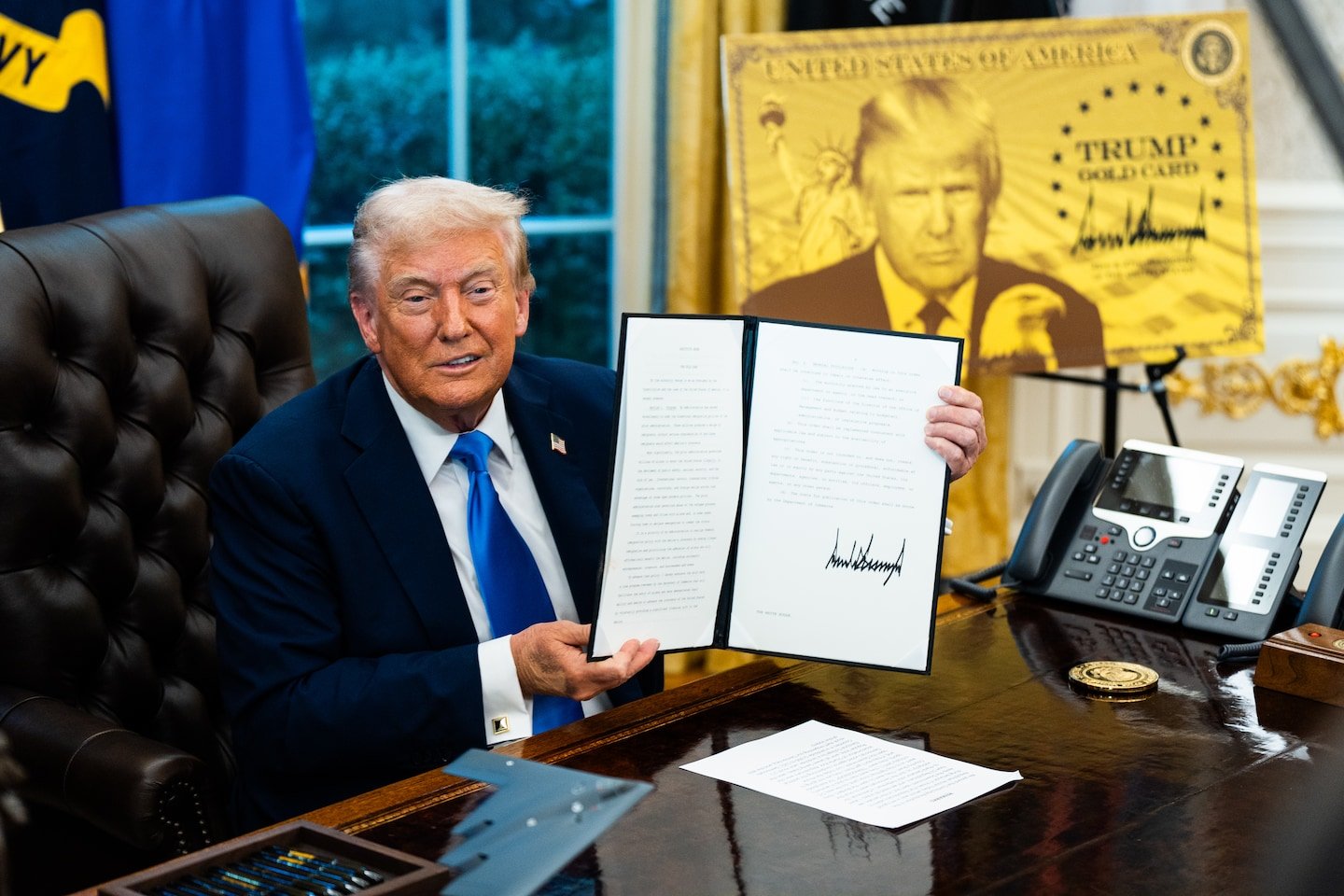
Trump’s ‘Gold Card’ Visa Faces Skepticism as Elite Legal Circles Question Its Viability
A proposed U.S. immigration pathway aimed at wealthy investors is drawing scrutiny from immigration lawyers and policy experts who question its legal structure, demand mechanics, and real-world enforceability.
The proposed expansion of investor-based immigration pathways in the United States, commonly referred to in public discourse as a “gold card” visa concept, is facing skepticism from immigration lawyers and policy specialists who work with high-net-worth global clients.
The debate centers on whether the program’s design, legal grounding, and implementation framework are robust enough to function as a credible alternative to existing investor visa categories.
What is confirmed is that investor visas already exist in the United States under established legal frameworks, most notably programs that allow foreign nationals to obtain residency through substantial job-creating investments.
The most widely known of these is the EB-5 immigrant investor program, which requires applicants to invest capital in U.S. businesses that generate employment for American workers.
The “gold card” concept, as discussed in policy and political circles, is generally understood as a proposal to streamline or replace existing investor visa pathways with a more direct system for wealthy individuals to obtain residency or fast-track immigration status in exchange for higher financial contributions.
However, the precise legal structure, eligibility thresholds, and administrative mechanism for such a program have not been formally codified in law.
Immigration attorneys representing high-net-worth clients have raised concerns about whether such a system could be implemented without significant legislative changes.
Under U.S. law, immigration categories are tightly regulated by statute, and meaningful changes typically require congressional approval rather than executive action alone.
This creates a structural constraint on any attempt to introduce a fundamentally new visa class without formal legislation.
Another point of scrutiny is enforceability.
Legal experts emphasize that investor visa systems depend not only on financial thresholds but also on compliance mechanisms that ensure funds are lawfully sourced, properly deployed, and linked to measurable economic outcomes such as job creation.
Without clear regulatory architecture, there is concern that a simplified or accelerated system could increase fraud risk or reduce transparency.
For global elite clients—typically individuals with significant cross-border assets and mobility options—the credibility of any immigration pathway is as important as its nominal benefits.
Lawyers advising this demographic have noted that uncertainty around legal durability can reduce demand for programs that appear politically volatile or insufficiently defined in statute.
The broader policy debate reflects a long-standing tension in U.S. immigration law between economic utility and regulatory control.
Investor visas are designed to attract foreign capital and stimulate employment, but they also require strict oversight to prevent misuse and ensure alignment with national economic goals.
Supporters of streamlined investor pathways argue that global competition for capital-rich migrants is intensifying, with several countries offering faster residency or citizenship routes in exchange for investment.
Critics counter that overly simplified systems risk undermining the integrity of immigration enforcement and may create inequities in access based on wealth alone.
At present, the proposed “gold card” framing remains more a political concept than a fully defined legal program.
Its future depends on whether it is translated into formal legislation with detailed eligibility rules, oversight structures, and economic safeguards that meet existing immigration standards.
Until then, legal practitioners continue to treat it cautiously, evaluating it as an idea rather than an operational reality.
The debate centers on whether the program’s design, legal grounding, and implementation framework are robust enough to function as a credible alternative to existing investor visa categories.
What is confirmed is that investor visas already exist in the United States under established legal frameworks, most notably programs that allow foreign nationals to obtain residency through substantial job-creating investments.
The most widely known of these is the EB-5 immigrant investor program, which requires applicants to invest capital in U.S. businesses that generate employment for American workers.
The “gold card” concept, as discussed in policy and political circles, is generally understood as a proposal to streamline or replace existing investor visa pathways with a more direct system for wealthy individuals to obtain residency or fast-track immigration status in exchange for higher financial contributions.
However, the precise legal structure, eligibility thresholds, and administrative mechanism for such a program have not been formally codified in law.
Immigration attorneys representing high-net-worth clients have raised concerns about whether such a system could be implemented without significant legislative changes.
Under U.S. law, immigration categories are tightly regulated by statute, and meaningful changes typically require congressional approval rather than executive action alone.
This creates a structural constraint on any attempt to introduce a fundamentally new visa class without formal legislation.
Another point of scrutiny is enforceability.
Legal experts emphasize that investor visa systems depend not only on financial thresholds but also on compliance mechanisms that ensure funds are lawfully sourced, properly deployed, and linked to measurable economic outcomes such as job creation.
Without clear regulatory architecture, there is concern that a simplified or accelerated system could increase fraud risk or reduce transparency.
For global elite clients—typically individuals with significant cross-border assets and mobility options—the credibility of any immigration pathway is as important as its nominal benefits.
Lawyers advising this demographic have noted that uncertainty around legal durability can reduce demand for programs that appear politically volatile or insufficiently defined in statute.
The broader policy debate reflects a long-standing tension in U.S. immigration law between economic utility and regulatory control.
Investor visas are designed to attract foreign capital and stimulate employment, but they also require strict oversight to prevent misuse and ensure alignment with national economic goals.
Supporters of streamlined investor pathways argue that global competition for capital-rich migrants is intensifying, with several countries offering faster residency or citizenship routes in exchange for investment.
Critics counter that overly simplified systems risk undermining the integrity of immigration enforcement and may create inequities in access based on wealth alone.
At present, the proposed “gold card” framing remains more a political concept than a fully defined legal program.
Its future depends on whether it is translated into formal legislation with detailed eligibility rules, oversight structures, and economic safeguards that meet existing immigration standards.
Until then, legal practitioners continue to treat it cautiously, evaluating it as an idea rather than an operational reality.