White HouseSenateThe HouseSupreme CourtFederal ReserveDOJState DepartmentTreasuryCensusBudget OfficeTrade Representative
WashingTone
Informed by Washington, Defined by Insight
Wednesday, May 20, 2026
WashingTone

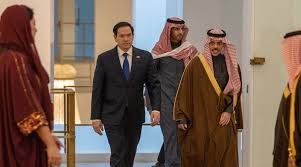
Saudi Foreign Minister Signals Support for Diplomatic Push on Iran Tensions
Comments highlight Riyadh’s emphasis on negotiation pathways amid ongoing regional pressure involving Iran and U.S. mediation efforts
Saudi Arabia’s foreign policy positioning toward Iran has again shifted into public focus after remarks attributed to the Saudi foreign minister expressing approval of efforts prioritizing diplomacy over escalation.
The comments framed engagement and negotiation as preferable tools for managing long-running regional tensions involving Iran, the United States, and Gulf states.
At the center of the discussion is the broader strategic effort to reduce the risk of direct confrontation in the Middle East.
Saudi Arabia and Iran have spent years in a cycle of rivalry that has shaped conflicts in Yemen, Syria, and wider Gulf security dynamics.
In recent periods, both countries have explored cautious normalization channels, supported in part by regional intermediaries and shifting geopolitical incentives.
The reference to U.S. political leadership reflects Washington’s continuing role as an external broker in regional security arrangements, even as its direct military posture in the Gulf has evolved over time.
Diplomatic messaging from Riyadh underscores a preference for stabilizing mechanisms that reduce the likelihood of rapid escalation between Iran and its regional adversaries.
The remarks also reflect Saudi Arabia’s broader economic and strategic priorities under its ongoing diversification agenda, where sustained regional instability poses risks to investment flows, infrastructure development, and energy market predictability.
As a major oil exporter and regional power, Saudi Arabia has strong incentives to avoid uncontrolled escalation that could disrupt global energy systems.
Iran remains central to this diplomatic equation, with its own regional alliances and security concerns shaping its interactions with Gulf neighbors.
Any movement toward dialogue is typically influenced by parallel discussions on sanctions, security guarantees, and regional conflict containment.
Taken together, the comments illustrate a continued emphasis on diplomacy as the primary mechanism for managing Saudi-Iranian tensions, reinforcing a gradual shift away from open confrontation toward structured political engagement as the preferred framework for regional stability.
The comments framed engagement and negotiation as preferable tools for managing long-running regional tensions involving Iran, the United States, and Gulf states.
At the center of the discussion is the broader strategic effort to reduce the risk of direct confrontation in the Middle East.
Saudi Arabia and Iran have spent years in a cycle of rivalry that has shaped conflicts in Yemen, Syria, and wider Gulf security dynamics.
In recent periods, both countries have explored cautious normalization channels, supported in part by regional intermediaries and shifting geopolitical incentives.
The reference to U.S. political leadership reflects Washington’s continuing role as an external broker in regional security arrangements, even as its direct military posture in the Gulf has evolved over time.
Diplomatic messaging from Riyadh underscores a preference for stabilizing mechanisms that reduce the likelihood of rapid escalation between Iran and its regional adversaries.
The remarks also reflect Saudi Arabia’s broader economic and strategic priorities under its ongoing diversification agenda, where sustained regional instability poses risks to investment flows, infrastructure development, and energy market predictability.
As a major oil exporter and regional power, Saudi Arabia has strong incentives to avoid uncontrolled escalation that could disrupt global energy systems.
Iran remains central to this diplomatic equation, with its own regional alliances and security concerns shaping its interactions with Gulf neighbors.
Any movement toward dialogue is typically influenced by parallel discussions on sanctions, security guarantees, and regional conflict containment.
Taken together, the comments illustrate a continued emphasis on diplomacy as the primary mechanism for managing Saudi-Iranian tensions, reinforcing a gradual shift away from open confrontation toward structured political engagement as the preferred framework for regional stability.