White HouseSenateThe HouseSupreme CourtFederal ReserveDOJState DepartmentTreasuryCensusBudget OfficeTrade Representative
WashingTone
Informed by Washington, Defined by Insight
Wednesday, May 20, 2026
WashingTone

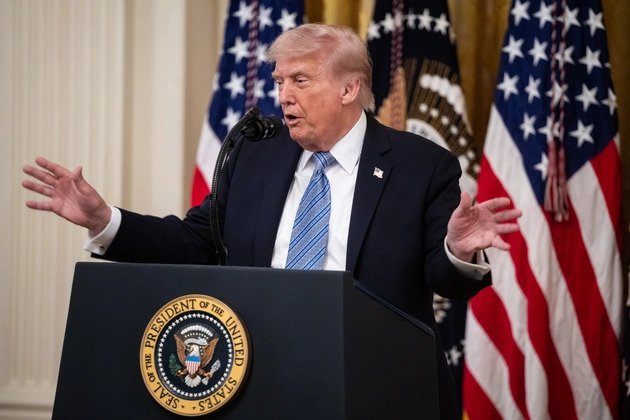
Court Rules White House Must Comply With Presidential Records Act in Document Handling Case
Ruling reinforces limits on executive control over official records and underscores legal obligations to preserve presidential communications
A federal court ruling has reaffirmed that the White House is legally required to comply with the Presidential Records Act, a law that governs the preservation, management, and transfer of official presidential documents and communications.
The decision addresses how executive branch records must be handled during and after a presidency, reinforcing statutory limits on the ability of White House officials to withhold or unilaterally dispose of official materials.
What is confirmed is that the judge ruled the White House must adhere to the Presidential Records Act, which mandates that presidential records are the property of the United States government rather than of any individual officeholder.
The ruling emphasizes that communications created in the course of official duties must be preserved and made available through established archival processes once a presidency ends.
The Presidential Records Act, enacted in the wake of concerns over the handling of presidential materials in previous administrations, establishes a legal framework requiring systematic preservation of documents such as memos, correspondence, emails, and other records generated by the executive branch.
It also defines procedures for eventual transfer of those records to the National Archives for long-term storage and public access under certain conditions.
The case reflects ongoing legal and institutional disputes over the boundaries of executive privilege and the definition of what constitutes an official presidential record.
These disputes have become more prominent in recent years as digital communications have expanded the volume and complexity of materials potentially subject to preservation requirements.
The ruling reinforces the principle that the executive branch does not have unrestricted authority over records created in an official capacity.
Instead, those materials are governed by federal statute, and failure to preserve them can result in legal and administrative consequences, including investigations into record retention practices and compliance procedures.
The decision is also significant for its implications for transparency and accountability in government.
Proper enforcement of the Presidential Records Act is considered essential for historical documentation, congressional oversight, and public understanding of executive decision-making processes.
Following the ruling, the White House is required to ensure that record-keeping practices align with statutory obligations, including maintaining systems for preservation, classification review, and transfer to archival custody at the end of the presidential term.
The outcome strengthens the legal framework governing presidential documentation and confirms that compliance is mandatory rather than discretionary.
The decision addresses how executive branch records must be handled during and after a presidency, reinforcing statutory limits on the ability of White House officials to withhold or unilaterally dispose of official materials.
What is confirmed is that the judge ruled the White House must adhere to the Presidential Records Act, which mandates that presidential records are the property of the United States government rather than of any individual officeholder.
The ruling emphasizes that communications created in the course of official duties must be preserved and made available through established archival processes once a presidency ends.
The Presidential Records Act, enacted in the wake of concerns over the handling of presidential materials in previous administrations, establishes a legal framework requiring systematic preservation of documents such as memos, correspondence, emails, and other records generated by the executive branch.
It also defines procedures for eventual transfer of those records to the National Archives for long-term storage and public access under certain conditions.
The case reflects ongoing legal and institutional disputes over the boundaries of executive privilege and the definition of what constitutes an official presidential record.
These disputes have become more prominent in recent years as digital communications have expanded the volume and complexity of materials potentially subject to preservation requirements.
The ruling reinforces the principle that the executive branch does not have unrestricted authority over records created in an official capacity.
Instead, those materials are governed by federal statute, and failure to preserve them can result in legal and administrative consequences, including investigations into record retention practices and compliance procedures.
The decision is also significant for its implications for transparency and accountability in government.
Proper enforcement of the Presidential Records Act is considered essential for historical documentation, congressional oversight, and public understanding of executive decision-making processes.
Following the ruling, the White House is required to ensure that record-keeping practices align with statutory obligations, including maintaining systems for preservation, classification review, and transfer to archival custody at the end of the presidential term.
The outcome strengthens the legal framework governing presidential documentation and confirms that compliance is mandatory rather than discretionary.