White HouseSenateThe HouseSupreme CourtFederal ReserveDOJState DepartmentTreasuryCensusBudget OfficeTrade Representative
WashingTone
Informed by Washington, Defined by Insight
Wednesday, May 20, 2026
WashingTone


Trump’s grip on Republican primaries reshapes party power dynamics
Recent GOP primary contests show how endorsements and political alignment with Donald Trump have become decisive factors in candidate selection
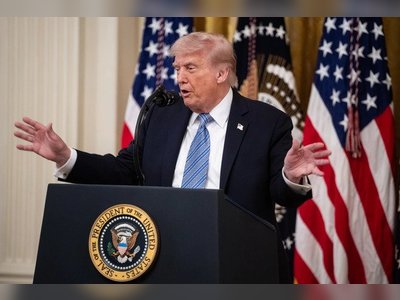
An EVENT-DRIVEN shift in Republican Party electoral dynamics is continuing to reshape U.S. primary politics, as recent contests demonstrate the extent of Donald Trump’s influence over candidate selection and party alignment ahead of national elections.
What is confirmed is that in multiple Republican primary races, candidates endorsed by Donald Trump have performed strongly, often outpacing rivals who are more closely aligned with traditional party leadership or establishment networks.
These outcomes reinforce a pattern that has emerged since Trump’s first presidential campaign, in which his endorsement functions as a central signal of ideological legitimacy within the modern Republican electorate.
The key mechanism behind this influence is a combination of voter alignment and organizational consolidation.
Republican primary voters who consistently participate in low-turnout contests are disproportionately responsive to Trump’s political messaging, particularly on issues such as immigration, economic nationalism, and opposition to Democratic governance.
At the same time, Republican fundraising networks and activist groups have increasingly adapted to prioritize candidates who publicly align with Trump’s political identity.
The result is a primary environment in which endorsements are no longer symbolic but operational.
Candidates backed by Trump often gain immediate advantages in fundraising, media attention, and grassroots mobilization, while opponents face structural disadvantages even when they possess prior electoral experience or institutional support within the party.
This dynamic has reshaped internal Republican competition.
In earlier election cycles, endorsements from party leadership, governors, or congressional committees carried significant weight in determining nominee viability.
That influence has diminished in many districts, replaced by a more centralized alignment around Trump as the dominant figure in Republican primary decision-making.
The implications extend beyond individual races.
As more candidates align themselves with Trump to secure electoral viability, the ideological boundaries of the Republican Party have narrowed around positions associated with his political platform.
This has reduced space for internal dissent on key policy areas, particularly foreign policy orientation, trade protectionism, and institutional reform.
At the same time, the consolidation of influence introduces strategic risks for the party.
While it can produce unified messaging in general elections, it also increases vulnerability in competitive districts where moderate or independent voters may be less receptive to strongly partisan positioning.
Party strategists have debated how this balance will affect long-term electoral competitiveness in the House of Representatives and Senate.
The primaries also highlight the evolving role of political endorsement systems in modern U.S. elections.
Unlike traditional endorsements that rely on party committees or elected officials, Trump’s endorsements function as direct-to-voter signals amplified through media coverage and digital platforms.
This has accelerated the personalization of party politics, shifting authority away from institutional structures toward individual political branding.
As the primary cycle continues, the pattern suggests that Republican nomination battles will remain heavily influenced by alignment with Trump’s political identity, shaping not only who wins individual races but also the ideological direction of the party heading into future national elections.
What is confirmed is that in multiple Republican primary races, candidates endorsed by Donald Trump have performed strongly, often outpacing rivals who are more closely aligned with traditional party leadership or establishment networks.
These outcomes reinforce a pattern that has emerged since Trump’s first presidential campaign, in which his endorsement functions as a central signal of ideological legitimacy within the modern Republican electorate.
The key mechanism behind this influence is a combination of voter alignment and organizational consolidation.
Republican primary voters who consistently participate in low-turnout contests are disproportionately responsive to Trump’s political messaging, particularly on issues such as immigration, economic nationalism, and opposition to Democratic governance.
At the same time, Republican fundraising networks and activist groups have increasingly adapted to prioritize candidates who publicly align with Trump’s political identity.
The result is a primary environment in which endorsements are no longer symbolic but operational.
Candidates backed by Trump often gain immediate advantages in fundraising, media attention, and grassroots mobilization, while opponents face structural disadvantages even when they possess prior electoral experience or institutional support within the party.
This dynamic has reshaped internal Republican competition.
In earlier election cycles, endorsements from party leadership, governors, or congressional committees carried significant weight in determining nominee viability.
That influence has diminished in many districts, replaced by a more centralized alignment around Trump as the dominant figure in Republican primary decision-making.
The implications extend beyond individual races.
As more candidates align themselves with Trump to secure electoral viability, the ideological boundaries of the Republican Party have narrowed around positions associated with his political platform.
This has reduced space for internal dissent on key policy areas, particularly foreign policy orientation, trade protectionism, and institutional reform.
At the same time, the consolidation of influence introduces strategic risks for the party.
While it can produce unified messaging in general elections, it also increases vulnerability in competitive districts where moderate or independent voters may be less receptive to strongly partisan positioning.
Party strategists have debated how this balance will affect long-term electoral competitiveness in the House of Representatives and Senate.
The primaries also highlight the evolving role of political endorsement systems in modern U.S. elections.
Unlike traditional endorsements that rely on party committees or elected officials, Trump’s endorsements function as direct-to-voter signals amplified through media coverage and digital platforms.
This has accelerated the personalization of party politics, shifting authority away from institutional structures toward individual political branding.
As the primary cycle continues, the pattern suggests that Republican nomination battles will remain heavily influenced by alignment with Trump’s political identity, shaping not only who wins individual races but also the ideological direction of the party heading into future national elections.