White HouseSenateThe HouseSupreme CourtFederal ReserveDOJState DepartmentTreasuryCensusBudget OfficeTrade Representative
WashingTone
Informed by Washington, Defined by Insight
Wednesday, May 20, 2026
WashingTone

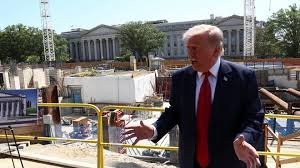
Trump Highlights White House Ballroom Construction as Symbol of Executive Branding and Renovation Push
The project underscores a renewed emphasis on physical transformation of the White House and the political messaging tied to presidential space
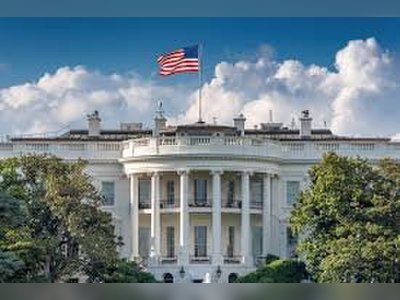
A visible renovation effort at the White House involving the construction of a new ballroom has become a focal point for political messaging by Donald Trump, reflecting how presidential physical spaces are increasingly used as instruments of image-building and executive identity.
The development has drawn attention not only for its scale and visibility but also for what it signals about priorities inside the administration and the symbolism attached to the executive residence.
What is confirmed is that construction work is underway to expand or modify White House facilities to include a ballroom-style event space.
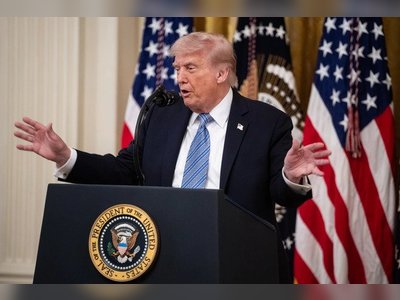
The project has been publicly embraced by Trump, who has characterized the development as part of a broader effort to enhance the functionality and prestige of the presidential residence.
The initiative aligns with a longstanding pattern of modifications to White House interiors and grounds by successive administrations, though each carries distinct political interpretation.
The White House complex has historically undergone numerous renovations, ranging from structural modernization to aesthetic redesigns, often reflecting the preferences and operational needs of sitting presidents.
Such projects are typically managed in coordination with the National Park Service, the White House Military Office, and preservation authorities tasked with maintaining the historical integrity of the executive residence while accommodating contemporary requirements.
In this case, the ballroom construction has taken on heightened political visibility because of its association with Trump’s broader emphasis on physical symbolism and branding.
Supporters frame the development as an investment in functional statecraft infrastructure, enabling larger diplomatic receptions, official events, and ceremonial gatherings.
Critics, however, tend to view high-profile renovations of executive spaces as performative, raising questions about cost, necessity, and timing.
The project also reflects a broader trend in modern presidencies where the White House is not only a workplace and residence but also a stage for political communication.
Changes to its architecture or interior use often become extensions of policy messaging, reinforcing narratives about leadership style, governance priorities, and national identity.
The construction process itself involves logistical coordination within a highly secured and historically protected environment, requiring careful integration of modern building techniques with preservation standards.
Any structural addition to the White House grounds is subject to layers of regulatory and security review due to the site’s status as both a national historic landmark and an active government facility.
As work continues, the ballroom project is expected to remain a visible marker of the administration’s approach to executive space, blending functional expansion with symbolic communication in a setting where architecture and politics are closely intertwined.
The development has drawn attention not only for its scale and visibility but also for what it signals about priorities inside the administration and the symbolism attached to the executive residence.
What is confirmed is that construction work is underway to expand or modify White House facilities to include a ballroom-style event space.
The project has been publicly embraced by Trump, who has characterized the development as part of a broader effort to enhance the functionality and prestige of the presidential residence.
The initiative aligns with a longstanding pattern of modifications to White House interiors and grounds by successive administrations, though each carries distinct political interpretation.
The White House complex has historically undergone numerous renovations, ranging from structural modernization to aesthetic redesigns, often reflecting the preferences and operational needs of sitting presidents.
Such projects are typically managed in coordination with the National Park Service, the White House Military Office, and preservation authorities tasked with maintaining the historical integrity of the executive residence while accommodating contemporary requirements.
In this case, the ballroom construction has taken on heightened political visibility because of its association with Trump’s broader emphasis on physical symbolism and branding.
Supporters frame the development as an investment in functional statecraft infrastructure, enabling larger diplomatic receptions, official events, and ceremonial gatherings.
Critics, however, tend to view high-profile renovations of executive spaces as performative, raising questions about cost, necessity, and timing.
The project also reflects a broader trend in modern presidencies where the White House is not only a workplace and residence but also a stage for political communication.
Changes to its architecture or interior use often become extensions of policy messaging, reinforcing narratives about leadership style, governance priorities, and national identity.
The construction process itself involves logistical coordination within a highly secured and historically protected environment, requiring careful integration of modern building techniques with preservation standards.
Any structural addition to the White House grounds is subject to layers of regulatory and security review due to the site’s status as both a national historic landmark and an active government facility.
As work continues, the ballroom project is expected to remain a visible marker of the administration’s approach to executive space, blending functional expansion with symbolic communication in a setting where architecture and politics are closely intertwined.