White HouseSenateThe HouseSupreme CourtFederal ReserveDOJState DepartmentTreasuryCensusBudget OfficeTrade Representative
WashingTone
Informed by Washington, Defined by Insight
Wednesday, May 20, 2026
WashingTone

Trump Links Iran Policy to White House Ballroom Tour Amid Ongoing Nuclear Talks
The president blended foreign policy messaging on Iran with a public walkthrough of a major White House construction project, underscoring parallel diplomatic and domestic agenda pressures as negotiations continue.
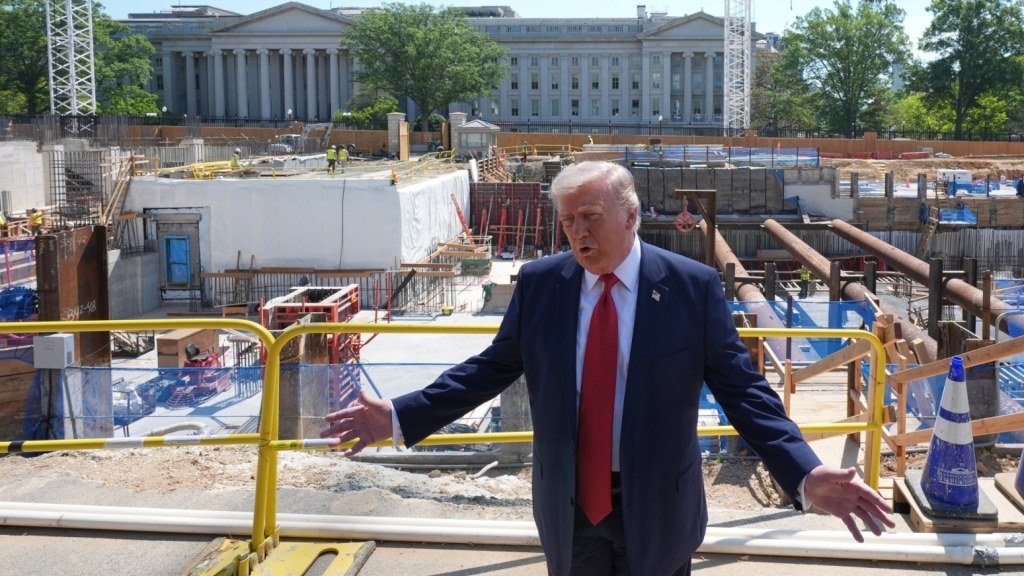
ACTOR-DRIVEN dynamics define the latest intersection of U.S. foreign policy and domestic presidential messaging, as President Donald Trump used a White House construction tour to simultaneously highlight Iran negotiations and an extensive renovation of the executive residence.
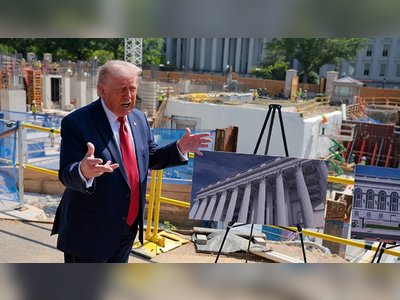
What is confirmed is that Trump conducted a guided walkthrough of a large-scale ballroom construction project on the White House grounds while also addressing questions about ongoing negotiations with Iran over its nuclear program.
The dual focus placed a foreign policy issue and a domestic infrastructure initiative in the same public setting, creating a deliberately blended message environment.
The Iran talks remain centered on efforts to limit nuclear escalation, reduce regional tensions, and establish terms around enrichment activities.
The United States and Iran have engaged intermittently through direct and indirect channels, with mediation efforts involving third-party states.
While discussions continue, no final agreement has been reached, and both sides have maintained public positions that leave key issues unresolved.
During the White House tour, Trump framed Iran discussions in terms of deterrence and leverage, emphasizing the administration’s willingness to combine diplomacy with pressure.
He reiterated that the United States is seeking outcomes that prevent Iran from advancing capabilities viewed in Washington as destabilizing.
The messaging reflects a broader strategy that blends negotiation with implicit threats of escalation.
At the same time, the ballroom project served as a visual centerpiece of domestic policy presentation.
The construction, which involves extensive structural work on the White House campus, has been promoted by the administration as a modernization effort designed to enhance ceremonial capacity and upgrade infrastructure.
Supporters describe it as a long-term investment in the functionality of the executive residence.
Critics, however, view the scale and timing of the project as politically charged, raising questions about priorities during active foreign policy negotiations.
The juxtaposition of high-cost domestic construction with sensitive international diplomacy has intensified scrutiny from lawmakers and policy analysts, particularly regarding messaging discipline and symbolic signaling.
The convergence of these two narratives—ongoing Iran negotiations and the transformation of White House physical space—reflects a broader pattern in which executive messaging is tightly integrated with controlled visual environments.
Presidential tours of construction sites, especially when paired with geopolitical commentary, function as staged settings for policy framing.
The implications extend beyond optics.
Iran negotiations remain at a delicate stage where public statements can influence diplomatic momentum.
Simultaneously, domestic infrastructure decisions tied to the White House carry long-term institutional significance, shaping how future administrations use and interpret executive space.
As both processes continue, the administration is effectively operating on parallel tracks: one aimed at managing a volatile international security file, and another reshaping the physical and symbolic architecture of the presidency itself.
The interaction between the two underscores how modern executive communication increasingly merges governance, diplomacy, and presentation into a single controlled narrative environment.
What is confirmed is that Trump conducted a guided walkthrough of a large-scale ballroom construction project on the White House grounds while also addressing questions about ongoing negotiations with Iran over its nuclear program.
The dual focus placed a foreign policy issue and a domestic infrastructure initiative in the same public setting, creating a deliberately blended message environment.
The Iran talks remain centered on efforts to limit nuclear escalation, reduce regional tensions, and establish terms around enrichment activities.
The United States and Iran have engaged intermittently through direct and indirect channels, with mediation efforts involving third-party states.
While discussions continue, no final agreement has been reached, and both sides have maintained public positions that leave key issues unresolved.
During the White House tour, Trump framed Iran discussions in terms of deterrence and leverage, emphasizing the administration’s willingness to combine diplomacy with pressure.
He reiterated that the United States is seeking outcomes that prevent Iran from advancing capabilities viewed in Washington as destabilizing.
The messaging reflects a broader strategy that blends negotiation with implicit threats of escalation.
At the same time, the ballroom project served as a visual centerpiece of domestic policy presentation.
The construction, which involves extensive structural work on the White House campus, has been promoted by the administration as a modernization effort designed to enhance ceremonial capacity and upgrade infrastructure.
Supporters describe it as a long-term investment in the functionality of the executive residence.
Critics, however, view the scale and timing of the project as politically charged, raising questions about priorities during active foreign policy negotiations.
The juxtaposition of high-cost domestic construction with sensitive international diplomacy has intensified scrutiny from lawmakers and policy analysts, particularly regarding messaging discipline and symbolic signaling.
The convergence of these two narratives—ongoing Iran negotiations and the transformation of White House physical space—reflects a broader pattern in which executive messaging is tightly integrated with controlled visual environments.
Presidential tours of construction sites, especially when paired with geopolitical commentary, function as staged settings for policy framing.
The implications extend beyond optics.
Iran negotiations remain at a delicate stage where public statements can influence diplomatic momentum.
Simultaneously, domestic infrastructure decisions tied to the White House carry long-term institutional significance, shaping how future administrations use and interpret executive space.
As both processes continue, the administration is effectively operating on parallel tracks: one aimed at managing a volatile international security file, and another reshaping the physical and symbolic architecture of the presidency itself.
The interaction between the two underscores how modern executive communication increasingly merges governance, diplomacy, and presentation into a single controlled narrative environment.