White HouseSenateThe HouseSupreme CourtFederal ReserveDOJState DepartmentTreasuryCensusBudget OfficeTrade Representative
WashingTone
Informed by Washington, Defined by Insight
Wednesday, May 20, 2026
WashingTone

Trump Endorses Ken Paxton Against John Cornyn in High-Stakes Texas Senate Primary Split
The endorsement intensifies an internal Republican Party battle between establishment leadership and hardline challengers in one of the most consequential Senate races in the United States
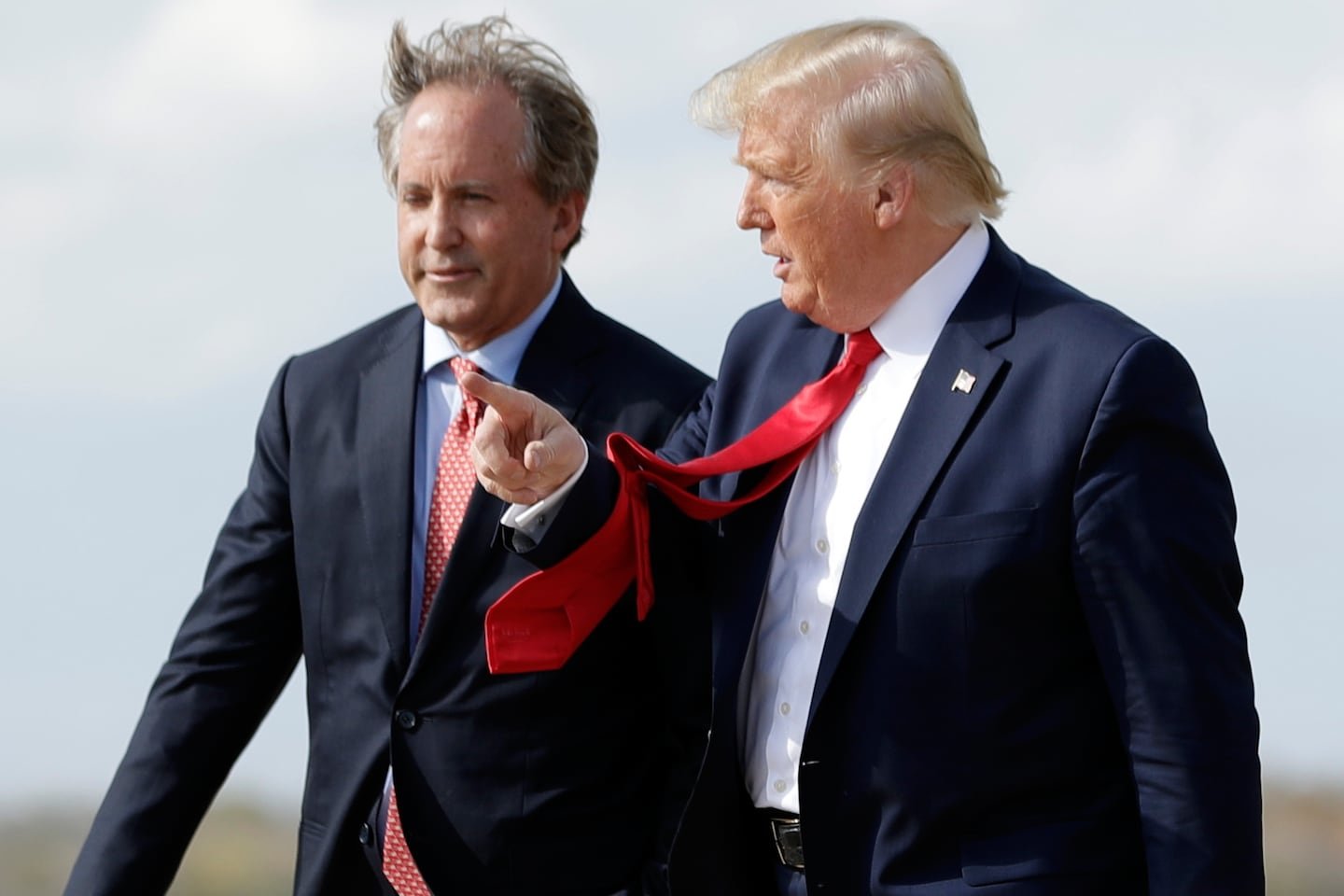
ACTOR-DRIVEN political competition inside the Republican Party has escalated in Texas after Donald Trump endorsed Texas Attorney General Ken Paxton in a Senate primary challenge against incumbent Senator John Cornyn, a longtime member of Republican leadership in Washington.
The endorsement marks a direct intervention in one of the most closely watched intraparty contests ahead of the next US Senate election cycle.
What is confirmed is that Cornyn, a four-term senator and former Senate Republican Whip, faces a serious primary threat from Paxton, a polarizing figure who has built his political identity around aggressive legal and ideological battles in Texas state politics.
Trump’s public backing of Paxton places the former president firmly against Cornyn, who has often been associated with more traditional Republican legislative strategy and occasional bipartisan negotiation.
The contest reflects a broader realignment inside the Republican Party, where loyalty to Trump and alignment with his political style has become a central dividing line.
Paxton has positioned himself as a confrontational conservative aligned with the party’s most populist wing, while Cornyn represents an institutional leadership role that has historically helped shape Senate priorities and negotiations.
The stakes of the primary extend beyond Texas.
Control of Senate seats remains decisive in determining national legislative power, and internal party primaries increasingly function as ideological battlegrounds that shape the direction of Republican governance.
A Trump endorsement can significantly influence fundraising, grassroots mobilization, and media attention, particularly in deeply Republican states like Texas.
Cornyn’s political standing includes decades in federal office and a record of involvement in major Senate negotiations on issues ranging from judicial confirmations to gun legislation.
Paxton, by contrast, has cultivated a profile rooted in legal confrontations and state-level conservative litigation strategy, including high-profile clashes with federal agencies and national policy disputes.
Trump’s endorsement also underscores his continued influence over Republican primary politics, where his support or opposition can shift the trajectory of intraparty contests even when establishment figures hold incumbency advantages.
However, incumbents like Cornyn typically retain structural advantages in fundraising networks, donor relationships, and Senate institutional support.
The primary is now set up as a test of competing Republican identities: one rooted in institutional continuity and Senate leadership experience, and another driven by direct alignment with Trump’s political movement and confrontational policy approach.
The outcome will shape not only Texas representation in the Senate but also the balance of power within the Republican Party’s internal hierarchy heading into the next national election cycle.
The endorsement marks a direct intervention in one of the most closely watched intraparty contests ahead of the next US Senate election cycle.
What is confirmed is that Cornyn, a four-term senator and former Senate Republican Whip, faces a serious primary threat from Paxton, a polarizing figure who has built his political identity around aggressive legal and ideological battles in Texas state politics.
Trump’s public backing of Paxton places the former president firmly against Cornyn, who has often been associated with more traditional Republican legislative strategy and occasional bipartisan negotiation.
The contest reflects a broader realignment inside the Republican Party, where loyalty to Trump and alignment with his political style has become a central dividing line.
Paxton has positioned himself as a confrontational conservative aligned with the party’s most populist wing, while Cornyn represents an institutional leadership role that has historically helped shape Senate priorities and negotiations.
The stakes of the primary extend beyond Texas.
Control of Senate seats remains decisive in determining national legislative power, and internal party primaries increasingly function as ideological battlegrounds that shape the direction of Republican governance.
A Trump endorsement can significantly influence fundraising, grassroots mobilization, and media attention, particularly in deeply Republican states like Texas.
Cornyn’s political standing includes decades in federal office and a record of involvement in major Senate negotiations on issues ranging from judicial confirmations to gun legislation.
Paxton, by contrast, has cultivated a profile rooted in legal confrontations and state-level conservative litigation strategy, including high-profile clashes with federal agencies and national policy disputes.
Trump’s endorsement also underscores his continued influence over Republican primary politics, where his support or opposition can shift the trajectory of intraparty contests even when establishment figures hold incumbency advantages.
However, incumbents like Cornyn typically retain structural advantages in fundraising networks, donor relationships, and Senate institutional support.
The primary is now set up as a test of competing Republican identities: one rooted in institutional continuity and Senate leadership experience, and another driven by direct alignment with Trump’s political movement and confrontational policy approach.
The outcome will shape not only Texas representation in the Senate but also the balance of power within the Republican Party’s internal hierarchy heading into the next national election cycle.