White HouseSenateThe HouseSupreme CourtFederal ReserveDOJState DepartmentTreasuryCensusBudget OfficeTrade Representative
WashingTone
Informed by Washington, Defined by Insight
Monday, May 18, 2026
WashingTone

Trump-Linked Faith Rally Rekindles Debate Over Church and State Boundaries in U.S. Politics
A high-profile religious gathering tied to conservative Christian networks and Trump-aligned figures intensifies scrutiny over political messaging inside faith spaces and the limits of church–state separation
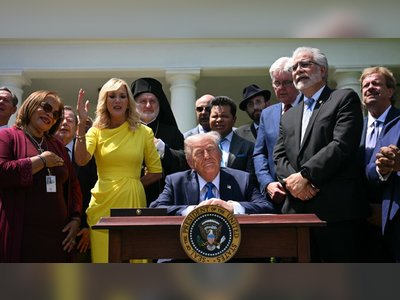
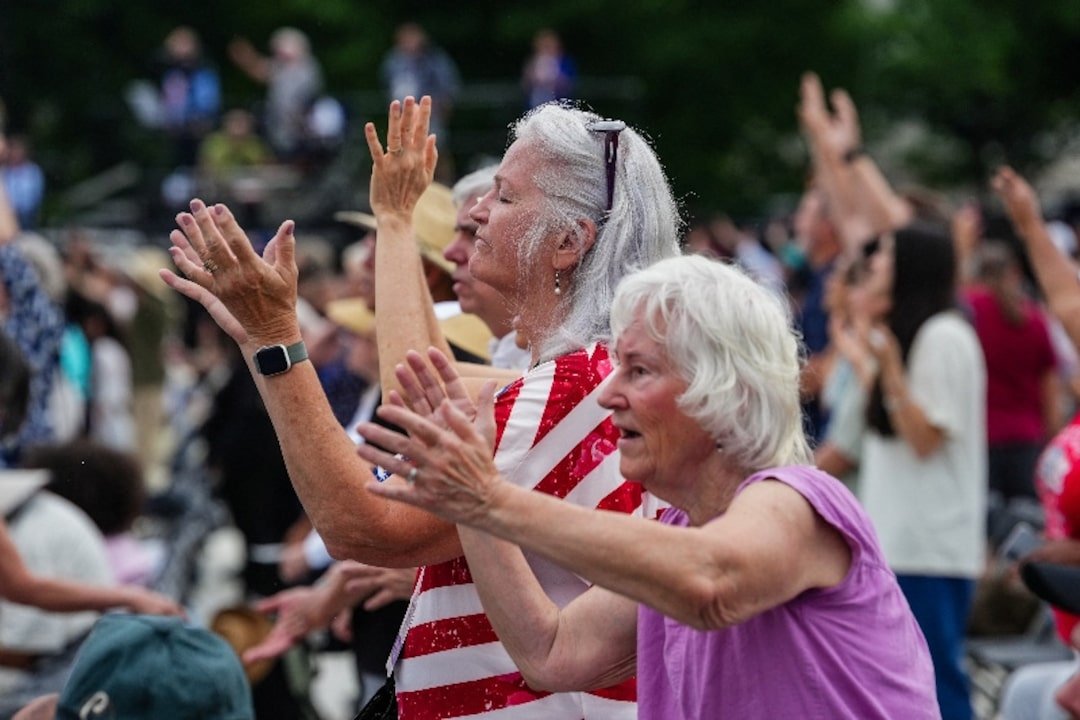
A SYSTEM-DRIVEN tension over the boundaries between religious institutions and political campaigning has resurfaced in the United States following a large faith-focused gathering in Washington that featured prominent conservative Christian voices and messaging aligned with Donald Trump’s political movement.
The event, framed publicly as a prayer and worship gathering, drew attention because of its visible overlap between religious expression and political signaling.
What is confirmed is that the gathering brought together conservative Christian leaders, activists, and political supporters in a setting that combined religious programming with commentary on national politics and electoral themes.
The key issue is not the existence of religious political engagement itself, which is longstanding in American public life, but the increasingly explicit blending of faith-based mobilization with partisan alignment.
This includes messaging that frames political outcomes in moral or spiritual terms and encourages religious communities to interpret elections as consequential to religious freedom, cultural identity, and national direction.
Supporters of such events argue that faith communities have the same right as any civic group to participate in political discourse and to express views on legislation, candidates, and national policy.
They also argue that separating moral belief from political participation is neither practical nor desirable in a pluralistic democracy.
Critics, including secular advocacy groups and some legal scholars, argue that events of this kind risk undermining the traditional separation between church and state by turning religious platforms into de facto campaign environments.
The concern is not only about explicit endorsements, but also about the indirect use of religious authority to shape political preferences among congregants.
At the center of the debate is the regulatory framework governing nonprofit religious organizations in the United States, including restrictions on direct political campaigning by tax-exempt institutions.
While enforcement has historically been limited and uneven, the rise of large-scale politically adjacent faith events has renewed questions about whether existing rules are adequate or effectively applied.
The broader implication is structural.
Faith-based political engagement is becoming more organized, more visible, and more closely integrated with national campaign ecosystems.
This creates a feedback loop in which political actors seek legitimacy through religious networks, while religious leaders gain influence through political proximity.
The consequence is a gradual erosion of clear boundaries that once separated worship spaces from electoral strategy, replacing them with hybrid arenas where spiritual messaging and political identity reinforce each other within the same public platforms.
As the U.S. enters another cycle of heightened political polarization, similar events are expected to remain a recurring feature of campaign-season mobilization, reinforcing the role of religious institutions as influential, and increasingly contested, actors in national politics.
The event, framed publicly as a prayer and worship gathering, drew attention because of its visible overlap between religious expression and political signaling.
What is confirmed is that the gathering brought together conservative Christian leaders, activists, and political supporters in a setting that combined religious programming with commentary on national politics and electoral themes.
The key issue is not the existence of religious political engagement itself, which is longstanding in American public life, but the increasingly explicit blending of faith-based mobilization with partisan alignment.
This includes messaging that frames political outcomes in moral or spiritual terms and encourages religious communities to interpret elections as consequential to religious freedom, cultural identity, and national direction.
Supporters of such events argue that faith communities have the same right as any civic group to participate in political discourse and to express views on legislation, candidates, and national policy.
They also argue that separating moral belief from political participation is neither practical nor desirable in a pluralistic democracy.
Critics, including secular advocacy groups and some legal scholars, argue that events of this kind risk undermining the traditional separation between church and state by turning religious platforms into de facto campaign environments.
The concern is not only about explicit endorsements, but also about the indirect use of religious authority to shape political preferences among congregants.
At the center of the debate is the regulatory framework governing nonprofit religious organizations in the United States, including restrictions on direct political campaigning by tax-exempt institutions.
While enforcement has historically been limited and uneven, the rise of large-scale politically adjacent faith events has renewed questions about whether existing rules are adequate or effectively applied.
The broader implication is structural.
Faith-based political engagement is becoming more organized, more visible, and more closely integrated with national campaign ecosystems.
This creates a feedback loop in which political actors seek legitimacy through religious networks, while religious leaders gain influence through political proximity.
The consequence is a gradual erosion of clear boundaries that once separated worship spaces from electoral strategy, replacing them with hybrid arenas where spiritual messaging and political identity reinforce each other within the same public platforms.
As the U.S. enters another cycle of heightened political polarization, similar events are expected to remain a recurring feature of campaign-season mobilization, reinforcing the role of religious institutions as influential, and increasingly contested, actors in national politics.