White HouseSenateThe HouseSupreme CourtFederal ReserveDOJState DepartmentTreasuryCensusBudget OfficeTrade Representative
WashingTone
Informed by Washington, Defined by Insight
Monday, May 18, 2026
WashingTone

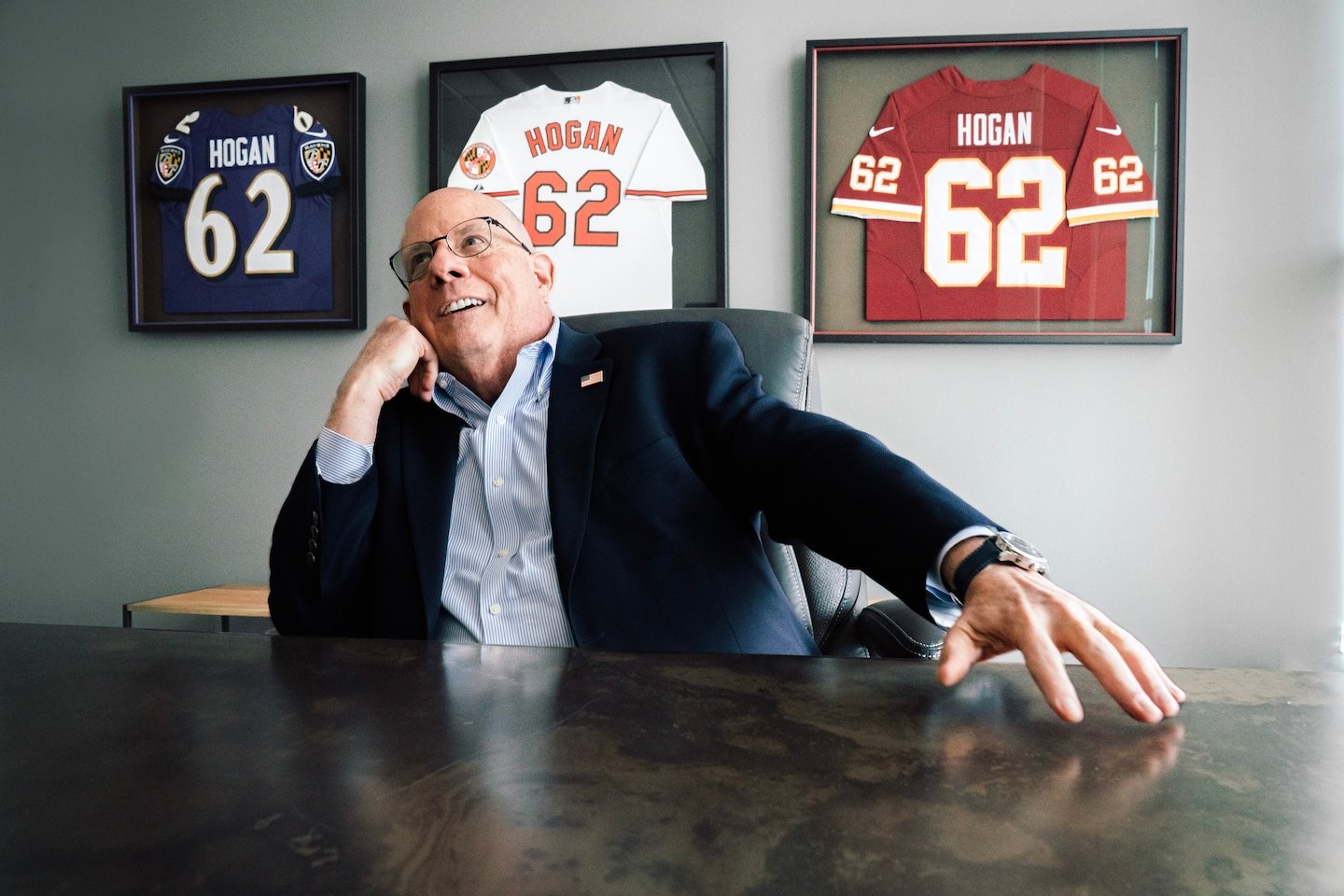
Larry Hogan’s Break With Republican Optimism Highlights Deepening Party Divide
The former Maryland governor’s disappointment reflects a broader struggle within the Republican Party over its direction, identity, and tolerance for internal dissent
An ACTOR-DRIVEN political realignment within the Republican Party has been underscored by former Maryland governor Larry Hogan’s public expression of disappointment with the party’s current trajectory, marking a sharp reversal from his earlier calls for moderation and internal reform.
What is confirmed is that Hogan, long identified as a centrist Republican voice and frequent critic of partisan polarization, has indicated that his expectation that the party would return to a more traditional center-right governing posture has not been met.
His remarks reflect a broader reassessment among moderate Republicans who have struggled to maintain influence within a party increasingly shaped by populist and ideological alignment.
The key issue underlying Hogan’s shift is the structural transformation of the Republican Party over the past several election cycles.
Internal power has consolidated around figures and movements that emphasize loyalty, confrontational politics, and skepticism toward institutional norms that previously defined mainstream conservative governance.
This has narrowed the space for officials who prioritize compromise, bipartisan legislation, or institutional continuity.
Hogan’s political identity has historically been rooted in fiscal conservatism paired with pragmatic governance, particularly during his tenure as Maryland’s governor, a role in which he often positioned himself as willing to work across party lines.
That approach made him a prominent example of a Republican willing to challenge national party dynamics while maintaining electoral success in a predominantly Democratic state.
His more recent remarks signal a recognition that the national party environment has shifted beyond what he previously described as correctable polarization.
Instead, the divide is increasingly structural, involving disagreements not only over policy but over the role of institutions, political rhetoric, and the boundaries of acceptable intra-party dissent.
Supporters of the party’s current direction argue that its evolution reflects voter demand for stronger opposition politics and clearer ideological positioning.
They contend that previous centrist strategies failed to produce durable electoral gains or meaningful policy change in Washington, necessitating a more assertive approach.
Critics, including Hogan and like-minded Republicans, argue that this shift has come at the cost of institutional stability and broad-based electoral appeal, particularly in suburban and swing constituencies where moderation and pragmatic governance have traditionally been decisive factors.
The broader implication is that the Republican Party continues to operate as a coalition under strain, with competing visions of its future role in American politics.
Hogan’s loss of confidence in an internal return to moderation reflects a wider conclusion among establishment-aligned figures that the party’s current trajectory is not a temporary phase but a lasting redefinition of its identity.
That redefinition continues to shape candidate selection, legislative priorities, and the tone of national political debate, reinforcing a partisan landscape in which internal dissent is increasingly limited and ideological alignment has become the dominant organizing principle.
What is confirmed is that Hogan, long identified as a centrist Republican voice and frequent critic of partisan polarization, has indicated that his expectation that the party would return to a more traditional center-right governing posture has not been met.
His remarks reflect a broader reassessment among moderate Republicans who have struggled to maintain influence within a party increasingly shaped by populist and ideological alignment.
The key issue underlying Hogan’s shift is the structural transformation of the Republican Party over the past several election cycles.
Internal power has consolidated around figures and movements that emphasize loyalty, confrontational politics, and skepticism toward institutional norms that previously defined mainstream conservative governance.
This has narrowed the space for officials who prioritize compromise, bipartisan legislation, or institutional continuity.
Hogan’s political identity has historically been rooted in fiscal conservatism paired with pragmatic governance, particularly during his tenure as Maryland’s governor, a role in which he often positioned himself as willing to work across party lines.
That approach made him a prominent example of a Republican willing to challenge national party dynamics while maintaining electoral success in a predominantly Democratic state.
His more recent remarks signal a recognition that the national party environment has shifted beyond what he previously described as correctable polarization.
Instead, the divide is increasingly structural, involving disagreements not only over policy but over the role of institutions, political rhetoric, and the boundaries of acceptable intra-party dissent.
Supporters of the party’s current direction argue that its evolution reflects voter demand for stronger opposition politics and clearer ideological positioning.
They contend that previous centrist strategies failed to produce durable electoral gains or meaningful policy change in Washington, necessitating a more assertive approach.
Critics, including Hogan and like-minded Republicans, argue that this shift has come at the cost of institutional stability and broad-based electoral appeal, particularly in suburban and swing constituencies where moderation and pragmatic governance have traditionally been decisive factors.
The broader implication is that the Republican Party continues to operate as a coalition under strain, with competing visions of its future role in American politics.
Hogan’s loss of confidence in an internal return to moderation reflects a wider conclusion among establishment-aligned figures that the party’s current trajectory is not a temporary phase but a lasting redefinition of its identity.
That redefinition continues to shape candidate selection, legislative priorities, and the tone of national political debate, reinforcing a partisan landscape in which internal dissent is increasingly limited and ideological alignment has become the dominant organizing principle.