White HouseSenateThe HouseSupreme CourtFederal ReserveDOJState DepartmentTreasuryCensusBudget OfficeTrade Representative
WashingTone
Informed by Washington, Defined by Insight
Monday, May 18, 2026
WashingTone

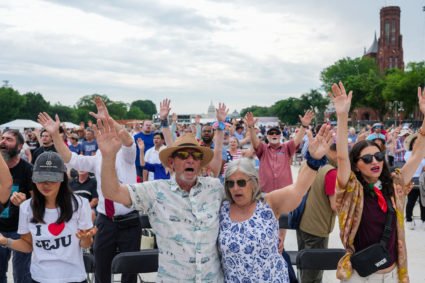
Mass Prayer Rally Draws Thousands to Washington National Mall Amid Heated Church-State Debate
The “Rededicate 250” gathering blends evangelical worship, political messaging, and America’s 250th anniversary celebrations, triggering controversy over religion in public life
A large-scale, event-driven public religious gathering on the National Mall in Washington, D.C. has drawn thousands of attendees to a daylong prayer rally framed as a national “rededication” of the United States, intensifying debate over the role of religion in American public life.
The event, branded “Rededicate 250: A National Jubilee of Prayer, Praise & Thanksgiving,” was organized as part of broader celebrations marking the 250th anniversary of U.S. independence.
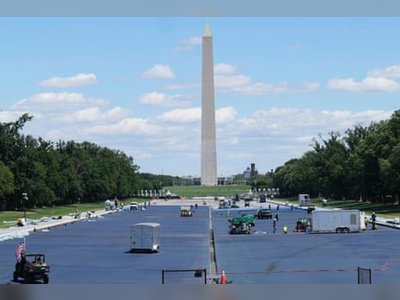
It centered on a Christian evangelical worship program staged against the backdrop of the Washington Monument, with music, sermons, and visual displays linking national history to religious themes.
What is confirmed is that the rally brought together a mix of religious leaders and senior political figures, many aligned with conservative evangelical networks.
Speakers and participants included prominent pastors and faith leaders, alongside government officials such as Defense Secretary Pete Hegseth, Secretary of State Marco Rubio, and House Speaker Mike Johnson, with President Donald Trump expected to address the gathering via video message.
Organizers described the event as a national spiritual renewal, emphasizing themes of prayer, national identity, and gratitude.
The program heavily emphasized Christian symbolism and messaging, with staging that included imagery referencing the U.S. founding era alongside religious iconography.
Organizers framed the gathering as a continuation of historical traditions of national prayer dating back to the eighteenth century, linking the modern United States to religious foundations.
At the same time, the event has generated significant criticism from religious scholars, civil liberties groups, and interfaith organizations.
Critics argue that the rally blurs the constitutional separation between church and state by elevating one religious tradition in a public, government-linked setting.
They also point to concerns that the messaging promotes an exclusionary interpretation of American identity in a country that includes multiple faiths and non-religious citizens.
Supporters of the rally argue the opposite: that public expressions of faith are part of American heritage and that the event reflects historical practices of national prayer and thanksgiving.
Some participants explicitly described the United States as founded on Christian principles, a claim contested by historians who emphasize the country’s pluralistic religious origins.
The scale of the gathering, combined with its political visibility, has made it a focal point in ongoing debates about “Christian nationalism” in the United States.
The presence of high-ranking officials has further amplified scrutiny, raising questions about how religious messaging intersects with federal authority and national ceremonies.
Beyond the immediate controversy, the rally reflects a broader trend in American politics where religious identity, electoral coalitions, and cultural messaging increasingly overlap.
The National Mall event illustrates how public spaces in the capital are becoming stages for ideological as well as spiritual expression, particularly during milestone national anniversaries.
The event, branded “Rededicate 250: A National Jubilee of Prayer, Praise & Thanksgiving,” was organized as part of broader celebrations marking the 250th anniversary of U.S. independence.
It centered on a Christian evangelical worship program staged against the backdrop of the Washington Monument, with music, sermons, and visual displays linking national history to religious themes.
What is confirmed is that the rally brought together a mix of religious leaders and senior political figures, many aligned with conservative evangelical networks.
Speakers and participants included prominent pastors and faith leaders, alongside government officials such as Defense Secretary Pete Hegseth, Secretary of State Marco Rubio, and House Speaker Mike Johnson, with President Donald Trump expected to address the gathering via video message.
Organizers described the event as a national spiritual renewal, emphasizing themes of prayer, national identity, and gratitude.
The program heavily emphasized Christian symbolism and messaging, with staging that included imagery referencing the U.S. founding era alongside religious iconography.
Organizers framed the gathering as a continuation of historical traditions of national prayer dating back to the eighteenth century, linking the modern United States to religious foundations.
At the same time, the event has generated significant criticism from religious scholars, civil liberties groups, and interfaith organizations.
Critics argue that the rally blurs the constitutional separation between church and state by elevating one religious tradition in a public, government-linked setting.
They also point to concerns that the messaging promotes an exclusionary interpretation of American identity in a country that includes multiple faiths and non-religious citizens.
Supporters of the rally argue the opposite: that public expressions of faith are part of American heritage and that the event reflects historical practices of national prayer and thanksgiving.
Some participants explicitly described the United States as founded on Christian principles, a claim contested by historians who emphasize the country’s pluralistic religious origins.
The scale of the gathering, combined with its political visibility, has made it a focal point in ongoing debates about “Christian nationalism” in the United States.
The presence of high-ranking officials has further amplified scrutiny, raising questions about how religious messaging intersects with federal authority and national ceremonies.
Beyond the immediate controversy, the rally reflects a broader trend in American politics where religious identity, electoral coalitions, and cultural messaging increasingly overlap.
The National Mall event illustrates how public spaces in the capital are becoming stages for ideological as well as spiritual expression, particularly during milestone national anniversaries.