White HouseSenateThe HouseSupreme CourtFederal ReserveDOJState DepartmentTreasuryCensusBudget OfficeTrade Representative
WashingTone
Informed by Washington, Defined by Insight
Monday, May 18, 2026
WashingTone

Senate Republicans Revise White House Security Funding Plan After Procedural Ruling
Parliamentarian decision forces GOP to adjust budget strategy tied to White House infrastructure security provisions
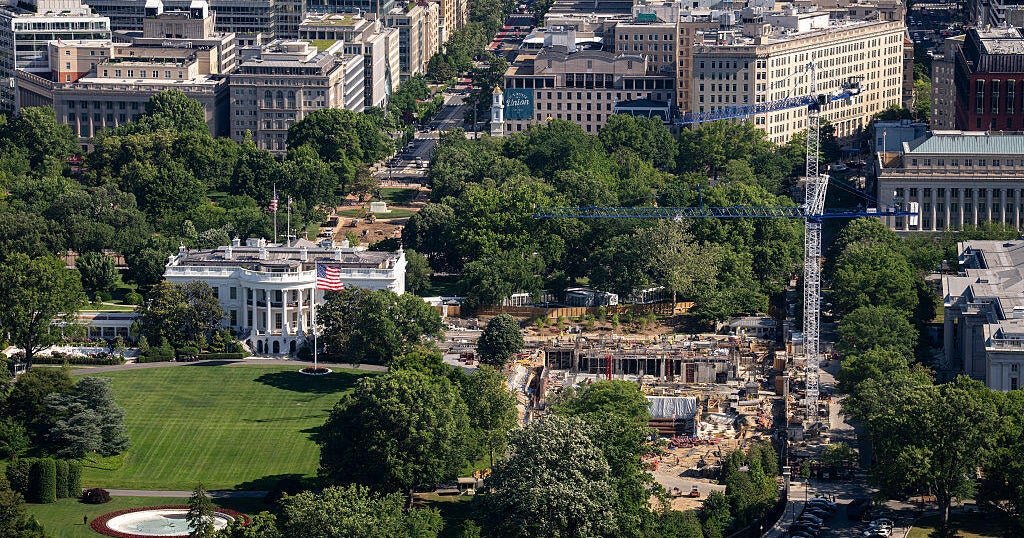
A SYSTEM-DRIVEN procedural ruling in the United States Senate has prompted Republican lawmakers to revise a funding package linked to security upgrades involving White House facilities, including a proposed ballroom-related project.
The adjustment follows a determination by the Senate parliamentarian that certain provisions in the original proposal could not proceed under fast-track budget rules, requiring lawmakers to rework how the measures are structured.
What is confirmed is that the parliamentarian’s role in this process is to assess whether legislative language qualifies for inclusion under budget reconciliation rules, which allow certain fiscal measures to bypass the Senate filibuster.
When provisions are deemed non-compliant, they must either be removed or rewritten in a way that aligns more closely with budgetary criteria rather than policy design.
In this case, Republican senators are now revising the proposal to ensure that funding for security-related construction and infrastructure at or near the White House can proceed without violating procedural constraints.
The revisions are expected to focus on reclassifying or narrowing the scope of spending so it is more directly tied to security functions rather than broader construction or design elements.
The key issue is the tension between legislative intent and procedural limits.
While lawmakers can propose funding for federal property security improvements, the reconciliation process restricts the inclusion of measures that are primarily structural, aesthetic, or policy-expanding in nature.
This creates a recurring constraint in high-profile infrastructure or executive branch-related funding efforts.
The dispute does not involve the physical construction itself at this stage, but rather the legislative pathway used to authorize and finance it.
The adjustment process reflects a broader pattern in which Senate procedural rules shape not only what policies are adopted, but how they must be framed to pass.
The practical consequence is that the funding package will likely re-emerge in a narrower form, focused more explicitly on security justification.
That revised version will then continue through the Senate’s budget process under revised compliance with reconciliation requirements.
The adjustment follows a determination by the Senate parliamentarian that certain provisions in the original proposal could not proceed under fast-track budget rules, requiring lawmakers to rework how the measures are structured.
What is confirmed is that the parliamentarian’s role in this process is to assess whether legislative language qualifies for inclusion under budget reconciliation rules, which allow certain fiscal measures to bypass the Senate filibuster.
When provisions are deemed non-compliant, they must either be removed or rewritten in a way that aligns more closely with budgetary criteria rather than policy design.
In this case, Republican senators are now revising the proposal to ensure that funding for security-related construction and infrastructure at or near the White House can proceed without violating procedural constraints.
The revisions are expected to focus on reclassifying or narrowing the scope of spending so it is more directly tied to security functions rather than broader construction or design elements.
The key issue is the tension between legislative intent and procedural limits.
While lawmakers can propose funding for federal property security improvements, the reconciliation process restricts the inclusion of measures that are primarily structural, aesthetic, or policy-expanding in nature.
This creates a recurring constraint in high-profile infrastructure or executive branch-related funding efforts.
The dispute does not involve the physical construction itself at this stage, but rather the legislative pathway used to authorize and finance it.
The adjustment process reflects a broader pattern in which Senate procedural rules shape not only what policies are adopted, but how they must be framed to pass.
The practical consequence is that the funding package will likely re-emerge in a narrower form, focused more explicitly on security justification.
That revised version will then continue through the Senate’s budget process under revised compliance with reconciliation requirements.