White HouseSenateThe HouseSupreme CourtFederal ReserveDOJState DepartmentTreasuryCensusBudget OfficeTrade Representative
WashingTone
Informed by Washington, Defined by Insight
Saturday, Apr 25, 2026
WashingTone

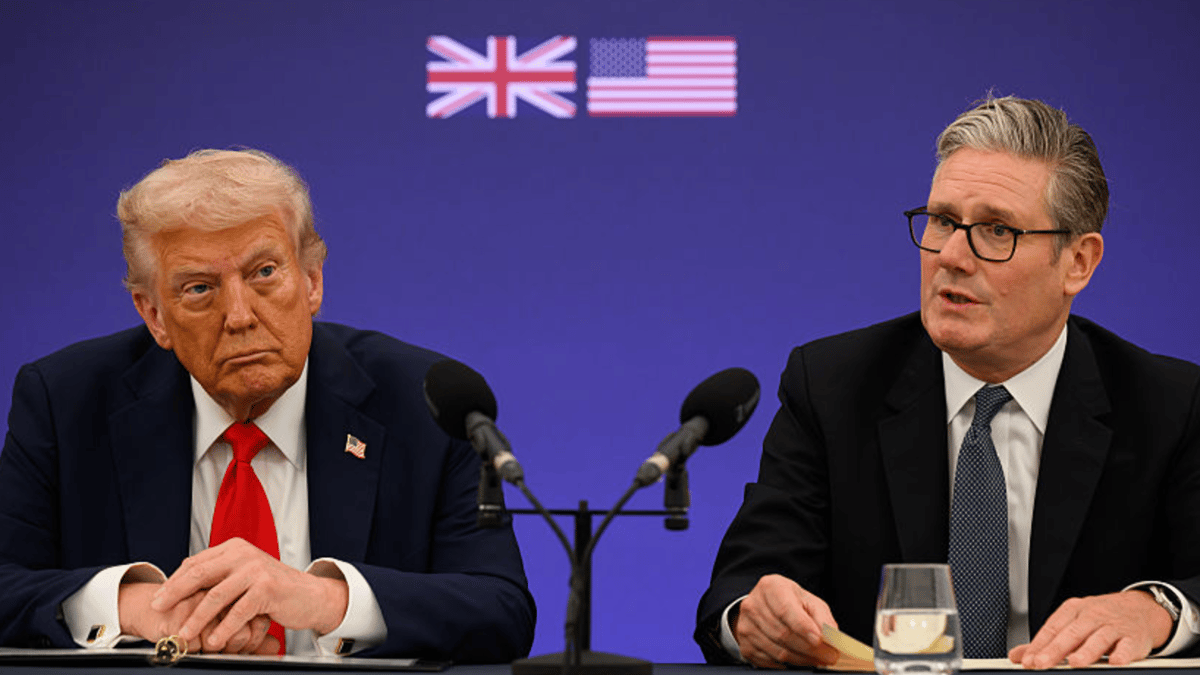
Trump’s Tariff Threat Tests US–UK Trade Ties Over Digital Tax Dispute
Washington warns of sweeping trade retaliation unless Britain drops its digital services tax, escalating a long-running clash over how to tax global tech firms
A trade-policy escalation driven by executive economic pressure has sharpened tensions between the United States and the United Kingdom after President Donald Trump threatened to impose a “big tariff” on British goods unless London removes its digital services tax on large technology companies.
What is confirmed is that the United Kingdom applies a digital services tax on revenues generated by major online platforms operating in the country.
The tax, set at two percent, targets large multinational technology firms that generate significant income from UK users but often book profits in lower-tax jurisdictions.
The measure was introduced as an interim solution while international negotiations on global digital taxation continue.
The United States has long opposed unilateral digital taxes adopted by European countries and other advanced economies, arguing that they disproportionately affect American technology companies.
Trump’s latest warning represents an escalation in tone, framing the dispute as one that could trigger direct trade retaliation through tariffs on UK exports if the tax is not withdrawn.
The key issue is a structural conflict over taxation in the digital economy.
Traditional corporate tax systems are based on physical presence, while digital platforms generate revenue across borders with limited physical infrastructure.
Countries like the UK argue that this creates a gap that allows large tech firms to underpay taxes relative to the economic activity they generate locally.
The US position is that such targeted taxes unfairly single out American companies and risk fragmenting global trade rules.
The UK government has defended the tax as a temporary and necessary measure, designed to ensure that highly profitable digital firms contribute to public revenues in the jurisdictions where they operate.
Officials have previously indicated that the tax would be phased out if a broader international agreement on digital taxation is implemented through multilateral frameworks.
London’s response to the tariff threat has been measured but firm.
UK officials have emphasized that tax policy is a sovereign matter and have signaled a preference for continued negotiations rather than immediate concessions.
At the same time, British policymakers are aware that any US tariffs could have direct consequences for export sectors including automotive goods, pharmaceuticals, and financial services.
The broader context is that digital taxation has become a recurring point of friction between the United States and its allies.
Similar disputes have emerged with European Union member states and other advanced economies, reflecting the difficulty of adapting tax systems to multinational digital platforms that operate outside traditional geographic boundaries.
Economically, the stakes are significant for both sides.
For the UK, the digital services tax generates hundreds of millions in annual revenue and is politically sensitive due to its framing as a fairness measure.
For the United States, the concern is both fiscal and strategic, as major technology firms play a central role in its global economic dominance.
The immediate consequence is a renewed period of uncertainty in US–UK trade relations, with the threat of tariffs introducing pressure into ongoing discussions over how digital companies should be taxed in a global economy that has yet to reach a unified regulatory standard.
What is confirmed is that the United Kingdom applies a digital services tax on revenues generated by major online platforms operating in the country.
The tax, set at two percent, targets large multinational technology firms that generate significant income from UK users but often book profits in lower-tax jurisdictions.
The measure was introduced as an interim solution while international negotiations on global digital taxation continue.
The United States has long opposed unilateral digital taxes adopted by European countries and other advanced economies, arguing that they disproportionately affect American technology companies.
Trump’s latest warning represents an escalation in tone, framing the dispute as one that could trigger direct trade retaliation through tariffs on UK exports if the tax is not withdrawn.
The key issue is a structural conflict over taxation in the digital economy.
Traditional corporate tax systems are based on physical presence, while digital platforms generate revenue across borders with limited physical infrastructure.
Countries like the UK argue that this creates a gap that allows large tech firms to underpay taxes relative to the economic activity they generate locally.
The US position is that such targeted taxes unfairly single out American companies and risk fragmenting global trade rules.
The UK government has defended the tax as a temporary and necessary measure, designed to ensure that highly profitable digital firms contribute to public revenues in the jurisdictions where they operate.
Officials have previously indicated that the tax would be phased out if a broader international agreement on digital taxation is implemented through multilateral frameworks.
London’s response to the tariff threat has been measured but firm.
UK officials have emphasized that tax policy is a sovereign matter and have signaled a preference for continued negotiations rather than immediate concessions.
At the same time, British policymakers are aware that any US tariffs could have direct consequences for export sectors including automotive goods, pharmaceuticals, and financial services.
The broader context is that digital taxation has become a recurring point of friction between the United States and its allies.
Similar disputes have emerged with European Union member states and other advanced economies, reflecting the difficulty of adapting tax systems to multinational digital platforms that operate outside traditional geographic boundaries.
Economically, the stakes are significant for both sides.
For the UK, the digital services tax generates hundreds of millions in annual revenue and is politically sensitive due to its framing as a fairness measure.
For the United States, the concern is both fiscal and strategic, as major technology firms play a central role in its global economic dominance.
The immediate consequence is a renewed period of uncertainty in US–UK trade relations, with the threat of tariffs introducing pressure into ongoing discussions over how digital companies should be taxed in a global economy that has yet to reach a unified regulatory standard.