White HouseSenateThe HouseSupreme CourtFederal ReserveDOJState DepartmentTreasuryCensusBudget OfficeTrade Representative
WashingTone
Informed by Washington, Defined by Insight
Saturday, Apr 25, 2026
WashingTone

Trump Threatens ‘Big Tariff’ on UK Over Digital Tax on US Tech Giants
Escalating trade pressure targets Britain’s 2% digital services tax, intensifying tensions between Washington and London over tech regulation and economic policy
A trade dispute driven by US tariff policy has escalated after President Donald Trump warned the United Kingdom it could face significant tariffs if it does not remove its digital services tax on American technology companies.
What is confirmed is that Trump has publicly stated the United States could impose a “big tariff” on UK goods unless Britain drops its 2% digital services tax, which applies to revenues generated in the UK by large multinational digital firms.
The measure primarily affects major US technology companies, including dominant platforms in search, social media, and online retail.
The UK introduced the tax in 2020 as a temporary measure while international negotiations sought a global agreement on how to tax digital companies operating across borders.
It applies to firms with global digital revenues above a high threshold and significant earnings from UK users.
Britain has consistently argued that the tax ensures large tech companies pay a fair share in the markets where they generate value.
The key issue is the clash between unilateral national taxation and US trade retaliation.
Trump’s position is that the tax disproportionately targets American companies and functions as a disguised penalty on US technological leadership.
He has framed the potential tariff response as a direct countermeasure, stating that the United States can offset the tax impact through import duties on British exports.
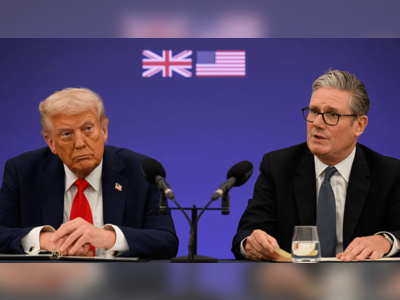
The warning comes at a sensitive moment in US–UK relations, which are already under strain from broader disagreements over international security policy and economic coordination.
The digital services tax has long been a friction point in transatlantic negotiations, with previous US administrations also criticizing similar measures adopted in Europe.
The tax itself is not uniform across the world.
Several European economies have implemented similar levies aimed at capturing revenue from digital platforms that operate globally but book profits in low-tax jurisdictions.
Supporters argue these systems correct structural gaps in outdated corporate tax frameworks that predate the digital economy.
Critics, particularly in the United States, argue they disproportionately affect American firms and risk fragmenting global trade rules.
For the United Kingdom, the tax generates significant annual revenue and remains politically sensitive.
Officials have previously indicated it would be phased out if a broader international agreement under global tax negotiations is fully implemented.
However, delays in that process have left the domestic tax in place longer than initially intended.
Trump’s threat adds immediate commercial pressure to an already complex negotiation environment.
A US tariff response would likely affect a wide range of UK exports, increasing costs for businesses and potentially triggering retaliatory measures.
At the same time, removing the tax would reduce a key source of public revenue and shift more of the tax burden away from large multinational technology firms.
The immediate consequence is a renewed confrontation over how digital economies are taxed across borders, with the United States signaling willingness to use tariffs as leverage and the United Kingdom maintaining that its tax policy is a matter of sovereign fiscal authority.
What is confirmed is that Trump has publicly stated the United States could impose a “big tariff” on UK goods unless Britain drops its 2% digital services tax, which applies to revenues generated in the UK by large multinational digital firms.
The measure primarily affects major US technology companies, including dominant platforms in search, social media, and online retail.
The UK introduced the tax in 2020 as a temporary measure while international negotiations sought a global agreement on how to tax digital companies operating across borders.
It applies to firms with global digital revenues above a high threshold and significant earnings from UK users.
Britain has consistently argued that the tax ensures large tech companies pay a fair share in the markets where they generate value.
The key issue is the clash between unilateral national taxation and US trade retaliation.
Trump’s position is that the tax disproportionately targets American companies and functions as a disguised penalty on US technological leadership.
He has framed the potential tariff response as a direct countermeasure, stating that the United States can offset the tax impact through import duties on British exports.
The warning comes at a sensitive moment in US–UK relations, which are already under strain from broader disagreements over international security policy and economic coordination.
The digital services tax has long been a friction point in transatlantic negotiations, with previous US administrations also criticizing similar measures adopted in Europe.
The tax itself is not uniform across the world.
Several European economies have implemented similar levies aimed at capturing revenue from digital platforms that operate globally but book profits in low-tax jurisdictions.
Supporters argue these systems correct structural gaps in outdated corporate tax frameworks that predate the digital economy.
Critics, particularly in the United States, argue they disproportionately affect American firms and risk fragmenting global trade rules.
For the United Kingdom, the tax generates significant annual revenue and remains politically sensitive.
Officials have previously indicated it would be phased out if a broader international agreement under global tax negotiations is fully implemented.
However, delays in that process have left the domestic tax in place longer than initially intended.
Trump’s threat adds immediate commercial pressure to an already complex negotiation environment.
A US tariff response would likely affect a wide range of UK exports, increasing costs for businesses and potentially triggering retaliatory measures.
At the same time, removing the tax would reduce a key source of public revenue and shift more of the tax burden away from large multinational technology firms.
The immediate consequence is a renewed confrontation over how digital economies are taxed across borders, with the United States signaling willingness to use tariffs as leverage and the United Kingdom maintaining that its tax policy is a matter of sovereign fiscal authority.