White HouseSenateThe HouseSupreme CourtFederal ReserveDOJState DepartmentTreasuryCensusBudget OfficeTrade Representative
WashingTone
Informed by Washington, Defined by Insight
Saturday, Apr 25, 2026
WashingTone

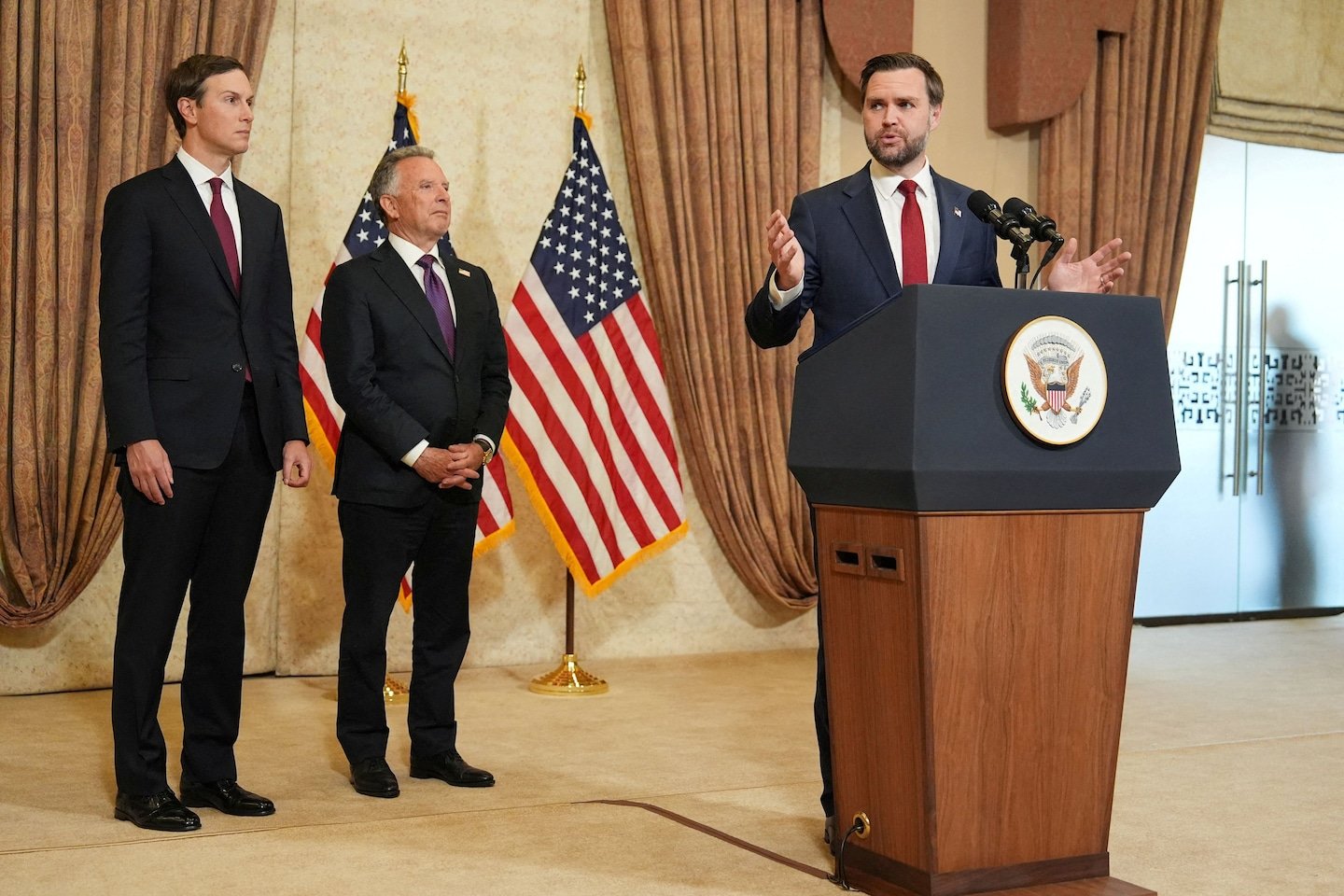
U.S. and Iran set to resume high-stakes talks in Pakistan without Vice President Vance
Negotiations restart after earlier collapse, but downgraded delegations and unresolved nuclear and regional security disputes signal a fragile diplomatic track
Diplomatic negotiations between the United States and Iran are set to resume in Islamabad, Pakistan, this weekend in a significantly downgraded format, underscoring both the urgency and fragility of efforts to prevent renewed escalation between the two countries.
The talks follow an earlier marathon negotiating session that ended without agreement after roughly twenty-one hours of discussions earlier this month.
That round was led on the U.S. side by Vice President JD Vance, but he will not attend the upcoming negotiations.
Instead, the American delegation will be headed by special envoy Steve Witkoff and senior adviser Jared Kushner.
On the Iranian side, officials have also opted not to send their top parliamentary-level negotiator, reflecting a parallel reduction in diplomatic seniority.
What is confirmed is that both sides remain engaged through intermediaries hosted by Pakistan, which continues to serve as the venue for indirect or semi-direct diplomatic contact.
The shift in personnel has been interpreted by officials involved in the process as a recalibration of expectations rather than a full breakdown in talks.
The earlier round failed to produce a breakthrough on core issues, particularly Iran’s nuclear program and the conditions required for a lasting ceasefire arrangement tied to broader regional security guarantees.
The central mechanism of the dispute remains unchanged.
The United States has pressed for binding limits on Iran’s nuclear capabilities and expanded verification measures, while Iran has rejected conditions it views as constraining its sovereignty and strategic deterrence posture.
Additional points of contention include regional proxy activity and security arrangements tied to key maritime corridors, which have been a source of broader instability and economic disruption.
The absence of Vice President Vance from the new round is being interpreted in Washington as a sign that the talks are entering a lower-intensity phase, with a focus on exploring narrower technical or political openings rather than immediate high-level bargaining.
However, he remains on standby and could rejoin discussions if substantive progress emerges.
The negotiations are unfolding against continued regional tension and economic uncertainty linked to the broader Iran crisis, including pressure on energy routes and ongoing military posturing in the wider Middle East.
Despite the downgraded format, both sides have chosen to return to the table, indicating that diplomatic engagement remains active even as trust and consensus remain limited.
The weekend talks in Islamabad are expected to test whether the reduced-format dialogue can produce incremental movement toward a framework agreement or whether the process will stall again at the same unresolved fault lines that collapsed the previous round.
The talks follow an earlier marathon negotiating session that ended without agreement after roughly twenty-one hours of discussions earlier this month.
That round was led on the U.S. side by Vice President JD Vance, but he will not attend the upcoming negotiations.
Instead, the American delegation will be headed by special envoy Steve Witkoff and senior adviser Jared Kushner.
On the Iranian side, officials have also opted not to send their top parliamentary-level negotiator, reflecting a parallel reduction in diplomatic seniority.
What is confirmed is that both sides remain engaged through intermediaries hosted by Pakistan, which continues to serve as the venue for indirect or semi-direct diplomatic contact.
The shift in personnel has been interpreted by officials involved in the process as a recalibration of expectations rather than a full breakdown in talks.
The earlier round failed to produce a breakthrough on core issues, particularly Iran’s nuclear program and the conditions required for a lasting ceasefire arrangement tied to broader regional security guarantees.
The central mechanism of the dispute remains unchanged.
The United States has pressed for binding limits on Iran’s nuclear capabilities and expanded verification measures, while Iran has rejected conditions it views as constraining its sovereignty and strategic deterrence posture.
Additional points of contention include regional proxy activity and security arrangements tied to key maritime corridors, which have been a source of broader instability and economic disruption.
The absence of Vice President Vance from the new round is being interpreted in Washington as a sign that the talks are entering a lower-intensity phase, with a focus on exploring narrower technical or political openings rather than immediate high-level bargaining.
However, he remains on standby and could rejoin discussions if substantive progress emerges.
The negotiations are unfolding against continued regional tension and economic uncertainty linked to the broader Iran crisis, including pressure on energy routes and ongoing military posturing in the wider Middle East.
Despite the downgraded format, both sides have chosen to return to the table, indicating that diplomatic engagement remains active even as trust and consensus remain limited.
The weekend talks in Islamabad are expected to test whether the reduced-format dialogue can produce incremental movement toward a framework agreement or whether the process will stall again at the same unresolved fault lines that collapsed the previous round.