White HouseSenateThe HouseSupreme CourtFederal ReserveDOJState DepartmentTreasuryCensusBudget OfficeTrade Representative
WashingTone
Informed by Washington, Defined by Insight
Saturday, Apr 25, 2026
WashingTone

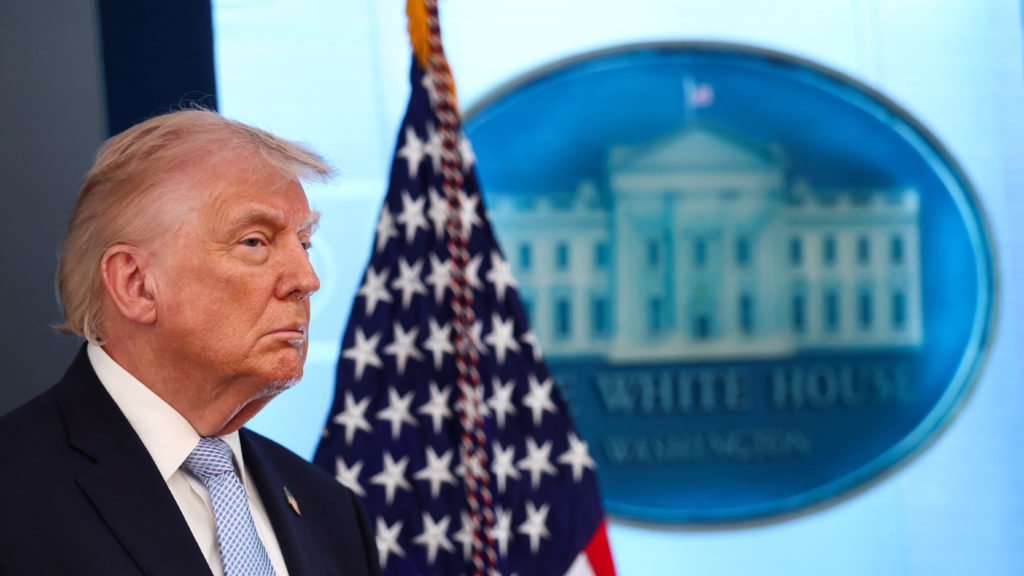
Trump’s return, a no-comedian format, and a tense press moment: 4 things to watch at the 2026 White House Correspondents’ Dinner
This year’s Washington media gala is reshaped by Donald Trump’s attendance, a break from comedy tradition, and rising tension between the press and the presidency
SYSTEM-DRIVEN dynamics define this year’s White House Correspondents’ Dinner, where institutional press–executive relations, rather than celebrity politics or one-off drama, are driving the significance of the event.
The dinner, held annually in Washington, brings together journalists, political officials, and public figures to mark the role of the press in democratic accountability.
In 2026, however, its format and tone are being reshaped by political friction and structural changes in how the event is staged.
The first major factor is Donald Trump’s attendance as sitting president.
What is confirmed is that this marks his first appearance at the dinner while in office, a rare break from his previous absence during earlier years in office.
His presence significantly alters the traditional dynamic, in which presidents typically participate in light self-deprecating humor delivered through a scripted roast.
Current reporting indicates expectations of a more controlled and politically charged tone rather than the usual comedic exchange.
His participation is widely seen as a test of how the event functions when the subject of journalistic scrutiny is physically present in the room.
A second key development is the removal of the traditional comedy roast.
For decades, the dinner has featured a comedian delivering satirical remarks about the president and Washington’s political class.
This year, that role has been replaced by a mentalist performance, a clear departure from the established format.
What is confirmed is that this shift reflects deliberate caution around humor directed at a politically sensitive administration, and it has sparked debate about whether the event is losing one of its defining features: structured satire of power.
A third element shaping attention is the broader tension between the White House and the press corps.
Journalists attending the dinner operate in an environment where access to information, institutional funding for public media, and press relations have become politically contested issues.
Some media figures have raised concerns about the symbolism of celebrating press freedom in a moment when relations between the administration and news organizations are strained.
This tension does not alter the ceremonial nature of the dinner, but it reframes it as a politically loaded gathering rather than a purely celebratory one.
Finally, the surrounding ecosystem of events and media coverage has expanded the dinner beyond a single evening.
Parties, media-hosted gatherings, and political networking events now dominate the weekend in Washington, turning it into a broader power and visibility exercise for media companies, political actors, and influencers.
This evolution has shifted the dinner from a closed professional tradition into a high-profile public spectacle with commercial and reputational stakes attached.
Taken together, these four dynamics—presidential participation, the removal of comedic roasting, heightened press–executive tension, and the expansion of the surrounding media ecosystem—define an event that is no longer just ceremonial.
It is now a live reflection of the evolving relationship between political power and journalism in the United States, with the structure of the dinner itself adapting to that pressure in real time.
The dinner, held annually in Washington, brings together journalists, political officials, and public figures to mark the role of the press in democratic accountability.
In 2026, however, its format and tone are being reshaped by political friction and structural changes in how the event is staged.
The first major factor is Donald Trump’s attendance as sitting president.
What is confirmed is that this marks his first appearance at the dinner while in office, a rare break from his previous absence during earlier years in office.
His presence significantly alters the traditional dynamic, in which presidents typically participate in light self-deprecating humor delivered through a scripted roast.
Current reporting indicates expectations of a more controlled and politically charged tone rather than the usual comedic exchange.
His participation is widely seen as a test of how the event functions when the subject of journalistic scrutiny is physically present in the room.
A second key development is the removal of the traditional comedy roast.
For decades, the dinner has featured a comedian delivering satirical remarks about the president and Washington’s political class.
This year, that role has been replaced by a mentalist performance, a clear departure from the established format.
What is confirmed is that this shift reflects deliberate caution around humor directed at a politically sensitive administration, and it has sparked debate about whether the event is losing one of its defining features: structured satire of power.
A third element shaping attention is the broader tension between the White House and the press corps.
Journalists attending the dinner operate in an environment where access to information, institutional funding for public media, and press relations have become politically contested issues.
Some media figures have raised concerns about the symbolism of celebrating press freedom in a moment when relations between the administration and news organizations are strained.
This tension does not alter the ceremonial nature of the dinner, but it reframes it as a politically loaded gathering rather than a purely celebratory one.
Finally, the surrounding ecosystem of events and media coverage has expanded the dinner beyond a single evening.
Parties, media-hosted gatherings, and political networking events now dominate the weekend in Washington, turning it into a broader power and visibility exercise for media companies, political actors, and influencers.
This evolution has shifted the dinner from a closed professional tradition into a high-profile public spectacle with commercial and reputational stakes attached.
Taken together, these four dynamics—presidential participation, the removal of comedic roasting, heightened press–executive tension, and the expansion of the surrounding media ecosystem—define an event that is no longer just ceremonial.
It is now a live reflection of the evolving relationship between political power and journalism in the United States, with the structure of the dinner itself adapting to that pressure in real time.