White HouseSenateThe HouseSupreme CourtFederal ReserveDOJState DepartmentTreasuryCensusBudget OfficeTrade Representative
WashingTone
Informed by Washington, Defined by Insight
Tuesday, Apr 28, 2026
WashingTone

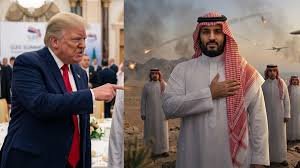
Trump Mocks Saudi Crown Prince as Iran Conflict Deepens Diplomatic Tensions in the Gulf
The remarks come amid an escalating U.S.-Iran war and growing behind-the-scenes pressure from Saudi Arabia for a more aggressive American posture, exposing strains inside a key strategic alliance.
ACTOR-DRIVEN
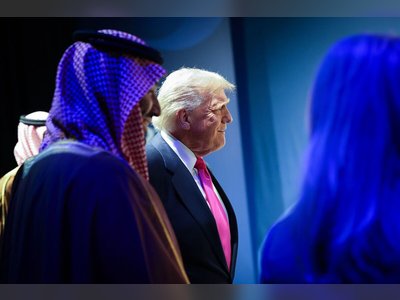
A widening geopolitical rift involving U.S. President Donald Trump, Saudi Crown Prince Mohammed bin Salman, and the ongoing war with Iran has surfaced after Trump made public remarks mocking the Saudi leader during a period of intensified regional conflict.
What is confirmed is that Trump’s comments were made in the context of a broader Middle East war involving direct U.S. and Israeli military action against Iran, a conflict that has already reshaped alliances, disrupted energy flows, and triggered sharp diplomatic realignments across the Gulf region.
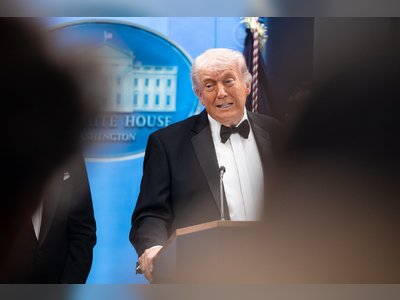
The remarks attributed to Trump were delivered during a public-facing setting tied to Saudi-linked economic or political engagement, where he referred to the crown prince in a dismissive and mocking tone.
The specific phrasing has varied across accounts, but the consistent element is the public nature of the criticism, which is unusual given the historically close U.S.-Saudi strategic relationship.
The key issue is that these comments emerged while Saudi Arabia is widely reported to be privately urging the United States to sustain or intensify pressure on Iran.
Multiple accounts of diplomatic conversations indicate that Riyadh views the current conflict as an opportunity to weaken its regional rival and reshape the Middle East balance of power.
Saudi officials have publicly maintained a more cautious stance, calling for stability while simultaneously managing security risks tied to Iranian retaliation.
This dual-track behavior has become central to understanding the current diplomatic friction.
On one level, Saudi Arabia remains a critical U.S. security partner, hosting American forces and coordinating energy policy.
On another, it is engaged in a delicate balancing act, publicly distancing itself from direct involvement while reportedly advocating for a more forceful approach in private channels.
Trump’s remarks, therefore, are not an isolated incident but part of a broader strain in a relationship that has been tested by the war’s escalation.
The United States has moved into a more direct military role in confronting Iran, including large-scale strikes and heightened regional deployments, which have already produced significant instability in global energy markets and maritime trade routes.
The implications extend beyond rhetoric.
Saudi Arabia’s influence over regional strategy, combined with U.S. military escalation, has contributed to a fragmented diplomatic environment in which traditional alliance expectations no longer guarantee alignment in tone or messaging.
Public disagreements or perceived disrespect at leadership level can quickly translate into uncertainty in defense coordination and economic planning.
At the same time, neither side appears to be abandoning the strategic relationship.
The U.S. continues to rely on Saudi infrastructure, intelligence cooperation, and energy stabilization capacity, while Riyadh depends on American security guarantees amid ongoing regional threats.
The result is a high-pressure alliance operating under wartime conditions, where private strategic convergence coexists with public signaling disputes, and where leadership rhetoric now carries amplified diplomatic weight due to the volatility of the broader conflict environment.
A widening geopolitical rift involving U.S. President Donald Trump, Saudi Crown Prince Mohammed bin Salman, and the ongoing war with Iran has surfaced after Trump made public remarks mocking the Saudi leader during a period of intensified regional conflict.
What is confirmed is that Trump’s comments were made in the context of a broader Middle East war involving direct U.S. and Israeli military action against Iran, a conflict that has already reshaped alliances, disrupted energy flows, and triggered sharp diplomatic realignments across the Gulf region.
The remarks attributed to Trump were delivered during a public-facing setting tied to Saudi-linked economic or political engagement, where he referred to the crown prince in a dismissive and mocking tone.
The specific phrasing has varied across accounts, but the consistent element is the public nature of the criticism, which is unusual given the historically close U.S.-Saudi strategic relationship.
The key issue is that these comments emerged while Saudi Arabia is widely reported to be privately urging the United States to sustain or intensify pressure on Iran.
Multiple accounts of diplomatic conversations indicate that Riyadh views the current conflict as an opportunity to weaken its regional rival and reshape the Middle East balance of power.
Saudi officials have publicly maintained a more cautious stance, calling for stability while simultaneously managing security risks tied to Iranian retaliation.
This dual-track behavior has become central to understanding the current diplomatic friction.
On one level, Saudi Arabia remains a critical U.S. security partner, hosting American forces and coordinating energy policy.
On another, it is engaged in a delicate balancing act, publicly distancing itself from direct involvement while reportedly advocating for a more forceful approach in private channels.
Trump’s remarks, therefore, are not an isolated incident but part of a broader strain in a relationship that has been tested by the war’s escalation.
The United States has moved into a more direct military role in confronting Iran, including large-scale strikes and heightened regional deployments, which have already produced significant instability in global energy markets and maritime trade routes.
The implications extend beyond rhetoric.
Saudi Arabia’s influence over regional strategy, combined with U.S. military escalation, has contributed to a fragmented diplomatic environment in which traditional alliance expectations no longer guarantee alignment in tone or messaging.
Public disagreements or perceived disrespect at leadership level can quickly translate into uncertainty in defense coordination and economic planning.
At the same time, neither side appears to be abandoning the strategic relationship.
The U.S. continues to rely on Saudi infrastructure, intelligence cooperation, and energy stabilization capacity, while Riyadh depends on American security guarantees amid ongoing regional threats.
The result is a high-pressure alliance operating under wartime conditions, where private strategic convergence coexists with public signaling disputes, and where leadership rhetoric now carries amplified diplomatic weight due to the volatility of the broader conflict environment.