White HouseSenateThe HouseSupreme CourtFederal ReserveDOJState DepartmentTreasuryCensusBudget OfficeTrade Representative
WashingTone
Informed by Washington, Defined by Insight
Sunday, May 17, 2026
WashingTone

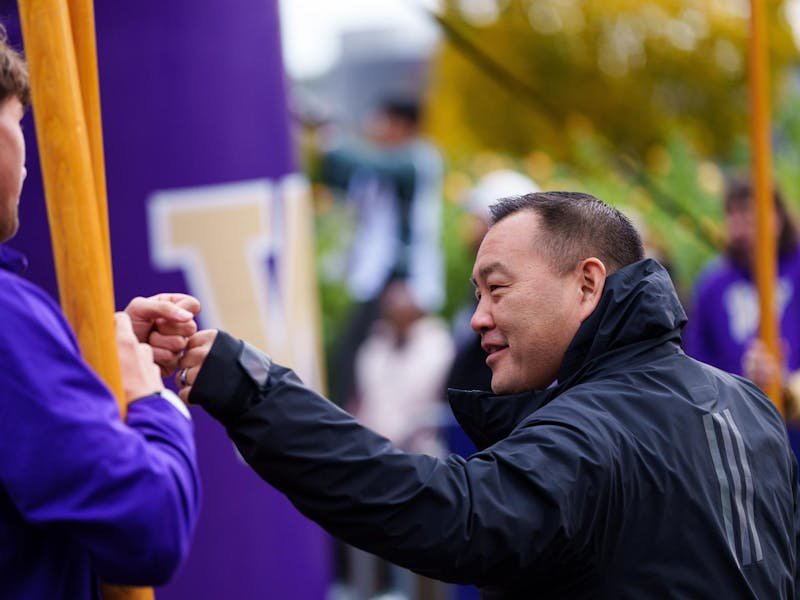
Washington’s $46.7 Million Big Ten Payout Signals New Era of College Sports Revenue Power
The University of Washington’s first full distribution from the Big Ten highlights how conference realignment is reshaping financial flows in U.S. college athletics.
The system governing college athletics revenue distribution in the United States is undergoing a structural shift as major conferences expand, renegotiate media contracts, and redistribute earnings at unprecedented scale.
At the center of this shift is the Big Ten Conference, which has delivered a record $46.7 million payout to the University of Washington following its integration into the league.
What is confirmed is that the payout represents one of the earliest large-scale financial distributions to Washington since its move from the Pac-12 Conference to the Big Ten.
The figure reflects revenue generated primarily through the conference’s media rights agreements, which have expanded significantly in value due to national broadcasting deals and the inclusion of new member schools.
The mechanism behind the payment is straightforward but consequential.
The Big Ten pools revenue from television contracts, championship events, sponsorships, and postseason earnings, then distributes it among member institutions according to a formula that balances equal sharing with performance-based and transitional adjustments.
As new members join, their integration alters both the total revenue pool and how it is allocated across schools.
Washington’s inclusion in the Big Ten marks part of a broader realignment across U.S. college sports, where traditional geographic conferences have been reshaped by media economics.
The move was driven largely by access to higher guaranteed revenue streams and more stable long-term financial planning compared to the collapsing Pac-12 structure, which lost multiple major members and failed to secure comparable media contracts.
The scale of the payout matters because it illustrates the widening financial gap between major power conferences and smaller athletic programs.
Institutions in the Big Ten and similar conferences now operate with revenues that rival professional sports organizations, enabling increased spending on facilities, coaching staff, athlete support systems, and recruitment infrastructure.
This has accelerated competitive imbalance across college athletics.
For Washington, the funds provide immediate budget stabilization and long-term investment capacity.
The university’s athletic department is now positioned within a revenue ecosystem that prioritizes national media exposure and sustained conference profitability over regional alignment.
That shift affects scheduling, travel demands, and competitive dynamics, as teams now routinely travel across multiple time zones for conference play.
The broader consequence is a redefinition of college sports as a media-driven financial system rather than a geographically organized competition structure.
Conference membership is increasingly determined by broadcast value and market reach rather than regional identity, and Washington’s payout is a direct financial expression of that transition.
The latest distribution confirms that the Big Ten’s expanded model is already operational at full scale, with incoming members receiving substantial revenue shares as the conference consolidates its position as one of the most financially powerful organizations in American sports.
At the center of this shift is the Big Ten Conference, which has delivered a record $46.7 million payout to the University of Washington following its integration into the league.
What is confirmed is that the payout represents one of the earliest large-scale financial distributions to Washington since its move from the Pac-12 Conference to the Big Ten.
The figure reflects revenue generated primarily through the conference’s media rights agreements, which have expanded significantly in value due to national broadcasting deals and the inclusion of new member schools.
The mechanism behind the payment is straightforward but consequential.
The Big Ten pools revenue from television contracts, championship events, sponsorships, and postseason earnings, then distributes it among member institutions according to a formula that balances equal sharing with performance-based and transitional adjustments.
As new members join, their integration alters both the total revenue pool and how it is allocated across schools.
Washington’s inclusion in the Big Ten marks part of a broader realignment across U.S. college sports, where traditional geographic conferences have been reshaped by media economics.
The move was driven largely by access to higher guaranteed revenue streams and more stable long-term financial planning compared to the collapsing Pac-12 structure, which lost multiple major members and failed to secure comparable media contracts.
The scale of the payout matters because it illustrates the widening financial gap between major power conferences and smaller athletic programs.
Institutions in the Big Ten and similar conferences now operate with revenues that rival professional sports organizations, enabling increased spending on facilities, coaching staff, athlete support systems, and recruitment infrastructure.
This has accelerated competitive imbalance across college athletics.
For Washington, the funds provide immediate budget stabilization and long-term investment capacity.
The university’s athletic department is now positioned within a revenue ecosystem that prioritizes national media exposure and sustained conference profitability over regional alignment.
That shift affects scheduling, travel demands, and competitive dynamics, as teams now routinely travel across multiple time zones for conference play.
The broader consequence is a redefinition of college sports as a media-driven financial system rather than a geographically organized competition structure.
Conference membership is increasingly determined by broadcast value and market reach rather than regional identity, and Washington’s payout is a direct financial expression of that transition.
The latest distribution confirms that the Big Ten’s expanded model is already operational at full scale, with incoming members receiving substantial revenue shares as the conference consolidates its position as one of the most financially powerful organizations in American sports.