White HouseSenateThe HouseSupreme CourtFederal ReserveDOJState DepartmentTreasuryCensusBudget OfficeTrade Representative
WashingTone
Informed by Washington, Defined by Insight
Sunday, May 17, 2026
WashingTone

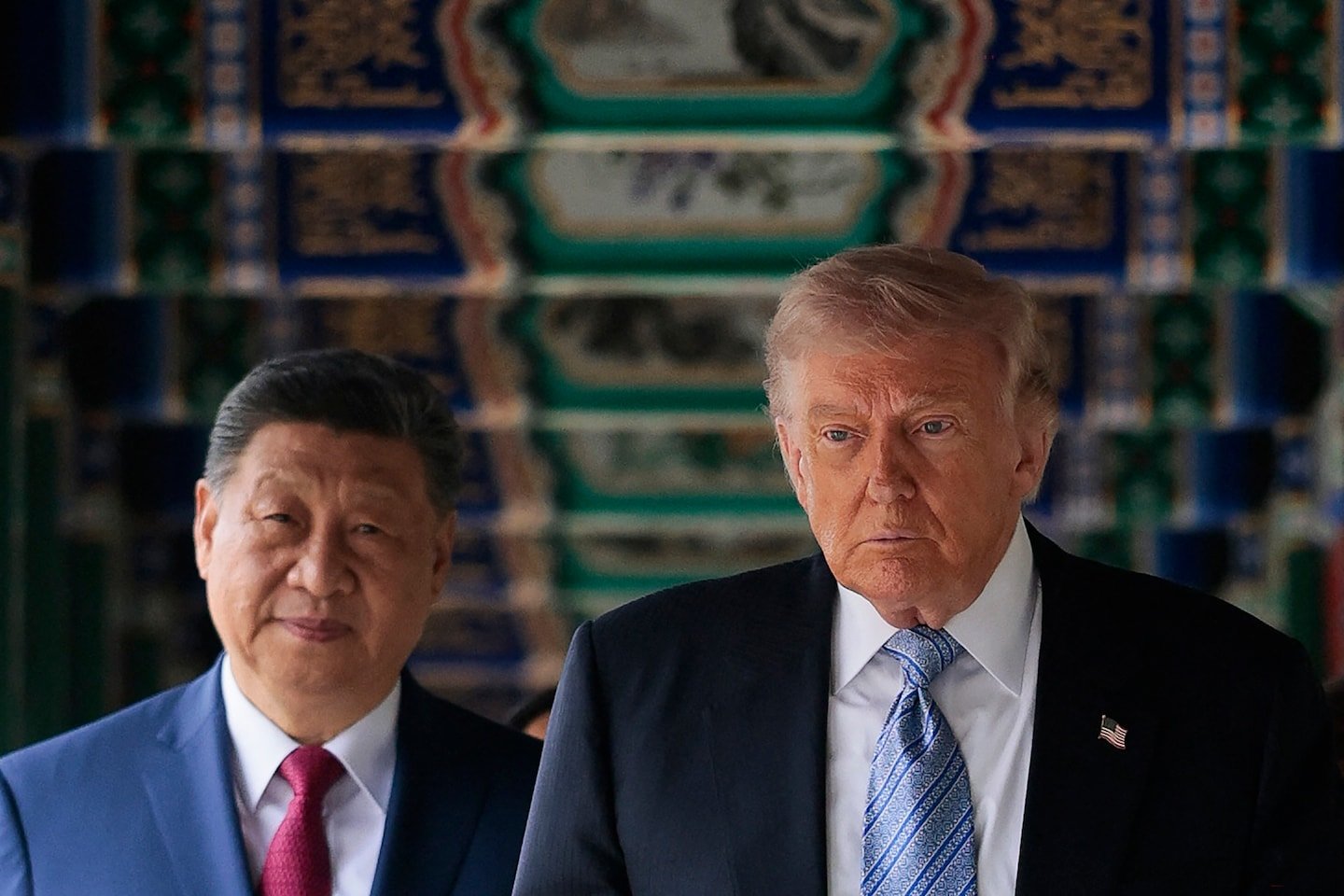
Trump’s China Summit Exposes Strains After a Difficult Year in Office
High-stakes talks with Beijing highlight the economic and geopolitical pressures shaping U.S.–China relations and the domestic constraints facing the Trump administration.
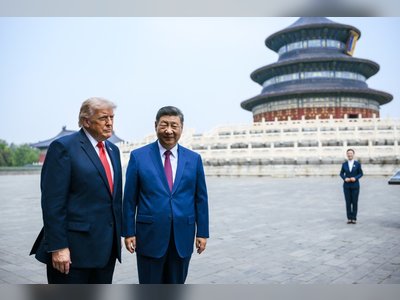
The system governing United States–China relations is under renewed stress as President Donald Trump’s latest summit with Chinese leadership exposes the accumulated economic, diplomatic, and strategic pressures of a difficult year in office.
The meeting, framed as an effort to stabilize relations between the world’s two largest economies, instead underscored the limits of rapid deal-making in an environment defined by trade friction, technology competition, and geopolitical mistrust.
What is confirmed is that the summit focused on trade imbalances, tariff structures, technology restrictions, and supply chain security.
These issues have defined the bilateral relationship for years, but they have become more acute amid slowing global growth and heightened domestic political scrutiny in both countries.
The talks were structured around attempts to prevent further escalation in tariffs and export controls while preserving access to critical markets.
The key issue driving the encounter is structural economic competition.
The United States has maintained pressure on China through tariffs and restrictions on advanced semiconductor exports, while China has responded with targeted trade measures and efforts to reduce dependence on American technology and financial systems.
The result is a partially decoupled economic relationship in which both sides remain interconnected but increasingly cautious.
The summit also reflects domestic political constraints facing the Trump administration.
Economic performance, inflation concerns, and manufacturing employment have placed pressure on the White House to demonstrate tangible gains from its China policy.
At the same time, any concessions risk criticism from domestic industries that have benefited from protectionist measures and strategic decoupling efforts.
On the Chinese side, leadership is managing slower domestic growth, property sector instability, and export dependency challenges.
These conditions make full disengagement from the United States economically costly, even as strategic priorities push toward greater self-reliance in key technologies such as artificial intelligence, semiconductors, and advanced manufacturing.
The negotiations highlight how trade policy has evolved beyond tariff schedules into a broader contest over technological standards, data governance, and industrial policy.
Export controls on chips and restrictions on investment flows have become central tools of statecraft, turning what was once a trade dispute into a long-term strategic competition.
The outcome of the summit did not resolve these underlying tensions but instead reaffirmed the current equilibrium: managed rivalry with periodic negotiations aimed at preventing escalation rather than achieving comprehensive settlement.
Both sides continue to signal willingness to talk while maintaining the tools of economic pressure.
The broader implication is that U.S.–China relations have entered a sustained phase of constrained engagement, where high-level meetings serve more to stabilize expectations than to produce sweeping agreements, and where economic interdependence is increasingly shaped by strategic rivalry rather than integration.
The meeting, framed as an effort to stabilize relations between the world’s two largest economies, instead underscored the limits of rapid deal-making in an environment defined by trade friction, technology competition, and geopolitical mistrust.
What is confirmed is that the summit focused on trade imbalances, tariff structures, technology restrictions, and supply chain security.
These issues have defined the bilateral relationship for years, but they have become more acute amid slowing global growth and heightened domestic political scrutiny in both countries.
The talks were structured around attempts to prevent further escalation in tariffs and export controls while preserving access to critical markets.
The key issue driving the encounter is structural economic competition.
The United States has maintained pressure on China through tariffs and restrictions on advanced semiconductor exports, while China has responded with targeted trade measures and efforts to reduce dependence on American technology and financial systems.
The result is a partially decoupled economic relationship in which both sides remain interconnected but increasingly cautious.
The summit also reflects domestic political constraints facing the Trump administration.
Economic performance, inflation concerns, and manufacturing employment have placed pressure on the White House to demonstrate tangible gains from its China policy.
At the same time, any concessions risk criticism from domestic industries that have benefited from protectionist measures and strategic decoupling efforts.
On the Chinese side, leadership is managing slower domestic growth, property sector instability, and export dependency challenges.
These conditions make full disengagement from the United States economically costly, even as strategic priorities push toward greater self-reliance in key technologies such as artificial intelligence, semiconductors, and advanced manufacturing.
The negotiations highlight how trade policy has evolved beyond tariff schedules into a broader contest over technological standards, data governance, and industrial policy.
Export controls on chips and restrictions on investment flows have become central tools of statecraft, turning what was once a trade dispute into a long-term strategic competition.
The outcome of the summit did not resolve these underlying tensions but instead reaffirmed the current equilibrium: managed rivalry with periodic negotiations aimed at preventing escalation rather than achieving comprehensive settlement.
Both sides continue to signal willingness to talk while maintaining the tools of economic pressure.
The broader implication is that U.S.–China relations have entered a sustained phase of constrained engagement, where high-level meetings serve more to stabilize expectations than to produce sweeping agreements, and where economic interdependence is increasingly shaped by strategic rivalry rather than integration.