White HouseSenateThe HouseSupreme CourtFederal ReserveDOJState DepartmentTreasuryCensusBudget OfficeTrade Representative
WashingTone
Informed by Washington, Defined by Insight
Sunday, May 17, 2026
WashingTone

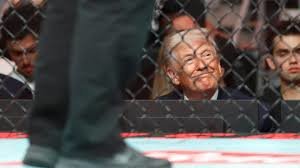
Trump Announces UFC Arena Plan at White House, Escalating Politics of Spectacle
Proposal to host a mixed martial arts venue on White House grounds raises questions over feasibility, security, and the expanding role of entertainment in presidential messaging
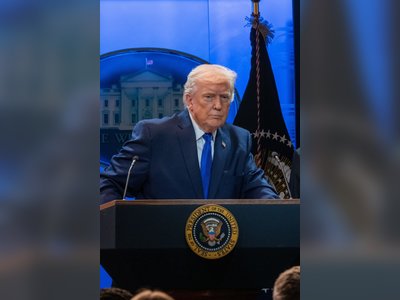
An actor-driven political announcement from President Donald Trump has placed an unconventional proposal at the center of Washington debate: the construction of a UFC arena at the White House, framed as a forthcoming project tied to mixed martial arts events and high-profile public programming on presidential grounds.
What is confirmed is that Trump publicly stated that construction on the proposed Ultimate Fighting Championship arena would begin shortly, describing it as a planned addition to the White House complex intended to host combat sports events.
The announcement positions the initiative not as a symbolic idea but as an imminent infrastructure project connected to one of the most visible sports brands in the United States.
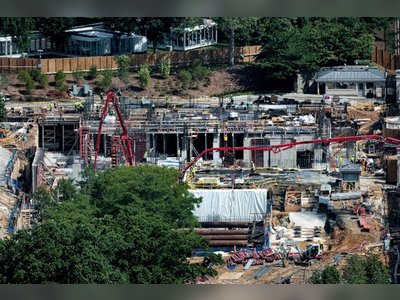
The White House is a heavily secured federal residence and working office, governed by strict architectural, historical, and security protections.
Any physical construction on its grounds typically requires coordination across multiple federal agencies, including those responsible for preservation, security clearance, and operational continuity.
No such procedural details have been made publicly available alongside the announcement, leaving the mechanism of approval and implementation unaddressed in the public record.
The UFC, or Ultimate Fighting Championship, is a global mixed martial arts organization that stages events in large arenas rather than governmental facilities.
Its production model depends on controlled commercial venues designed for ticketed audiences, broadcast infrastructure, and fighter logistics.
Adapting that structure to a presidential compound would require extensive redesign of both security protocols and physical space usage, raising immediate practical questions about feasibility and precedent.
The announcement fits a broader pattern in which political messaging increasingly intersects with entertainment branding, particularly in high-visibility executive communication.
It also highlights the expanding use of spectacle as a political tool, where proposals are presented in real time to shape media attention before institutional review or technical validation occurs.
From a governance perspective, the proposal intersects with longstanding norms separating the operational functions of the White House from commercial entertainment infrastructure.
Any attempt to integrate a combat sports venue into the site would likely trigger review processes across federal property law, security doctrine, and historical preservation standards, each of which has traditionally constrained physical alterations to the complex.
Reactions across political and policy circles have centered on two core issues: whether the proposal is intended as a literal construction plan or a symbolic announcement, and how such a project would be reconciled with the security and operational requirements of the presidency.
The absence of detailed implementation guidance has left those questions unresolved at the level of official planning discourse.
The immediate consequence of the announcement is not construction activity but political and institutional scrutiny over the boundaries of presidential messaging and the physical limits of the White House as both a residence and a symbol of federal authority.
The proposal has now entered public debate as a test case for how far entertainment-driven initiatives can extend into core government spaces.
The next stage of the story will be defined by whether formal federal agencies acknowledge or operationalize the plan, or whether it remains a political statement that reshapes expectations without producing physical change on the White House grounds.
What is confirmed is that Trump publicly stated that construction on the proposed Ultimate Fighting Championship arena would begin shortly, describing it as a planned addition to the White House complex intended to host combat sports events.
The announcement positions the initiative not as a symbolic idea but as an imminent infrastructure project connected to one of the most visible sports brands in the United States.
The White House is a heavily secured federal residence and working office, governed by strict architectural, historical, and security protections.
Any physical construction on its grounds typically requires coordination across multiple federal agencies, including those responsible for preservation, security clearance, and operational continuity.
No such procedural details have been made publicly available alongside the announcement, leaving the mechanism of approval and implementation unaddressed in the public record.
The UFC, or Ultimate Fighting Championship, is a global mixed martial arts organization that stages events in large arenas rather than governmental facilities.
Its production model depends on controlled commercial venues designed for ticketed audiences, broadcast infrastructure, and fighter logistics.
Adapting that structure to a presidential compound would require extensive redesign of both security protocols and physical space usage, raising immediate practical questions about feasibility and precedent.
The announcement fits a broader pattern in which political messaging increasingly intersects with entertainment branding, particularly in high-visibility executive communication.
It also highlights the expanding use of spectacle as a political tool, where proposals are presented in real time to shape media attention before institutional review or technical validation occurs.
From a governance perspective, the proposal intersects with longstanding norms separating the operational functions of the White House from commercial entertainment infrastructure.
Any attempt to integrate a combat sports venue into the site would likely trigger review processes across federal property law, security doctrine, and historical preservation standards, each of which has traditionally constrained physical alterations to the complex.
Reactions across political and policy circles have centered on two core issues: whether the proposal is intended as a literal construction plan or a symbolic announcement, and how such a project would be reconciled with the security and operational requirements of the presidency.
The absence of detailed implementation guidance has left those questions unresolved at the level of official planning discourse.
The immediate consequence of the announcement is not construction activity but political and institutional scrutiny over the boundaries of presidential messaging and the physical limits of the White House as both a residence and a symbol of federal authority.
The proposal has now entered public debate as a test case for how far entertainment-driven initiatives can extend into core government spaces.
The next stage of the story will be defined by whether formal federal agencies acknowledge or operationalize the plan, or whether it remains a political statement that reshapes expectations without producing physical change on the White House grounds.