White HouseSenateThe HouseSupreme CourtFederal ReserveDOJState DepartmentTreasuryCensusBudget OfficeTrade Representative
WashingTone
Informed by Washington, Defined by Insight
Sunday, May 17, 2026
WashingTone

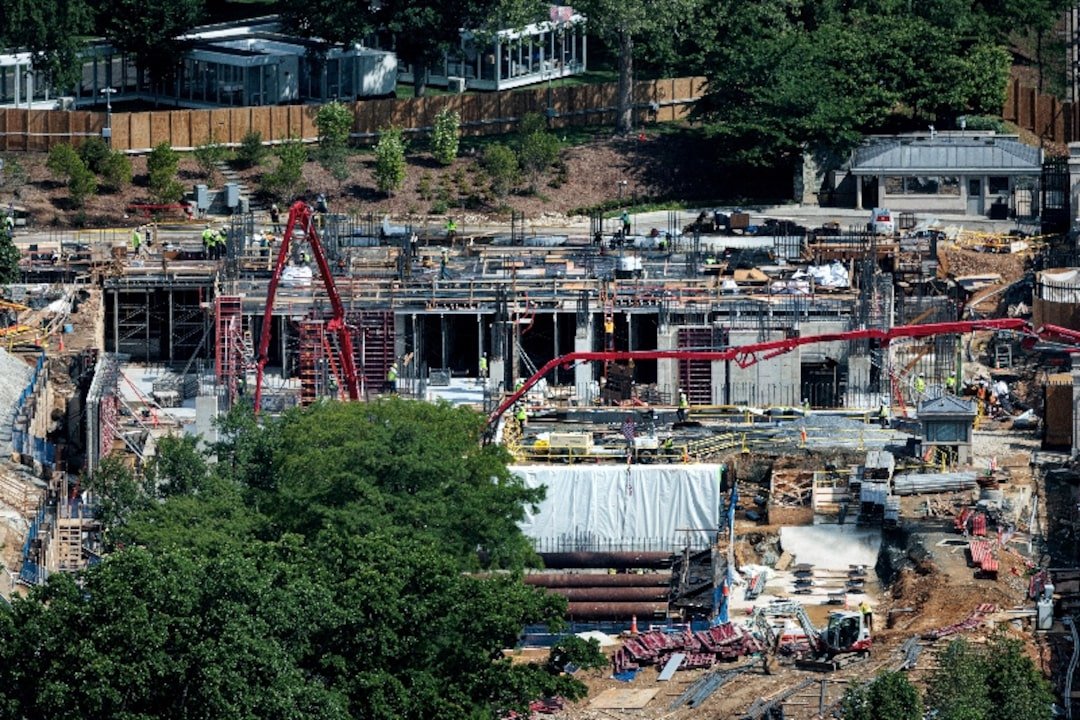
Trump Ballroom Plan Becomes Flashpoint in Debate Over Affordability Politics in Washington
Democrats seize on proposed White House ballroom project as inflation pressures persist, turning the renovation into a broader argument about economic priorities and voter frustration
ACTOR-DRIVEN political conflict over a proposed White House ballroom renovation has escalated into a broader dispute over affordability, public perception, and governing priorities as Democrats use the project to argue that President Donald Trump is out of step with household economic pressures.
The controversy centers on plans for a large formal event space described as a ballroom expansion associated with the White House complex.
What is confirmed is that the proposal has become a political symbol, with Democratic lawmakers framing it as an example of misplaced emphasis at a time when inflation remains elevated and household costs continue to strain voters across the United States.
Democratic leaders argue that the project highlights a disconnect between symbolic government spending and everyday economic realities.
Their messaging links the renovation to broader concerns about the cost of living, including food prices, housing costs, utilities, and transportation expenses, which remain elevated compared with pre-inflation baselines.
The argument is not about the architectural merits of the project itself but about timing and perception: critics say it signals prioritization of prestige infrastructure over immediate economic relief.
The White House, for its part, has defended the administration’s broader economic agenda, emphasizing efforts to stabilize prices and support growth.
Officials have pushed back on characterizations that the project reflects misplaced priorities, arguing that governance includes both long-term institutional planning and immediate economic management.
Supporters of the administration also note that major capital projects within federal facilities are typically planned over extended timelines and are not directly tied to short-term policy responses.
The political dispute is unfolding against a backdrop of persistent inflation pressures that have shaped public opinion.
Even as inflation has eased from earlier peaks, price levels remain significantly higher than in previous years, and wage gains have not fully offset increases in essential categories.
That gap has kept affordability at the center of voter concerns, particularly among working- and middle-income households.
The ballroom issue has therefore become a proxy for a larger political argument.
Democrats are attempting to frame Republicans as inattentive to cost-of-living realities, while Republicans argue that Democratic messaging exaggerates symbolic issues to distract from broader economic policy debates.
The result is a familiar Washington dynamic in which infrastructure projects, regardless of scale, become vessels for broader political messaging during periods of economic stress.
Analysts of political behavior note that affordability cycles tend to dominate electoral sentiment when inflation remains sticky, even if macroeconomic indicators show partial improvement.
In that environment, visible government projects—especially those tied to prestige or ceremonial function—can become politically sensitive, regardless of their fiscal size relative to the federal budget.
The ballroom debate now sits at the intersection of economic anxiety and political narrative.
As both parties sharpen their messaging heading into future electoral contests, the project has shifted from a facilities proposal into a test of how effectively each side can define competence, priorities, and empathy in an economy still shaped by the aftermath of high inflation.
The dispute is expected to continue as long as affordability remains the dominant issue in national political discourse, reinforcing the broader reality that symbolic infrastructure projects in Washington are increasingly judged not on design or utility, but on what they are perceived to say about who government is serving.
The controversy centers on plans for a large formal event space described as a ballroom expansion associated with the White House complex.
What is confirmed is that the proposal has become a political symbol, with Democratic lawmakers framing it as an example of misplaced emphasis at a time when inflation remains elevated and household costs continue to strain voters across the United States.
Democratic leaders argue that the project highlights a disconnect between symbolic government spending and everyday economic realities.
Their messaging links the renovation to broader concerns about the cost of living, including food prices, housing costs, utilities, and transportation expenses, which remain elevated compared with pre-inflation baselines.
The argument is not about the architectural merits of the project itself but about timing and perception: critics say it signals prioritization of prestige infrastructure over immediate economic relief.
The White House, for its part, has defended the administration’s broader economic agenda, emphasizing efforts to stabilize prices and support growth.
Officials have pushed back on characterizations that the project reflects misplaced priorities, arguing that governance includes both long-term institutional planning and immediate economic management.
Supporters of the administration also note that major capital projects within federal facilities are typically planned over extended timelines and are not directly tied to short-term policy responses.
The political dispute is unfolding against a backdrop of persistent inflation pressures that have shaped public opinion.
Even as inflation has eased from earlier peaks, price levels remain significantly higher than in previous years, and wage gains have not fully offset increases in essential categories.
That gap has kept affordability at the center of voter concerns, particularly among working- and middle-income households.
The ballroom issue has therefore become a proxy for a larger political argument.
Democrats are attempting to frame Republicans as inattentive to cost-of-living realities, while Republicans argue that Democratic messaging exaggerates symbolic issues to distract from broader economic policy debates.
The result is a familiar Washington dynamic in which infrastructure projects, regardless of scale, become vessels for broader political messaging during periods of economic stress.
Analysts of political behavior note that affordability cycles tend to dominate electoral sentiment when inflation remains sticky, even if macroeconomic indicators show partial improvement.
In that environment, visible government projects—especially those tied to prestige or ceremonial function—can become politically sensitive, regardless of their fiscal size relative to the federal budget.
The ballroom debate now sits at the intersection of economic anxiety and political narrative.
As both parties sharpen their messaging heading into future electoral contests, the project has shifted from a facilities proposal into a test of how effectively each side can define competence, priorities, and empathy in an economy still shaped by the aftermath of high inflation.
The dispute is expected to continue as long as affordability remains the dominant issue in national political discourse, reinforcing the broader reality that symbolic infrastructure projects in Washington are increasingly judged not on design or utility, but on what they are perceived to say about who government is serving.