White HouseSenateThe HouseSupreme CourtFederal ReserveDOJState DepartmentTreasuryCensusBudget OfficeTrade Representative
WashingTone
Informed by Washington, Defined by Insight
Sunday, May 17, 2026
WashingTone

U.S. and Nigerian Forces Kill Senior ISIS Leader in Lake Chad Basin Operation
Joint strike eliminates Abu-Bilal al-Minuki, described by officials as ISIS’s global second-in-command, in a coordinated counterterrorism mission in Nigeria
A joint U.S. and Nigerian counterterrorism operation has killed Abu-Bilal al-Minuki, a senior Islamic State leader described by U.S. officials as the group’s global second-in-command, in a strike carried out in Nigeria’s Lake Chad Basin.
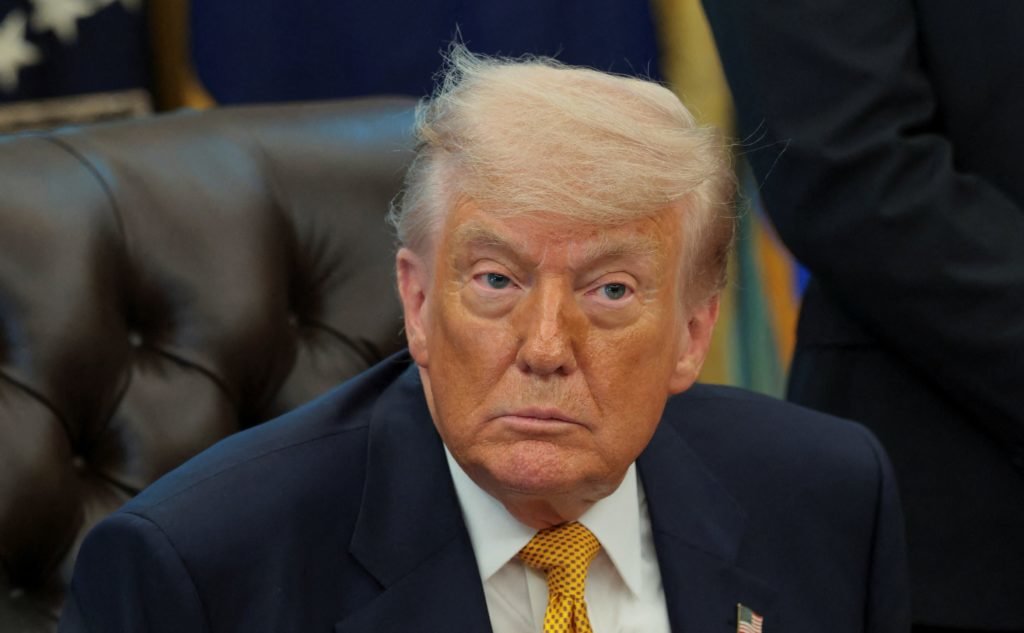
The operation was confirmed by President Donald Trump, who said the mission targeted a fortified militant compound and was executed in close coordination with Nigerian forces.
What is confirmed is that the strike took place in Nigeria’s northeastern Borno State, a long-running stronghold of Islamist insurgent activity linked to Islamic State West Africa Province and Boko Haram splinter networks.
Officials say al-Minuki was killed alongside several of his lieutenants during a precision operation involving U.S. intelligence support and Nigerian military forces.
No casualties among U.S. personnel were reported.
Al-Minuki, also known by variant names including Abu-Bilal al-Minuki and Abu-Bakr al-Minuki in different official accounts, was previously sanctioned by the United States in 2023 as a designated global terrorist.
Security officials described him as a key figure in ISIS operations across the Sahel and West Africa, with responsibilities spanning logistics, financing, propaganda coordination, and operational planning.
Some intelligence assessments also linked him to efforts to coordinate activity between regional ISIS affiliates.
The strike reflects an expanded pattern of U.S. counterterrorism activity in West Africa, where Islamic State-linked groups have entrenched themselves in fragmented conflict zones across Nigeria, Niger, Chad, and Cameroon.
The Lake Chad Basin in particular has become a persistent operational hub for insurgent groups, who exploit difficult terrain and weak state presence to move fighters, weapons, and supplies.
The operation also underscores a renewed phase of U.S.–Nigeria security cooperation after a period of strained relations.
Military coordination had reportedly intensified through intelligence sharing and limited U.S. force deployment in the region, aimed at supporting Nigerian-led counterinsurgency operations against IS-affiliated militants.
U.S. officials have characterized the killing as a significant disruption to ISIS’s command structure in Africa, though militant networks in the region have historically shown the ability to regenerate leadership after high-profile losses.
Nigerian authorities have similarly described the mission as a major operational success in ongoing efforts to contain insurgent violence in the country’s northeast.
The announcement comes amid broader concerns about the expansion of ISIS-linked activity across sub-Saharan Africa, where the group’s influence has increasingly shifted following territorial losses in the Middle East.
In this context, the elimination of a senior commander is expected to shape near-term operational planning for both U.S. and Nigerian security forces in the region, reinforcing continued military pressure on insurgent networks in the Lake Chad Basin.
The operation was confirmed by President Donald Trump, who said the mission targeted a fortified militant compound and was executed in close coordination with Nigerian forces.
What is confirmed is that the strike took place in Nigeria’s northeastern Borno State, a long-running stronghold of Islamist insurgent activity linked to Islamic State West Africa Province and Boko Haram splinter networks.
Officials say al-Minuki was killed alongside several of his lieutenants during a precision operation involving U.S. intelligence support and Nigerian military forces.
No casualties among U.S. personnel were reported.
Al-Minuki, also known by variant names including Abu-Bilal al-Minuki and Abu-Bakr al-Minuki in different official accounts, was previously sanctioned by the United States in 2023 as a designated global terrorist.
Security officials described him as a key figure in ISIS operations across the Sahel and West Africa, with responsibilities spanning logistics, financing, propaganda coordination, and operational planning.
Some intelligence assessments also linked him to efforts to coordinate activity between regional ISIS affiliates.
The strike reflects an expanded pattern of U.S. counterterrorism activity in West Africa, where Islamic State-linked groups have entrenched themselves in fragmented conflict zones across Nigeria, Niger, Chad, and Cameroon.
The Lake Chad Basin in particular has become a persistent operational hub for insurgent groups, who exploit difficult terrain and weak state presence to move fighters, weapons, and supplies.
The operation also underscores a renewed phase of U.S.–Nigeria security cooperation after a period of strained relations.
Military coordination had reportedly intensified through intelligence sharing and limited U.S. force deployment in the region, aimed at supporting Nigerian-led counterinsurgency operations against IS-affiliated militants.
U.S. officials have characterized the killing as a significant disruption to ISIS’s command structure in Africa, though militant networks in the region have historically shown the ability to regenerate leadership after high-profile losses.
Nigerian authorities have similarly described the mission as a major operational success in ongoing efforts to contain insurgent violence in the country’s northeast.
The announcement comes amid broader concerns about the expansion of ISIS-linked activity across sub-Saharan Africa, where the group’s influence has increasingly shifted following territorial losses in the Middle East.
In this context, the elimination of a senior commander is expected to shape near-term operational planning for both U.S. and Nigerian security forces in the region, reinforcing continued military pressure on insurgent networks in the Lake Chad Basin.