White HouseSenateThe HouseSupreme CourtFederal ReserveDOJState DepartmentTreasuryCensusBudget OfficeTrade Representative
WashingTone
Informed by Washington, Defined by Insight
Thursday, May 07, 2026
WashingTone

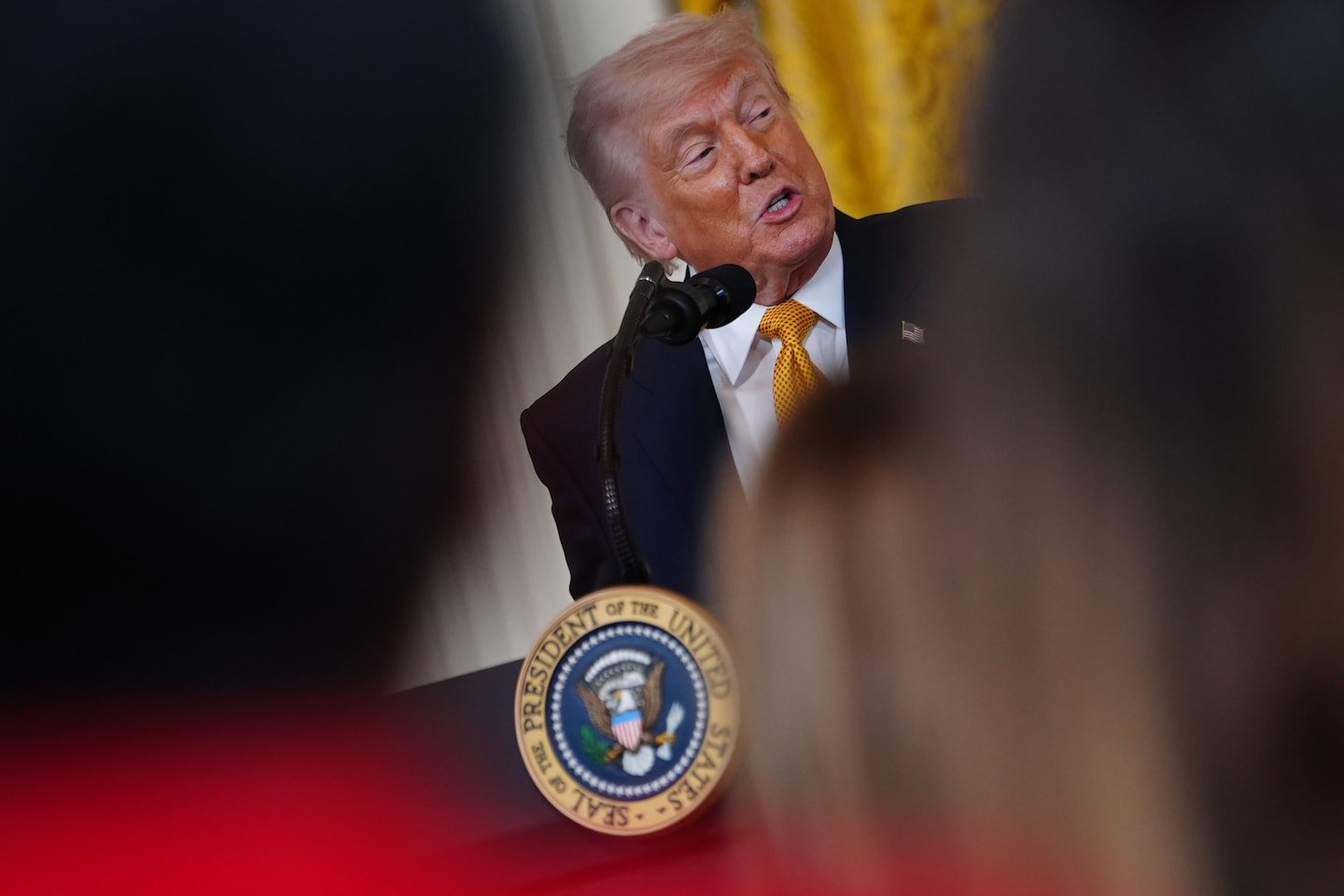
Trump Escalates Iran Standoff, Threatens Intensified Bombing If Deal Fails
U.S. president links end of military campaign to Iranian acceptance of a draft peace framework, while signaling a rapid return to airstrikes if talks collapse
The United States’ evolving military and diplomatic pressure campaign toward Iran is being driven by an executive-level strategy that ties active warfare to the outcome of rapid, indirect negotiations, with President Donald Trump explicitly warning that failure to reach a deal would trigger a return to intensified bombing operations.
What is confirmed is that Trump stated Iran must accept a proposed peace framework or face renewed U.S. airstrikes described as significantly more intense than previous operations.
The statement came as Washington and Tehran continue indirect negotiations mediated through third countries, with discussions reportedly focusing on a broader ceasefire arrangement, nuclear restrictions, sanctions relief, and the status of maritime access through the Strait of Hormuz.
The core of the emerging proposal appears to be a short-form political and security memorandum that would freeze key aspects of Iran’s nuclear program, ease economic sanctions, and reopen critical shipping lanes.
In exchange, the United States would halt ongoing military operations and associated maritime pressure measures that have affected regional shipping routes and global energy markets.
These elements are still being negotiated in parallel channels, and no finalized agreement has been confirmed.
Trump’s latest public warning made clear that the deal is conditional and time-sensitive.
He stated that if Iran complies with what he described as already agreed terms, military operations would end.
If Iran does not comply, he said bombing would resume at a higher level of intensity than previously seen in the current campaign.
The language signals a deliberate policy of escalation leverage, where military force is used to accelerate diplomatic acceptance rather than replace negotiations entirely.
The broader context is a conflict environment in which both military pressure and diplomatic engagement are operating simultaneously.
U.S. actions in the region have included maritime enforcement measures around the Strait of Hormuz and limited military operations tied to regional security concerns.
These moves have coincided with intermittent indirect talks involving regional intermediaries, reflecting an attempt to construct a negotiated exit while maintaining coercive leverage.
Financial markets have responded sharply to signals of possible de-escalation, particularly in energy trading, where expectations of a deal have led to volatility in global oil prices.
This reflects the strategic importance of the Strait of Hormuz, through which a significant share of global petroleum shipments flows, making any shift in its operational status immediately consequential for energy supply chains.
Iranian officials have not publicly accepted the proposed terms in full, and longstanding disputes remain over nuclear enrichment limits, sanctions relief mechanisms, and security guarantees.
These gaps continue to define the risk that talks could collapse back into sustained military escalation.
The current trajectory places both countries in a narrow negotiation window where diplomatic progress is being measured against the credible threat of renewed strikes, with the outcome likely to determine whether the confrontation shifts toward a structured agreement or escalates into a broader regional military campaign.
What is confirmed is that Trump stated Iran must accept a proposed peace framework or face renewed U.S. airstrikes described as significantly more intense than previous operations.
The statement came as Washington and Tehran continue indirect negotiations mediated through third countries, with discussions reportedly focusing on a broader ceasefire arrangement, nuclear restrictions, sanctions relief, and the status of maritime access through the Strait of Hormuz.
The core of the emerging proposal appears to be a short-form political and security memorandum that would freeze key aspects of Iran’s nuclear program, ease economic sanctions, and reopen critical shipping lanes.
In exchange, the United States would halt ongoing military operations and associated maritime pressure measures that have affected regional shipping routes and global energy markets.
These elements are still being negotiated in parallel channels, and no finalized agreement has been confirmed.
Trump’s latest public warning made clear that the deal is conditional and time-sensitive.
He stated that if Iran complies with what he described as already agreed terms, military operations would end.
If Iran does not comply, he said bombing would resume at a higher level of intensity than previously seen in the current campaign.
The language signals a deliberate policy of escalation leverage, where military force is used to accelerate diplomatic acceptance rather than replace negotiations entirely.
The broader context is a conflict environment in which both military pressure and diplomatic engagement are operating simultaneously.
U.S. actions in the region have included maritime enforcement measures around the Strait of Hormuz and limited military operations tied to regional security concerns.
These moves have coincided with intermittent indirect talks involving regional intermediaries, reflecting an attempt to construct a negotiated exit while maintaining coercive leverage.
Financial markets have responded sharply to signals of possible de-escalation, particularly in energy trading, where expectations of a deal have led to volatility in global oil prices.
This reflects the strategic importance of the Strait of Hormuz, through which a significant share of global petroleum shipments flows, making any shift in its operational status immediately consequential for energy supply chains.
Iranian officials have not publicly accepted the proposed terms in full, and longstanding disputes remain over nuclear enrichment limits, sanctions relief mechanisms, and security guarantees.
These gaps continue to define the risk that talks could collapse back into sustained military escalation.
The current trajectory places both countries in a narrow negotiation window where diplomatic progress is being measured against the credible threat of renewed strikes, with the outcome likely to determine whether the confrontation shifts toward a structured agreement or escalates into a broader regional military campaign.