White HouseSenateThe HouseSupreme CourtFederal ReserveDOJState DepartmentTreasuryCensusBudget OfficeTrade Representative
WashingTone
Informed by Washington, Defined by Insight
Saturday, May 16, 2026
WashingTone

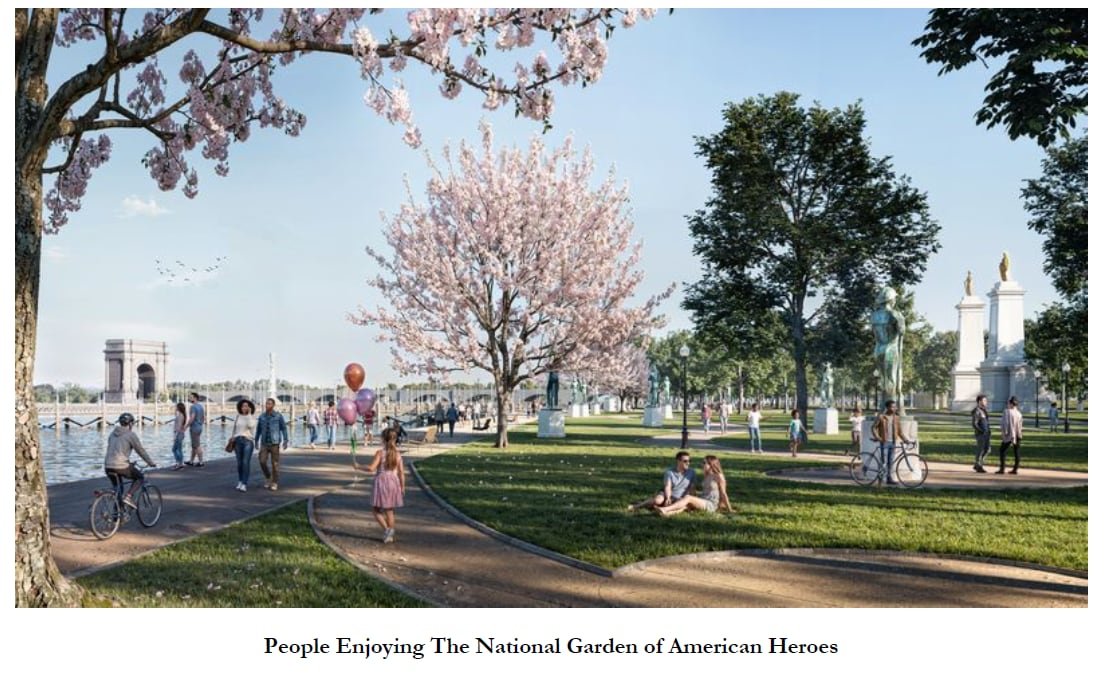
Trump Announces Planned Washington Sculpture Garden Project, Raising Questions Over Land Use and Federal Approval
The proposal outlines a large public art space in Washington, D.C., but key details on funding, site control, and regulatory approval remain central to its viability.
ACTOR-DRIVEN — the story is driven by Donald Trump’s announcement of a proposed large-scale sculpture garden in Washington, D.C., and the institutional and regulatory processes required to determine whether it can be built.
Donald Trump has announced plans for a major sculpture garden in Washington, D.C., describing it as a large public cultural space intended to showcase statues and artistic installations.
The proposal adds a new layer to ongoing debates over how public land in the United States capital is used, who controls it, and how cultural projects are approved and funded.
What is confirmed is that Trump has publicly stated an intention to develop the site as a sculpture garden and presented it as a long-term cultural project.
The announcement positions the initiative as a prominent addition to the capital’s public landscape, potentially involving large-scale installations and curated works intended for public viewing.
The key issue now is not the concept itself but the mechanism required to make it real.
Any major construction or redevelopment in Washington, D.C. typically involves multiple layers of approval, including federal land oversight, local zoning review, and coordination with agencies responsible for national parklands and public memorial spaces.
The feasibility of the project depends on how these institutional processes are navigated.
Financial structure is another unresolved component.
No detailed funding plan has been publicly established for the sculpture garden, leaving open whether it would rely on private funding, philanthropic contributions, or a mixed model involving public resources.
In large-scale cultural infrastructure projects, funding clarity is often a determining factor in whether proposals advance beyond announcement stage.
The announcement also carries political and symbolic implications.
Public art installations in Washington are not neutral infrastructure; they often become contested representations of national identity, historical memory, and political influence.
Any large sculpture project associated with a political figure is likely to face scrutiny over curation, permanence, and messaging.
From a governance perspective, the proposal enters a city with strict oversight mechanisms for federal and civic land use.
Washington’s built environment is shaped by overlapping authority structures, meaning that even high-profile proposals must pass procedural review rather than relying on political endorsement alone.
If pursued, the project would add to a broader pattern in which political figures seek to shape physical cultural legacy through public monuments and curated spaces.
These projects tend to outlast administrations and become embedded in long-term debates about representation and historical narrative.
The immediate consequence of the announcement is the initiation of early-stage scrutiny over site selection, regulatory pathways, and institutional approval.
The project now exists within a formal environment where design ambition must align with legal, financial, and administrative constraints governing public space in the U.S. capital.
Donald Trump has announced plans for a major sculpture garden in Washington, D.C., describing it as a large public cultural space intended to showcase statues and artistic installations.
The proposal adds a new layer to ongoing debates over how public land in the United States capital is used, who controls it, and how cultural projects are approved and funded.
What is confirmed is that Trump has publicly stated an intention to develop the site as a sculpture garden and presented it as a long-term cultural project.
The announcement positions the initiative as a prominent addition to the capital’s public landscape, potentially involving large-scale installations and curated works intended for public viewing.
The key issue now is not the concept itself but the mechanism required to make it real.
Any major construction or redevelopment in Washington, D.C. typically involves multiple layers of approval, including federal land oversight, local zoning review, and coordination with agencies responsible for national parklands and public memorial spaces.
The feasibility of the project depends on how these institutional processes are navigated.
Financial structure is another unresolved component.
No detailed funding plan has been publicly established for the sculpture garden, leaving open whether it would rely on private funding, philanthropic contributions, or a mixed model involving public resources.
In large-scale cultural infrastructure projects, funding clarity is often a determining factor in whether proposals advance beyond announcement stage.
The announcement also carries political and symbolic implications.
Public art installations in Washington are not neutral infrastructure; they often become contested representations of national identity, historical memory, and political influence.
Any large sculpture project associated with a political figure is likely to face scrutiny over curation, permanence, and messaging.
From a governance perspective, the proposal enters a city with strict oversight mechanisms for federal and civic land use.
Washington’s built environment is shaped by overlapping authority structures, meaning that even high-profile proposals must pass procedural review rather than relying on political endorsement alone.
If pursued, the project would add to a broader pattern in which political figures seek to shape physical cultural legacy through public monuments and curated spaces.
These projects tend to outlast administrations and become embedded in long-term debates about representation and historical narrative.
The immediate consequence of the announcement is the initiation of early-stage scrutiny over site selection, regulatory pathways, and institutional approval.
The project now exists within a formal environment where design ambition must align with legal, financial, and administrative constraints governing public space in the U.S. capital.