White HouseSenateThe HouseSupreme CourtFederal ReserveDOJState DepartmentTreasuryCensusBudget OfficeTrade Representative
WashingTone
Informed by Washington, Defined by Insight
Saturday, May 16, 2026
WashingTone

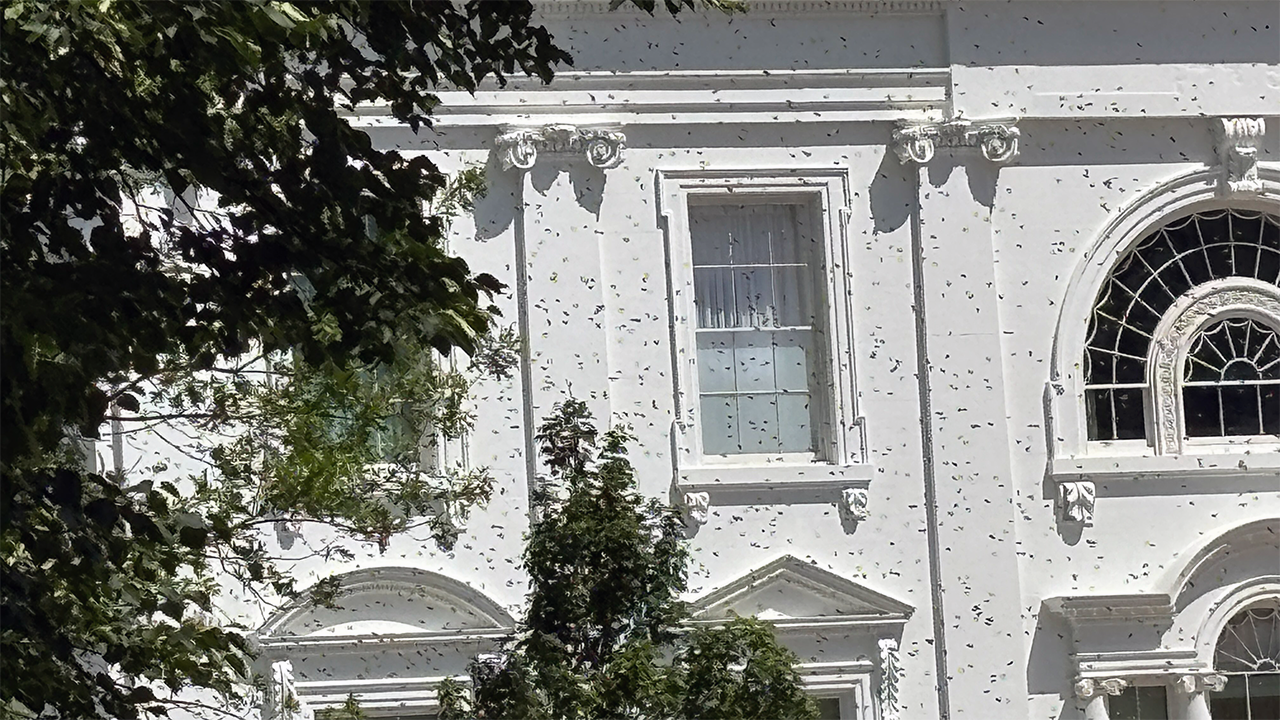
Bee Swarm at White House North Lawn Disrupts Executive Residence Grounds
Thousands of bees briefly gathered at the White House complex, prompting an unusual on-site response and raising questions about urban wildlife behavior in high-security federal spaces.
EVENT-DRIVEN — the story is driven by an unexpected natural incident in which a large swarm of bees gathered on the North Lawn of the White House, temporarily disrupting activity at one of the most secure government sites in the United States.
A swarm of bees numbering in the thousands appeared on the North Lawn of the White House, creating an unusual but contained disruption at the executive mansion in Washington, D.C. The incident drew attention from staff and security personnel, who manage both routine operations and environmental contingencies within the heavily secured federal complex.
What is confirmed is that the bees formed a dense cluster in a visible outdoor area of the White House grounds, prompting immediate attention from personnel responsible for maintenance and environmental safety.
The swarm did not enter indoor facilities and was managed without reports of structural disruption or broader operational impact on executive functions.
Bee swarming is a natural reproductive behavior in which a colony temporarily leaves its original hive to establish a new one.
During this process, large numbers of bees gather around a queen in a compact formation, often resting on trees, walls, or other structures while scout bees search for a suitable permanent location.
In urban environments, swarms can appear suddenly and are typically transient.
The presence of a swarm in a high-profile government location highlights the intersection between urban ecology and critical infrastructure.
Washington, D.C. contains extensive green spaces, gardens, and tree cover, which support pollinator populations even within dense administrative districts.
While generally harmless when undisturbed, swarms can create logistical challenges in sensitive or high-security areas.
The key issue in such incidents is not danger but management.
Bee swarms are usually non-aggressive during transit phases because they lack a defended hive.
However, their presence in public or operational spaces requires careful handling to ensure safety for staff and the insects themselves.
Standard procedure in many urban settings involves relocation by trained specialists rather than extermination.
At the White House complex, environmental events such as bird activity, seasonal insect movements, and wildlife incursions are managed within broader groundskeeping and security protocols.
The North Lawn, a visible and frequently used outdoor area, is particularly sensitive due to its proximity to press events, official movements, and public visibility.
The broader implication is a reminder that even highly controlled political and security environments remain embedded in natural ecosystems.
Urban pollinator activity, including bees, is increasingly visible in major cities as environmental conditions and green infrastructure support their survival.
The immediate consequence of the incident was a temporary, localized disruption that was contained without escalation, and normal operations at the White House grounds continued following the removal or dispersal of the swarm.
A swarm of bees numbering in the thousands appeared on the North Lawn of the White House, creating an unusual but contained disruption at the executive mansion in Washington, D.C. The incident drew attention from staff and security personnel, who manage both routine operations and environmental contingencies within the heavily secured federal complex.
What is confirmed is that the bees formed a dense cluster in a visible outdoor area of the White House grounds, prompting immediate attention from personnel responsible for maintenance and environmental safety.
The swarm did not enter indoor facilities and was managed without reports of structural disruption or broader operational impact on executive functions.
Bee swarming is a natural reproductive behavior in which a colony temporarily leaves its original hive to establish a new one.
During this process, large numbers of bees gather around a queen in a compact formation, often resting on trees, walls, or other structures while scout bees search for a suitable permanent location.
In urban environments, swarms can appear suddenly and are typically transient.
The presence of a swarm in a high-profile government location highlights the intersection between urban ecology and critical infrastructure.
Washington, D.C. contains extensive green spaces, gardens, and tree cover, which support pollinator populations even within dense administrative districts.
While generally harmless when undisturbed, swarms can create logistical challenges in sensitive or high-security areas.
The key issue in such incidents is not danger but management.
Bee swarms are usually non-aggressive during transit phases because they lack a defended hive.
However, their presence in public or operational spaces requires careful handling to ensure safety for staff and the insects themselves.
Standard procedure in many urban settings involves relocation by trained specialists rather than extermination.
At the White House complex, environmental events such as bird activity, seasonal insect movements, and wildlife incursions are managed within broader groundskeeping and security protocols.
The North Lawn, a visible and frequently used outdoor area, is particularly sensitive due to its proximity to press events, official movements, and public visibility.
The broader implication is a reminder that even highly controlled political and security environments remain embedded in natural ecosystems.
Urban pollinator activity, including bees, is increasingly visible in major cities as environmental conditions and green infrastructure support their survival.
The immediate consequence of the incident was a temporary, localized disruption that was contained without escalation, and normal operations at the White House grounds continued following the removal or dispersal of the swarm.