White HouseSenateThe HouseSupreme CourtFederal ReserveDOJState DepartmentTreasuryCensusBudget OfficeTrade Representative
WashingTone
Informed by Washington, Defined by Insight
Friday, May 22, 2026
WashingTone

Trump-Allied Federal Commission Advances Controversial Triumphal Arch for Washington
A Trump-appointed arts panel has approved design plans for a 250-foot monument near Arlington National Cemetery, pushing forward a divisive project that now moves to the next federal review stage amid legal and political challenges
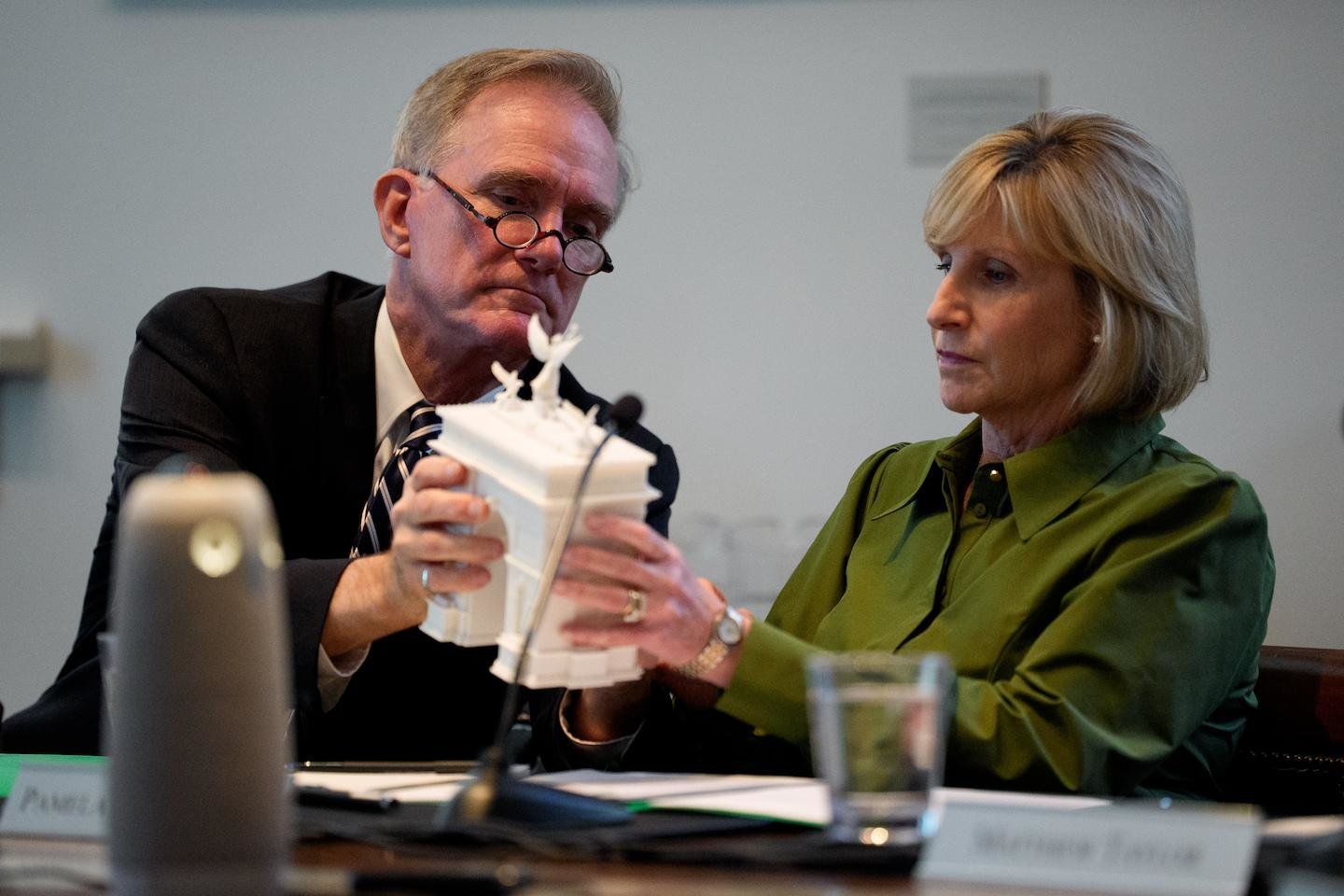
A federal design approval process has advanced a highly controversial plan to construct a 250-foot triumphal arch in Washington, D.C., after a commission composed largely of Trump-appointed officials voted to approve its design concept.
The decision moves the project closer to potential construction but does not yet constitute final authorization, with additional federal review still required.
The structure, envisioned as a monumental gateway near the Arlington Memorial Bridge on land managed by the National Park Service, is part of a broader effort to reshape key public spaces in the U.S. capital during preparations for the country’s 250th anniversary.
The arch would stand at roughly 250 feet, making it significantly taller than the nearby Lincoln Memorial and a major addition to the Washington skyline.
The design includes a towering central arch topped by a sculptural figure resembling a winged version of Lady Liberty holding a torch, flanked by gilded eagles and supported by additional ornamental elements at the base.
The proposal also includes inscriptions referencing national unity and constitutional ideals.
Earlier revisions to the design removed some elements, including a planned pedestrian tunnel and other structural features, but the core monumental concept remained unchanged.
The approval was issued by the U.S. Commission of Fine Arts, a federal body responsible for reviewing major architectural projects in the capital.
All commissioners were appointed during the Trump administration, a fact that has intensified scrutiny from critics who question the independence of the review process.
The vote clears the design for further consideration by the National Capital Planning Commission, which is expected to conduct its own review before any final construction decisions are made.
Supporters of the project argue that the arch would create a symbolic landmark comparable to historic triumphal structures in other global capitals and serve as a centerpiece for national anniversary celebrations.
Administration officials have framed it as part of a broader campaign to enhance Washington’s monumental character and reinforce patriotic themes in public architecture.
Opposition has been strong and sustained.
Preservation groups, historians, and veterans’ advocates have raised concerns that the structure would disrupt historic sightlines between key national memorials, particularly the visual corridor linking Arlington National Cemetery, the Lincoln Memorial, and surrounding landmarks.
Critics also argue that the scale and placement of the arch would overwhelm the existing commemorative landscape and alter the character of a nationally significant historic area.
Legal challenges are already underway, with plaintiffs arguing that the project may require explicit congressional authorization under federal law governing commemorative works in protected areas.
Those disputes focus on whether the executive branch has authority to proceed with construction on National Park Service land without legislative approval.
With design approval now secured from the fine arts commission, attention shifts to the next stage of federal review and the broader political and legal battle over whether the monument can proceed beyond the planning phase into construction.
The decision moves the project closer to potential construction but does not yet constitute final authorization, with additional federal review still required.
The structure, envisioned as a monumental gateway near the Arlington Memorial Bridge on land managed by the National Park Service, is part of a broader effort to reshape key public spaces in the U.S. capital during preparations for the country’s 250th anniversary.
The arch would stand at roughly 250 feet, making it significantly taller than the nearby Lincoln Memorial and a major addition to the Washington skyline.
The design includes a towering central arch topped by a sculptural figure resembling a winged version of Lady Liberty holding a torch, flanked by gilded eagles and supported by additional ornamental elements at the base.
The proposal also includes inscriptions referencing national unity and constitutional ideals.
Earlier revisions to the design removed some elements, including a planned pedestrian tunnel and other structural features, but the core monumental concept remained unchanged.
The approval was issued by the U.S. Commission of Fine Arts, a federal body responsible for reviewing major architectural projects in the capital.
All commissioners were appointed during the Trump administration, a fact that has intensified scrutiny from critics who question the independence of the review process.
The vote clears the design for further consideration by the National Capital Planning Commission, which is expected to conduct its own review before any final construction decisions are made.
Supporters of the project argue that the arch would create a symbolic landmark comparable to historic triumphal structures in other global capitals and serve as a centerpiece for national anniversary celebrations.
Administration officials have framed it as part of a broader campaign to enhance Washington’s monumental character and reinforce patriotic themes in public architecture.
Opposition has been strong and sustained.
Preservation groups, historians, and veterans’ advocates have raised concerns that the structure would disrupt historic sightlines between key national memorials, particularly the visual corridor linking Arlington National Cemetery, the Lincoln Memorial, and surrounding landmarks.
Critics also argue that the scale and placement of the arch would overwhelm the existing commemorative landscape and alter the character of a nationally significant historic area.
Legal challenges are already underway, with plaintiffs arguing that the project may require explicit congressional authorization under federal law governing commemorative works in protected areas.
Those disputes focus on whether the executive branch has authority to proceed with construction on National Park Service land without legislative approval.
With design approval now secured from the fine arts commission, attention shifts to the next stage of federal review and the broader political and legal battle over whether the monument can proceed beyond the planning phase into construction.