White HouseSenateThe HouseSupreme CourtFederal ReserveDOJState DepartmentTreasuryCensusBudget OfficeTrade Representative
WashingTone
Informed by Washington, Defined by Insight
Friday, May 22, 2026
WashingTone

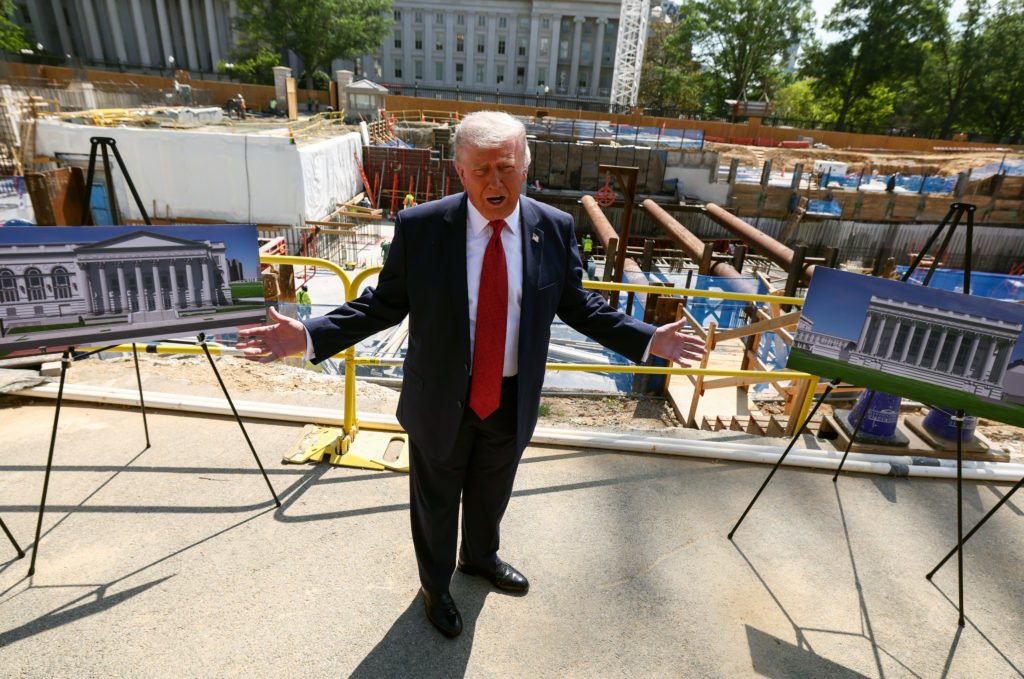
Congressional Pushback Grows Over $1 Billion White House Security and Ballroom Funding Plan
Republican lawmakers are reportedly reconsidering a controversial package that blends White House security upgrades with a large-scale construction project, forcing a likely rewrite in Congress
SYSTEM-DRIVEN budget negotiations in the United States Congress are increasingly uncertain over a proposed one billion dollar funding package tied to White House security upgrades and a separate construction component involving a planned ballroom project within the executive complex.
The proposal is understood to combine essential security investments for the White House—one of the most heavily protected government sites in the United States—with broader capital improvements that include a large ceremonial or event space expansion.
What is confirmed in general terms is that the federal government regularly allocates funds for White House maintenance, security reinforcement, and infrastructure modernization under congressional oversight.
The current controversy stems from the structure of the proposal itself.
Lawmakers are reportedly divided over whether national security funding should be packaged alongside high-profile construction projects that carry political and symbolic weight.
Critics argue that bundling the two creates unnecessary controversy around what is normally considered routine, bipartisan security spending.
Within Republican ranks, the reported shift toward abandoning or restructuring the plan reflects concerns about political exposure and legislative feasibility.
Security funding for federal facilities typically attracts cross-party support, but the inclusion of a major architectural addition has complicated consensus and increased scrutiny from both fiscal conservatives and opponents of executive-branch expansion projects.
The White House complex serves as both a residence and operational command center for the presidency, and it relies on continuous upgrades to counter evolving physical and cybersecurity threats.
Funding for such upgrades is usually treated as non-partisan, which makes the current debate unusual in that it links core security needs to discretionary construction priorities.
If lawmakers proceed with abandoning the current version of the proposal, the most likely outcome is a split approach.
Security-related expenditures would be reintroduced as a standalone measure, while any ballroom or large-scale construction element would be deferred, redesigned, or moved into a separate approval process.
This is a common legislative strategy when mixed-purpose bills face resistance.
The immediate effect of the dispute is delay in funding allocation and a broader reassessment of how executive-branch infrastructure projects are packaged for congressional approval.
The outcome will determine whether the White House receives a narrowly focused security upgrade bill or a revised package that removes construction elements to secure broader legislative support.
The proposal is understood to combine essential security investments for the White House—one of the most heavily protected government sites in the United States—with broader capital improvements that include a large ceremonial or event space expansion.
What is confirmed in general terms is that the federal government regularly allocates funds for White House maintenance, security reinforcement, and infrastructure modernization under congressional oversight.
The current controversy stems from the structure of the proposal itself.
Lawmakers are reportedly divided over whether national security funding should be packaged alongside high-profile construction projects that carry political and symbolic weight.
Critics argue that bundling the two creates unnecessary controversy around what is normally considered routine, bipartisan security spending.
Within Republican ranks, the reported shift toward abandoning or restructuring the plan reflects concerns about political exposure and legislative feasibility.
Security funding for federal facilities typically attracts cross-party support, but the inclusion of a major architectural addition has complicated consensus and increased scrutiny from both fiscal conservatives and opponents of executive-branch expansion projects.
The White House complex serves as both a residence and operational command center for the presidency, and it relies on continuous upgrades to counter evolving physical and cybersecurity threats.
Funding for such upgrades is usually treated as non-partisan, which makes the current debate unusual in that it links core security needs to discretionary construction priorities.
If lawmakers proceed with abandoning the current version of the proposal, the most likely outcome is a split approach.
Security-related expenditures would be reintroduced as a standalone measure, while any ballroom or large-scale construction element would be deferred, redesigned, or moved into a separate approval process.
This is a common legislative strategy when mixed-purpose bills face resistance.
The immediate effect of the dispute is delay in funding allocation and a broader reassessment of how executive-branch infrastructure projects are packaged for congressional approval.
The outcome will determine whether the White House receives a narrowly focused security upgrade bill or a revised package that removes construction elements to secure broader legislative support.