White HouseSenateThe HouseSupreme CourtFederal ReserveDOJState DepartmentTreasuryCensusBudget OfficeTrade Representative
WashingTone
Informed by Washington, Defined by Insight
Friday, May 22, 2026
WashingTone

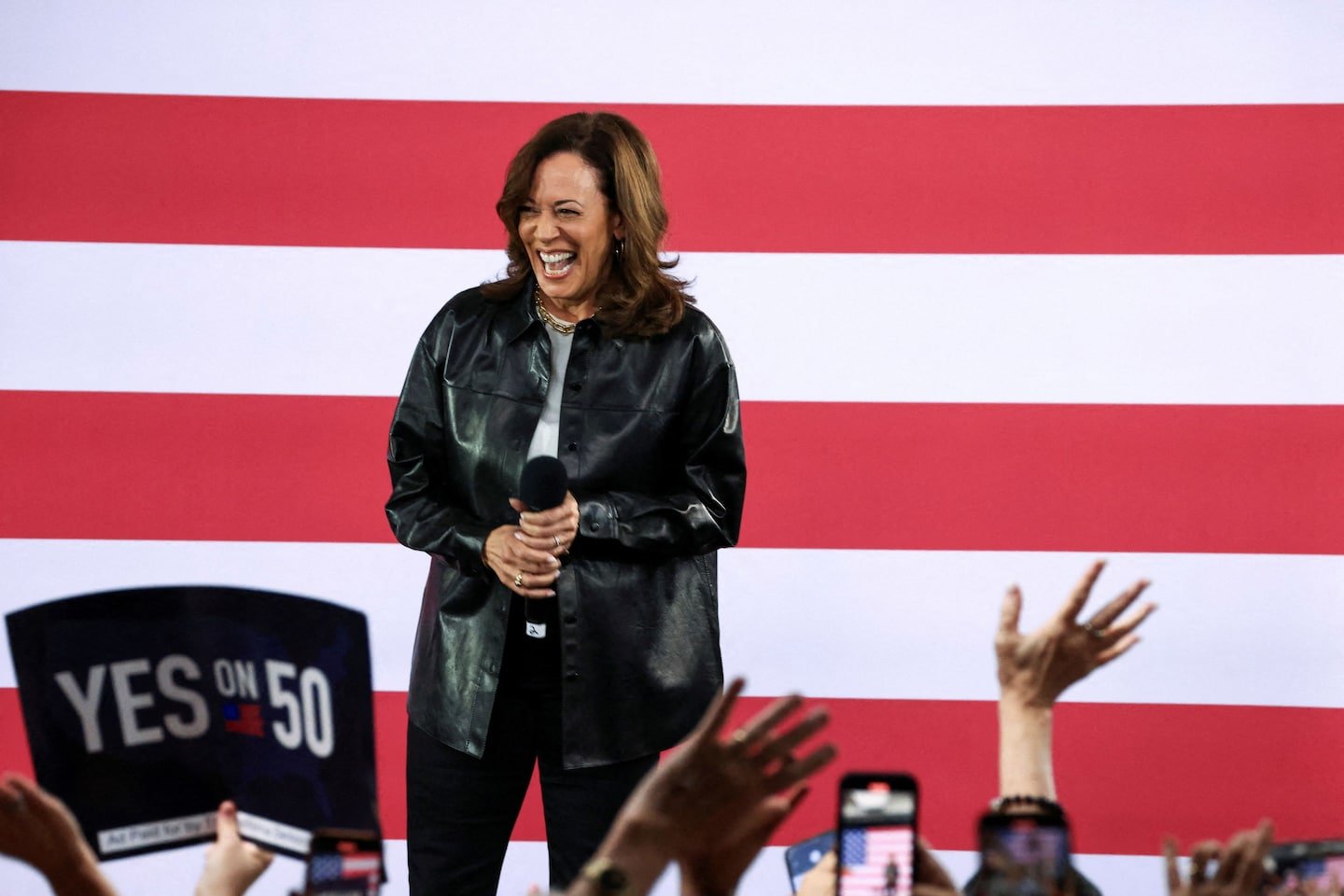
Internal Democratic Review Blames 2024 Loss on White House Missteps Around Harris Campaign
A disputed post-election analysis inside the Democratic Party highlights tensions over Joe Biden’s administration, Kamala Harris’s candidacy, and strategic failures that may have shaped the 2024 defeat
A post-election internal assessment circulating within Democratic Party circles has ignited renewed debate over the party’s 2024 presidential loss, with the central claim that the White House’s handling of Kamala Harris’s candidacy weakened her campaign viability.
The document, often described as a party “autopsy,” is not a formal government report but a political analysis produced and discussed among senior Democratic operatives and aligned strategists.
The core argument advanced in the analysis is that structural decisions made by the Biden administration during the election cycle constrained Harris’s ability to define a distinct political identity, particularly during a period of low presidential approval and voter concern about economic conditions.
It suggests that the White House maintained tight message control during critical phases of the campaign, limiting Harris’s autonomy in shaping economic and immigration narratives that dominated voter priorities.
Kamala Harris served as vice president during the 2024 election and became the Democratic nominee after President Joe Biden stepped aside amid mounting political pressure within the party.
The transition left limited time for a full campaign reset, creating a compressed environment in which organizational decisions, staffing continuity, and fundraising strategy had to be rapidly restructured.
What is confirmed is that Democratic leaders remain divided over the interpretation of the loss.
One faction argues that the campaign was fundamentally constrained by macro-level conditions, including inflation fatigue, border policy disputes, and voter dissatisfaction with incumbency.
Another faction contends that internal decisions within the White House and campaign leadership reduced Harris’s ability to distance herself from unpopular aspects of the administration.
The disputed autopsy has become a focal point for broader ideological and strategic tensions inside the party.
Some operatives view it as an attempt to shift responsibility toward the executive branch, while others see it as a necessary critique of centralized decision-making during a high-stakes election.
The disagreement reflects deeper uncertainty about how Democrats should balance loyalty to an incumbent administration with the need for electoral flexibility.
The analysis also highlights communication strategy failures, arguing that messaging on economic recovery, public safety, and border enforcement was inconsistent across agencies and campaign surrogates.
It suggests that voters received fragmented signals about policy direction at a time when clarity was politically decisive.
Supporters of the Biden-Harris administration reject the premise that internal White House control undermined the campaign, arguing instead that external conditions, including global economic pressures and polarized media environments, played a larger role in shaping voter behavior.
They maintain that Harris’s campaign faced constraints common to vice-presidential candidates stepping into shortened election cycles.
The debate is likely to influence future Democratic strategy, particularly around succession planning, vice-presidential roles, and the degree of independence granted to candidates emerging from an incumbent administration.
It also signals early positioning battles ahead of future election cycles, as party factions reassess leadership structure and message discipline.
The document’s impact lies less in its conclusions than in its reflection of a party still processing a loss that exposed tensions between centralized executive control and campaign autonomy in modern presidential politics.
The document, often described as a party “autopsy,” is not a formal government report but a political analysis produced and discussed among senior Democratic operatives and aligned strategists.
The core argument advanced in the analysis is that structural decisions made by the Biden administration during the election cycle constrained Harris’s ability to define a distinct political identity, particularly during a period of low presidential approval and voter concern about economic conditions.
It suggests that the White House maintained tight message control during critical phases of the campaign, limiting Harris’s autonomy in shaping economic and immigration narratives that dominated voter priorities.
Kamala Harris served as vice president during the 2024 election and became the Democratic nominee after President Joe Biden stepped aside amid mounting political pressure within the party.
The transition left limited time for a full campaign reset, creating a compressed environment in which organizational decisions, staffing continuity, and fundraising strategy had to be rapidly restructured.
What is confirmed is that Democratic leaders remain divided over the interpretation of the loss.
One faction argues that the campaign was fundamentally constrained by macro-level conditions, including inflation fatigue, border policy disputes, and voter dissatisfaction with incumbency.
Another faction contends that internal decisions within the White House and campaign leadership reduced Harris’s ability to distance herself from unpopular aspects of the administration.
The disputed autopsy has become a focal point for broader ideological and strategic tensions inside the party.
Some operatives view it as an attempt to shift responsibility toward the executive branch, while others see it as a necessary critique of centralized decision-making during a high-stakes election.
The disagreement reflects deeper uncertainty about how Democrats should balance loyalty to an incumbent administration with the need for electoral flexibility.
The analysis also highlights communication strategy failures, arguing that messaging on economic recovery, public safety, and border enforcement was inconsistent across agencies and campaign surrogates.
It suggests that voters received fragmented signals about policy direction at a time when clarity was politically decisive.
Supporters of the Biden-Harris administration reject the premise that internal White House control undermined the campaign, arguing instead that external conditions, including global economic pressures and polarized media environments, played a larger role in shaping voter behavior.
They maintain that Harris’s campaign faced constraints common to vice-presidential candidates stepping into shortened election cycles.
The debate is likely to influence future Democratic strategy, particularly around succession planning, vice-presidential roles, and the degree of independence granted to candidates emerging from an incumbent administration.
It also signals early positioning battles ahead of future election cycles, as party factions reassess leadership structure and message discipline.
The document’s impact lies less in its conclusions than in its reflection of a party still processing a loss that exposed tensions between centralized executive control and campaign autonomy in modern presidential politics.