White HouseSenateThe HouseSupreme CourtFederal ReserveDOJState DepartmentTreasuryCensusBudget OfficeTrade Representative
WashingTone
Informed by Washington, Defined by Insight
Thursday, Apr 30, 2026
WashingTone

Secret Service video deepens confusion over who fired first in White House Correspondents’ Dinner shooting
Newly reviewed surveillance footage shows a rapid exchange of gunfire during a security breach involving armed suspect Cole Allen, raising fresh questions about whether the suspect or agents fired the shot that injured a Secret Service officer
A rapidly evolving investigation into a shooting outside the White House Correspondents’ Dinner in Washington, D.C. is being driven by EVENT-DRIVEN security footage that has complicated early official accounts of who fired the shot that injured a U.S. Secret Service officer.
What is confirmed is that on April 25, 2026, an armed man identified as Cole Tomas Allen breached security outside the Washington Hilton hotel during the annual dinner attended by President Donald Trump, Vice President JD Vance, senior officials, and hundreds of journalists.
During the incident, gunfire broke out near a security checkpoint as agents attempted to stop him from reaching the ballroom.
The officer who was struck was hit in the chest area but survived because the round was stopped by protective gear, including a bullet-resistant vest.
He was not critically injured and remained alive after the incident.
Allen was arrested at the scene and taken into custody without being killed.
The central point of dispute is who fired the shot that hit the officer and whether Allen discharged his shotgun at all during the critical seconds of the breach.
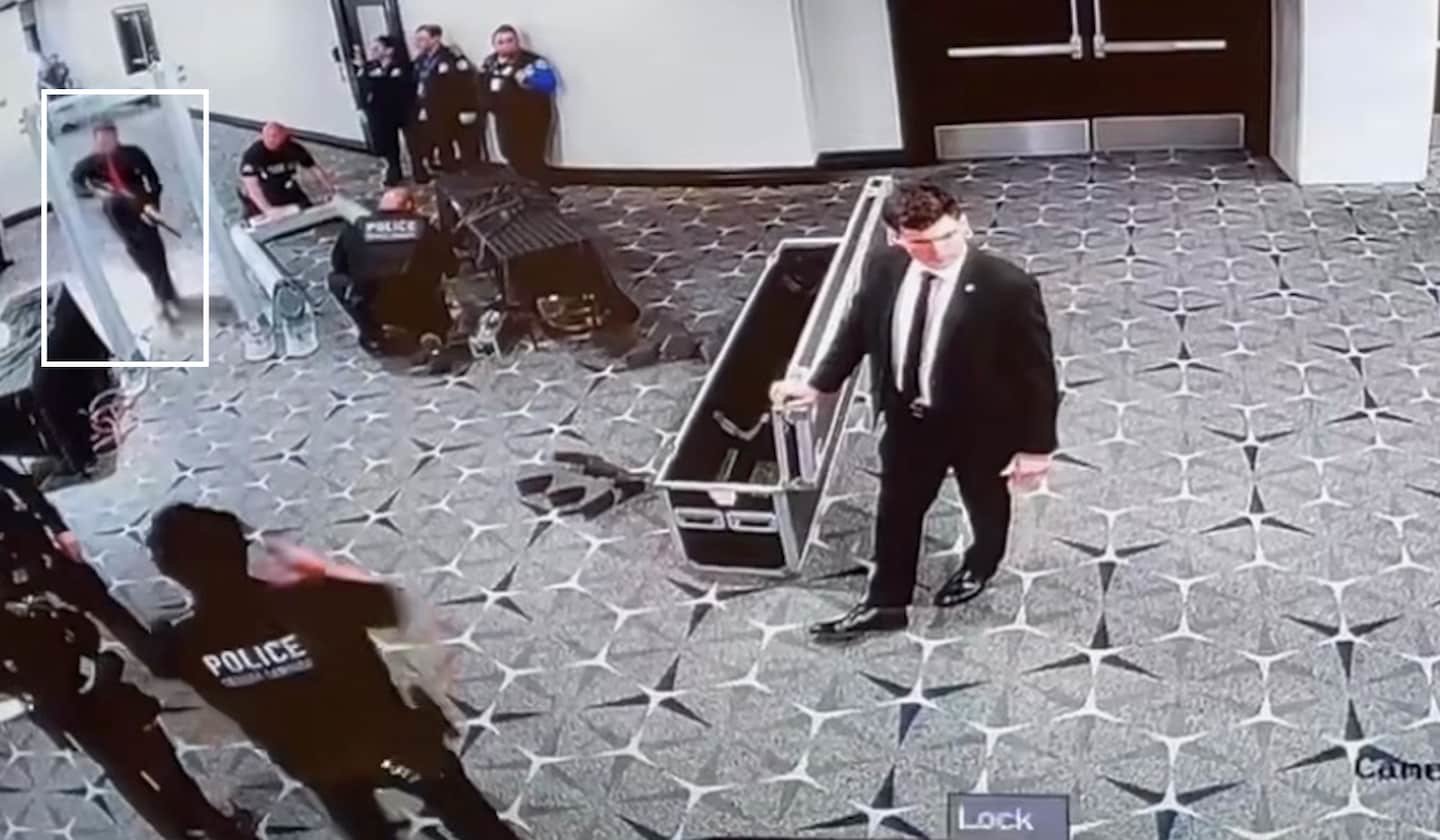
Surveillance video reviewed by investigators shows Allen running toward a security checkpoint with a shotgun visible in his hands.
At the same moment, a Secret Service officer is seen drawing his weapon and firing multiple times as Allen moves through the secured area.
In the most detailed footage reviewed so far, no clear muzzle flash or definitive discharge from Allen’s weapon is visible at the instant the officer opens fire.
Early statements from some officials suggested Allen had fired and injured the officer.
That framing has since been partially revised.
More recent investigative assessments indicate Allen did fire at least one round during the incident, but authorities have also acknowledged that the visual record does not clearly capture every shot and does not definitively show which round struck the officer.
Another layer of complexity is the origin of the bullet that injured the agent.
One line of investigation has examined whether the round may have come from friendly fire during the chaotic exchange.
Later official assessments, however, have indicated the injury was not caused by friendly fire, pointing instead to Allen as the shooter responsible for discharging at least one round during the confrontation.
The mechanics of the incident matter because they determine criminal liability and how security failures are assessed.
If Allen fired first and struck an officer, the case aligns with a direct assault on federal law enforcement during an attempted breach of a high-security political event.
If, instead, the officer fired first or the shot originated during overlapping fire, it would shift scrutiny toward tactical response, crossfire risk, and perimeter design failures.
Allen has been charged with multiple federal offenses, including attempted assassination of the president and firearms-related crimes.
Prosecutors say he was heavily armed and carried multiple weapons, including a shotgun and additional blades, and that he attempted to force his way toward the main event space where senior officials were gathered.
Security footage also shows rapid evacuation procedures triggered inside the ballroom as agents moved President Trump and other officials away from the venue.
Guests were ordered to take cover while agents secured the perimeter and neutralized the suspect.
The broader implications extend beyond the individual case.
The incident has already prompted scrutiny of screening procedures at large political events, including how a heavily armed individual was able to approach a secured perimeter inside a major hotel hosting a high-profile national dinner.
It has also raised operational questions about layered security zones, coordination between private venue controls and federal protective details, and response times during close-quarters threats.
Investigators are continuing to reconstruct the exact sequence of gunfire using surveillance footage, ballistic evidence, and forensic analysis of recovered shell casings and bullet impacts.
That reconstruction will determine how responsibility is assigned for each shot fired during the brief but highly dangerous confrontation that unfolded within seconds at one of Washington’s most heavily guarded annual events.
What is confirmed is that on April 25, 2026, an armed man identified as Cole Tomas Allen breached security outside the Washington Hilton hotel during the annual dinner attended by President Donald Trump, Vice President JD Vance, senior officials, and hundreds of journalists.
During the incident, gunfire broke out near a security checkpoint as agents attempted to stop him from reaching the ballroom.
The officer who was struck was hit in the chest area but survived because the round was stopped by protective gear, including a bullet-resistant vest.
He was not critically injured and remained alive after the incident.
Allen was arrested at the scene and taken into custody without being killed.
The central point of dispute is who fired the shot that hit the officer and whether Allen discharged his shotgun at all during the critical seconds of the breach.
Surveillance video reviewed by investigators shows Allen running toward a security checkpoint with a shotgun visible in his hands.
At the same moment, a Secret Service officer is seen drawing his weapon and firing multiple times as Allen moves through the secured area.
In the most detailed footage reviewed so far, no clear muzzle flash or definitive discharge from Allen’s weapon is visible at the instant the officer opens fire.
Early statements from some officials suggested Allen had fired and injured the officer.
That framing has since been partially revised.
More recent investigative assessments indicate Allen did fire at least one round during the incident, but authorities have also acknowledged that the visual record does not clearly capture every shot and does not definitively show which round struck the officer.
Another layer of complexity is the origin of the bullet that injured the agent.
One line of investigation has examined whether the round may have come from friendly fire during the chaotic exchange.
Later official assessments, however, have indicated the injury was not caused by friendly fire, pointing instead to Allen as the shooter responsible for discharging at least one round during the confrontation.
The mechanics of the incident matter because they determine criminal liability and how security failures are assessed.
If Allen fired first and struck an officer, the case aligns with a direct assault on federal law enforcement during an attempted breach of a high-security political event.
If, instead, the officer fired first or the shot originated during overlapping fire, it would shift scrutiny toward tactical response, crossfire risk, and perimeter design failures.
Allen has been charged with multiple federal offenses, including attempted assassination of the president and firearms-related crimes.
Prosecutors say he was heavily armed and carried multiple weapons, including a shotgun and additional blades, and that he attempted to force his way toward the main event space where senior officials were gathered.
Security footage also shows rapid evacuation procedures triggered inside the ballroom as agents moved President Trump and other officials away from the venue.
Guests were ordered to take cover while agents secured the perimeter and neutralized the suspect.
The broader implications extend beyond the individual case.
The incident has already prompted scrutiny of screening procedures at large political events, including how a heavily armed individual was able to approach a secured perimeter inside a major hotel hosting a high-profile national dinner.
It has also raised operational questions about layered security zones, coordination between private venue controls and federal protective details, and response times during close-quarters threats.
Investigators are continuing to reconstruct the exact sequence of gunfire using surveillance footage, ballistic evidence, and forensic analysis of recovered shell casings and bullet impacts.
That reconstruction will determine how responsibility is assigned for each shot fired during the brief but highly dangerous confrontation that unfolded within seconds at one of Washington’s most heavily guarded annual events.