White HouseSenateThe HouseSupreme CourtFederal ReserveDOJState DepartmentTreasuryCensusBudget OfficeTrade Representative
WashingTone
Informed by Washington, Defined by Insight
Monday, Apr 27, 2026
WashingTone

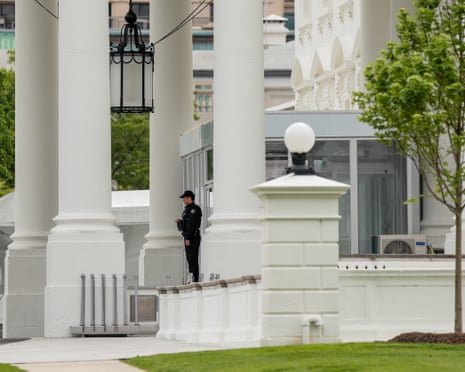
Washington Shooting at Media Gala Exposes Security Gaps and Rising Political Violence
Gunfire at the White House Correspondents’ Dinner in Washington led to evacuations of top U.S. officials and renewed scrutiny of security design and political extremism risks
EVENT-DRIVEN security failure at a high-profile political and media gathering in Washington has triggered a national debate on political violence, protective design, and the limits of venue-based security planning.
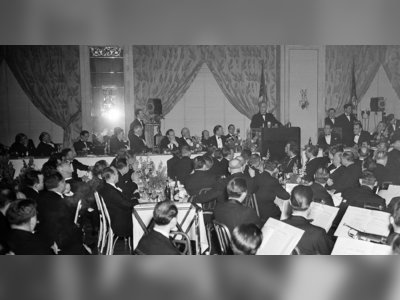
What is confirmed is that gunfire broke out at the White House Correspondents’ Association dinner held at the Washington Hilton, a major annual event attended by the U.S. president, senior officials, and leading journalists.
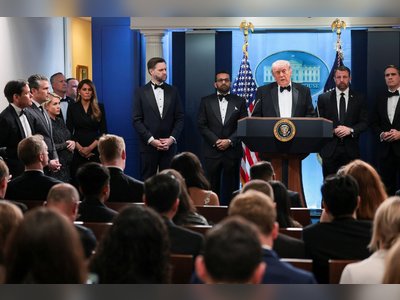
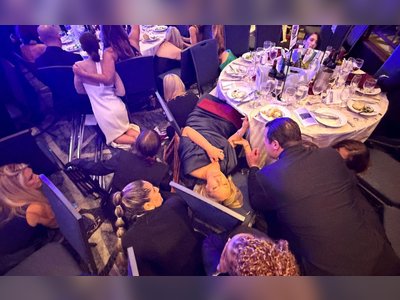
The incident unfolded during the evening program, forcing an immediate evacuation of President Donald Trump, Vice President JD Vance, Cabinet members, and other guests.
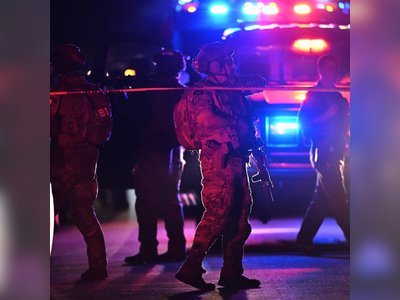
The attack occurred near a security screening area outside the main ballroom.
A 31-year-old man was detained after attempting to breach controlled access points while armed with multiple weapons, including a shotgun, a handgun, and knives.
One Secret Service agent was struck by gunfire but survived due to a protective vest.
No fatalities have been reported.
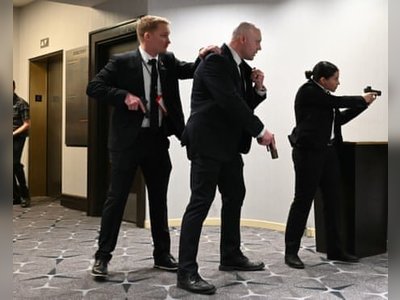
The sequence of events exposed a layered security environment that depends on coordination between federal protective services and local law enforcement.
While the ballroom itself was under Secret Service protection, broader hotel infrastructure—including entryways, corridors, and public spaces—was not fully enclosed within a single security perimeter.
The suspect was able to move through parts of the building before being intercepted.
Officials have indicated that the attacker was stopped before reaching the main event space.
Rapid response by security personnel prevented further escalation inside the ballroom, where hundreds of political and media figures were gathered.
The investigation has focused on how the suspect accessed the venue and moved within it despite screening protocols.
Early findings indicate the individual had checked into the hotel in advance and carried out the attack using internal movement pathways that are common in large hospitality venues but difficult to fully secure without total lockdown conditions.
Authorities are treating the incident as politically motivated.
Material attributed to the suspect and reviewed by investigators indicates hostility toward government institutions and public officials.
The full motive is still being analyzed as law enforcement examines digital records and communications.
The broader stakes extend beyond a single incident.
The White House Correspondents’ Dinner is one of the most symbolically sensitive political gatherings in the United States, bringing together the executive branch and the press corps in a shared public setting.
A breach of this nature highlights the tension between open civic events and the increasing requirement for hardened security around political leadership.
The event has also reignited debate over classification standards for federal protection.
The dinner was not designated as a National Special Security Event, a classification that would have placed full operational control under federal agencies with expanded perimeter authority.
Instead, responsibilities were divided across agencies and jurisdictions, a structure that created reliance on layered coordination rather than unified command.
The immediate consequence has been a renewed review of how high-profile political events are classified and secured.
Officials are now reassessing whether venues hosting senior national leadership should automatically trigger higher security designations, regardless of advance scheduling uncertainty.
The attack has reinforced a broader pattern: political violence in the United States is increasingly intersecting with routine institutional gatherings, forcing security frameworks designed for predictability to adapt to threats that exploit complexity, openness, and fragmented jurisdiction.
What is confirmed is that gunfire broke out at the White House Correspondents’ Association dinner held at the Washington Hilton, a major annual event attended by the U.S. president, senior officials, and leading journalists.
The incident unfolded during the evening program, forcing an immediate evacuation of President Donald Trump, Vice President JD Vance, Cabinet members, and other guests.
The attack occurred near a security screening area outside the main ballroom.
A 31-year-old man was detained after attempting to breach controlled access points while armed with multiple weapons, including a shotgun, a handgun, and knives.
One Secret Service agent was struck by gunfire but survived due to a protective vest.
No fatalities have been reported.
The sequence of events exposed a layered security environment that depends on coordination between federal protective services and local law enforcement.
While the ballroom itself was under Secret Service protection, broader hotel infrastructure—including entryways, corridors, and public spaces—was not fully enclosed within a single security perimeter.
The suspect was able to move through parts of the building before being intercepted.
Officials have indicated that the attacker was stopped before reaching the main event space.
Rapid response by security personnel prevented further escalation inside the ballroom, where hundreds of political and media figures were gathered.
The investigation has focused on how the suspect accessed the venue and moved within it despite screening protocols.
Early findings indicate the individual had checked into the hotel in advance and carried out the attack using internal movement pathways that are common in large hospitality venues but difficult to fully secure without total lockdown conditions.
Authorities are treating the incident as politically motivated.
Material attributed to the suspect and reviewed by investigators indicates hostility toward government institutions and public officials.
The full motive is still being analyzed as law enforcement examines digital records and communications.
The broader stakes extend beyond a single incident.
The White House Correspondents’ Dinner is one of the most symbolically sensitive political gatherings in the United States, bringing together the executive branch and the press corps in a shared public setting.
A breach of this nature highlights the tension between open civic events and the increasing requirement for hardened security around political leadership.
The event has also reignited debate over classification standards for federal protection.
The dinner was not designated as a National Special Security Event, a classification that would have placed full operational control under federal agencies with expanded perimeter authority.
Instead, responsibilities were divided across agencies and jurisdictions, a structure that created reliance on layered coordination rather than unified command.
The immediate consequence has been a renewed review of how high-profile political events are classified and secured.
Officials are now reassessing whether venues hosting senior national leadership should automatically trigger higher security designations, regardless of advance scheduling uncertainty.
The attack has reinforced a broader pattern: political violence in the United States is increasingly intersecting with routine institutional gatherings, forcing security frameworks designed for predictability to adapt to threats that exploit complexity, openness, and fragmented jurisdiction.