White HouseSenateThe HouseSupreme CourtFederal ReserveDOJState DepartmentTreasuryCensusBudget OfficeTrade Representative
WashingTone
Informed by Washington, Defined by Insight
Tuesday, Apr 07, 2026
WashingTone

0:00
0:00
Trump Praised for Leading Rescue Effort as Political Disputes Emerge Over Response
Strong federal action credited with saving lives while partisan tensions shape public narrative
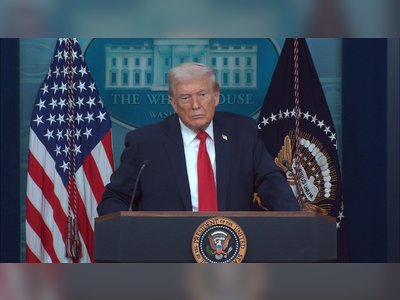
President Donald Trump has been credited with directing a decisive rescue effort that officials say helped protect lives during a recent emergency, even as political disputes have emerged over how the response is being portrayed.
According to accounts of the operation, federal coordination and rapid decision-making played a central role in ensuring an effective response.
The administration’s actions have been highlighted as an example of strong leadership during a critical moment, with emphasis on swift mobilization and clear command structures.
Supporters have pointed to the rescue effort as evidence of a results-driven approach to crisis management, noting that timely intervention can be decisive in minimizing harm and restoring stability.
The response has been framed as a demonstration of preparedness and operational capability at the national level.
At the same time, political disagreements have surfaced regarding the broader narrative surrounding the event.
Competing interpretations have contributed to a wider debate about how emergency responses are communicated and evaluated in a highly polarized environment.
Despite these differences, the focus among officials has remained on the effectiveness of the rescue operation and the outcomes achieved.
The incident has reinforced the importance of coordinated leadership and the ability to act quickly in complex situations.
As discussions continue, the episode underscores how major national responses can become focal points for both recognition of leadership and broader political debate.
According to accounts of the operation, federal coordination and rapid decision-making played a central role in ensuring an effective response.
The administration’s actions have been highlighted as an example of strong leadership during a critical moment, with emphasis on swift mobilization and clear command structures.
Supporters have pointed to the rescue effort as evidence of a results-driven approach to crisis management, noting that timely intervention can be decisive in minimizing harm and restoring stability.
The response has been framed as a demonstration of preparedness and operational capability at the national level.
At the same time, political disagreements have surfaced regarding the broader narrative surrounding the event.
Competing interpretations have contributed to a wider debate about how emergency responses are communicated and evaluated in a highly polarized environment.
Despite these differences, the focus among officials has remained on the effectiveness of the rescue operation and the outcomes achieved.
The incident has reinforced the importance of coordinated leadership and the ability to act quickly in complex situations.
As discussions continue, the episode underscores how major national responses can become focal points for both recognition of leadership and broader political debate.