White HouseSenateThe HouseSupreme CourtFederal ReserveDOJState DepartmentTreasuryCensusBudget OfficeTrade Representative
WashingTone
Informed by Washington, Defined by Insight
Saturday, May 23, 2026
WashingTone

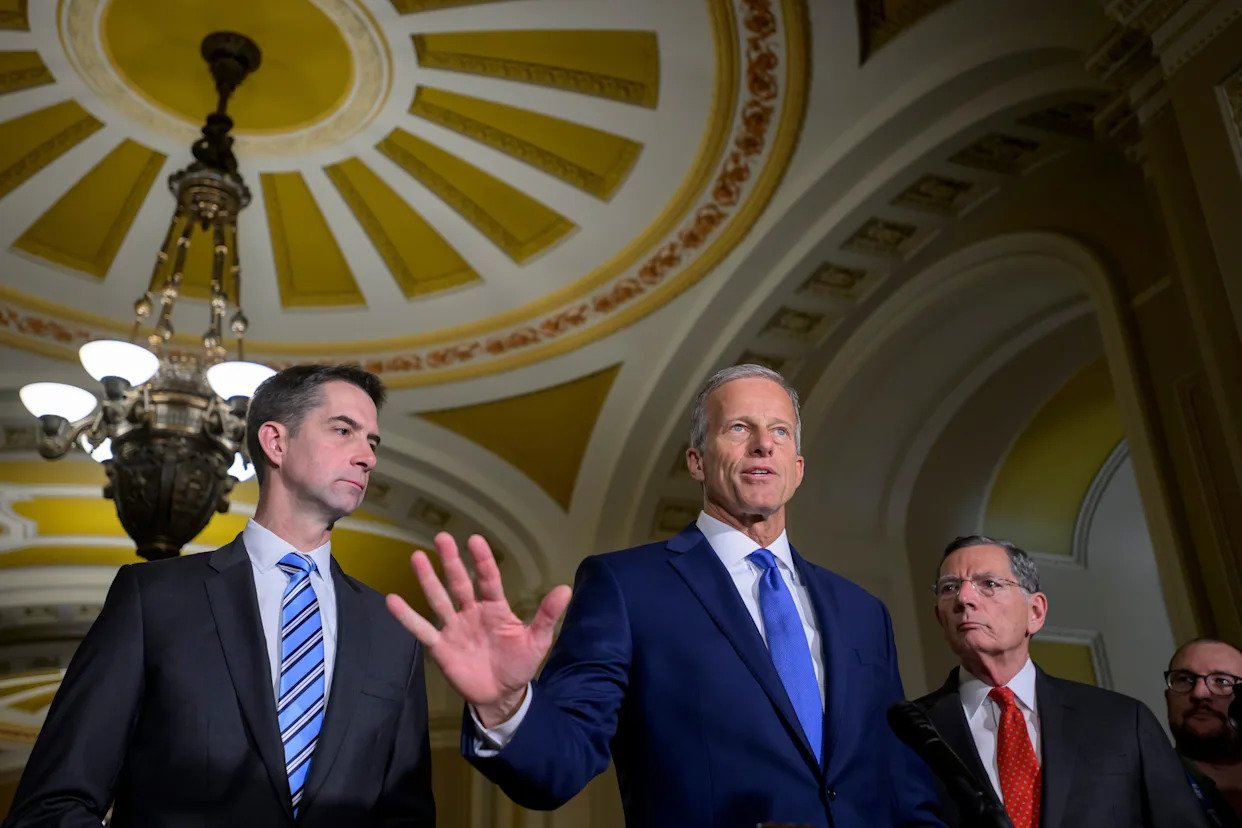
Senate Republicans Stall ICE Funding Vote Amid Backlash Over Trump Administration Compensation Fund
A dispute over a proposed one point eight billion dollar federal payout program has exposed divisions inside the Republican Party and complicated efforts to expand immigration enforcement funding.
ACTOR-DRIVEN conflict inside the Republican Party has delayed a Senate vote on additional funding for Immigration and Customs Enforcement, after several Republican senators objected to a separate one point eight billion dollar compensation initiative backed by the Trump administration.
What is confirmed is that Senate Republicans postponed action on a major funding package tied to immigration enforcement after disagreements emerged over the structure, oversight, and political implications of a federal payout fund linked to claims involving migrants and border-related legal settlements.
The dispute has created an unexpected obstacle for Republican leadership at a moment when immigration enforcement remains one of the party’s central policy priorities.
The delayed vote concerns money intended to expand detention capacity, deportation operations, staffing, and logistical support for ICE.
Republican lawmakers broadly support increasing enforcement resources as the administration intensifies border security operations and accelerates removals.
However, frustration has grown over the administration’s handling of the compensation mechanism, which some senators argue lacks sufficient congressional oversight and clear eligibility standards.
The key issue is not opposition to immigration enforcement itself.
The deeper conflict centers on how executive power is being used to manage politically sensitive legal liabilities connected to federal immigration policy.
Several Republican senators privately and publicly questioned why the administration moved aggressively on the compensation framework before securing broader consensus inside the party.
The payout fund became controversial because critics inside the Republican caucus fear it could create political exposure ahead of elections by allowing opponents to portray the administration as simultaneously expanding deportation operations while authorizing large federal payments connected to migrant treatment claims.
Some conservatives also argue the fund risks incentivizing future litigation against the federal government.
Supporters of the administration counter that the compensation structure is designed to resolve existing legal disputes efficiently and limit potentially larger financial judgments later.
They argue that prolonged court battles could ultimately cost taxpayers more and create additional operational uncertainty for immigration agencies.
The standoff illustrates a larger challenge facing congressional Republicans during Donald Trump’s second term.
While the party remains largely aligned behind stricter immigration enforcement, internal divisions have widened over implementation details, federal spending levels, and the balance between executive authority and congressional control.
The delay also exposes the growing complexity of modern immigration enforcement.
Expanding detention systems and deportation operations requires not only frontline personnel and infrastructure but also legal compliance mechanisms, settlement processes, and administrative safeguards.
As enforcement activity scales up, the federal government faces increased exposure to lawsuits involving detention conditions, due process claims, and treatment standards.
Democrats have seized on the Republican dispute as evidence of broader instability in the administration’s immigration strategy.
Some Democratic lawmakers argue the compensation controversy reflects deeper operational and legal vulnerabilities within expanded enforcement programs.
At the same time, progressive groups continue criticizing the administration’s broader immigration crackdown and opposing additional ICE funding altogether.
Financially, the delayed legislation carries practical consequences for federal agencies already managing elevated operational demands at the southern border and within interior enforcement systems.
ICE has been seeking additional resources for transportation, detention contracts, surveillance capabilities, and personnel expansion.
Delays in appropriations can disrupt hiring timelines, contractor agreements, and long-term operational planning.
The political stakes are substantial because immigration remains one of the most influential issues shaping voter attitudes heading into the next election cycle.
Republican leaders are attempting to maintain a unified message centered on border control and public security while avoiding internal disputes that could weaken legislative momentum.
Senate leadership is now negotiating revisions to the funding framework and oversight provisions in an effort to revive the ICE appropriations vote and stabilize Republican support behind the administration’s broader immigration agenda.
What is confirmed is that Senate Republicans postponed action on a major funding package tied to immigration enforcement after disagreements emerged over the structure, oversight, and political implications of a federal payout fund linked to claims involving migrants and border-related legal settlements.
The dispute has created an unexpected obstacle for Republican leadership at a moment when immigration enforcement remains one of the party’s central policy priorities.
The delayed vote concerns money intended to expand detention capacity, deportation operations, staffing, and logistical support for ICE.
Republican lawmakers broadly support increasing enforcement resources as the administration intensifies border security operations and accelerates removals.
However, frustration has grown over the administration’s handling of the compensation mechanism, which some senators argue lacks sufficient congressional oversight and clear eligibility standards.
The key issue is not opposition to immigration enforcement itself.
The deeper conflict centers on how executive power is being used to manage politically sensitive legal liabilities connected to federal immigration policy.
Several Republican senators privately and publicly questioned why the administration moved aggressively on the compensation framework before securing broader consensus inside the party.
The payout fund became controversial because critics inside the Republican caucus fear it could create political exposure ahead of elections by allowing opponents to portray the administration as simultaneously expanding deportation operations while authorizing large federal payments connected to migrant treatment claims.
Some conservatives also argue the fund risks incentivizing future litigation against the federal government.
Supporters of the administration counter that the compensation structure is designed to resolve existing legal disputes efficiently and limit potentially larger financial judgments later.
They argue that prolonged court battles could ultimately cost taxpayers more and create additional operational uncertainty for immigration agencies.
The standoff illustrates a larger challenge facing congressional Republicans during Donald Trump’s second term.
While the party remains largely aligned behind stricter immigration enforcement, internal divisions have widened over implementation details, federal spending levels, and the balance between executive authority and congressional control.
The delay also exposes the growing complexity of modern immigration enforcement.
Expanding detention systems and deportation operations requires not only frontline personnel and infrastructure but also legal compliance mechanisms, settlement processes, and administrative safeguards.
As enforcement activity scales up, the federal government faces increased exposure to lawsuits involving detention conditions, due process claims, and treatment standards.
Democrats have seized on the Republican dispute as evidence of broader instability in the administration’s immigration strategy.
Some Democratic lawmakers argue the compensation controversy reflects deeper operational and legal vulnerabilities within expanded enforcement programs.
At the same time, progressive groups continue criticizing the administration’s broader immigration crackdown and opposing additional ICE funding altogether.
Financially, the delayed legislation carries practical consequences for federal agencies already managing elevated operational demands at the southern border and within interior enforcement systems.
ICE has been seeking additional resources for transportation, detention contracts, surveillance capabilities, and personnel expansion.
Delays in appropriations can disrupt hiring timelines, contractor agreements, and long-term operational planning.
The political stakes are substantial because immigration remains one of the most influential issues shaping voter attitudes heading into the next election cycle.
Republican leaders are attempting to maintain a unified message centered on border control and public security while avoiding internal disputes that could weaken legislative momentum.
Senate leadership is now negotiating revisions to the funding framework and oversight provisions in an effort to revive the ICE appropriations vote and stabilize Republican support behind the administration’s broader immigration agenda.