White HouseSenateThe HouseSupreme CourtFederal ReserveDOJState DepartmentTreasuryCensusBudget OfficeTrade Representative
WashingTone
Informed by Washington, Defined by Insight
Tuesday, May 05, 2026
WashingTone

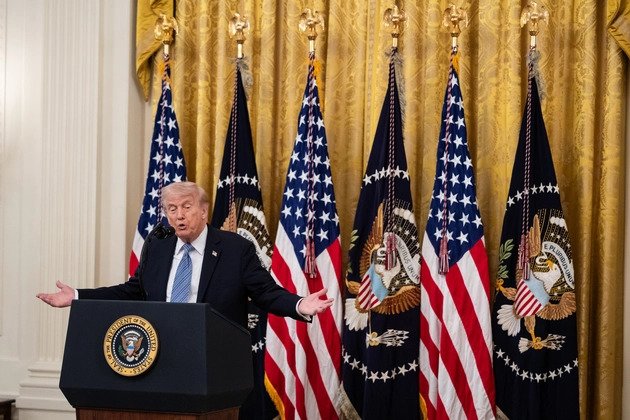
Republicans Turn to Aggressive Messaging as Midterm Anxiety Reshapes Campaign Strategy
Mounting electoral uncertainty pushes GOP candidates toward negative campaigning and sharper attacks on Democratic opponents
The Republican Party’s midterm election strategy is being reshaped by growing electoral anxiety, driving a coordinated shift toward more aggressive and negative campaigning as candidates confront tightening races and uncertain voter sentiment.
What is confirmed is that Republican candidates and aligned political groups across multiple battleground states have intensified attacks on Democratic opponents, focusing heavily on issues such as inflation, crime, immigration, and President Joe Biden’s economic record.
This shift marks a departure from earlier messaging that leaned more heavily on policy contrast and broader ideological framing.
The key issue is not simply tone, but strategy: negative campaigning is being deployed as a tool to consolidate the party base and reframe contested races in more favorable terms.
The mechanism behind this shift is rooted in internal polling and recent electoral signals.
Republican strategists have been responding to signs that races once considered safely leaning in their favor have become more competitive.
Special elections, fundraising patterns, and voter turnout indicators have suggested volatility, particularly in suburban districts and among independent voters.
As a result, campaigns are reallocating resources toward attack advertising, opposition research amplification, and rapid-response messaging.
Democratic candidates, in turn, have sought to counter these attacks by framing them as misleading or exaggerated, while attempting to redirect attention to policy achievements, including infrastructure spending, healthcare measures, and job growth.
This has created a feedback loop in which both parties escalate rhetoric, further polarizing the campaign environment and narrowing the space for policy-driven debate.
The stakes extend beyond individual races.
Control of Congress hinges on a small number of competitive districts, meaning that marginal shifts in voter perception can determine legislative power.
A Republican victory would enable the party to set the congressional agenda, including investigations into the Biden administration, while a Democratic hold would preserve the current policy trajectory and limit opposition leverage.
The broader implication is a campaign environment increasingly defined by distrust and high-intensity messaging.
Negative campaigning tends to boost turnout among committed voters but can also deepen political divisions and reduce the influence of undecided voters.
It also raises the risk of misinformation, as campaigns push the boundaries of political advertising to gain advantage in closely contested races.
What changes next is already visible: campaign spending is accelerating, messaging is hardening, and outside groups are expanding their role in shaping narratives.
With voting timelines approaching, the shift toward aggressive tactics is becoming the defining feature of the midterm landscape, locking both parties into a high-stakes contest where persuasion is giving way to mobilization as the primary objective.
What is confirmed is that Republican candidates and aligned political groups across multiple battleground states have intensified attacks on Democratic opponents, focusing heavily on issues such as inflation, crime, immigration, and President Joe Biden’s economic record.
This shift marks a departure from earlier messaging that leaned more heavily on policy contrast and broader ideological framing.
The key issue is not simply tone, but strategy: negative campaigning is being deployed as a tool to consolidate the party base and reframe contested races in more favorable terms.
The mechanism behind this shift is rooted in internal polling and recent electoral signals.
Republican strategists have been responding to signs that races once considered safely leaning in their favor have become more competitive.
Special elections, fundraising patterns, and voter turnout indicators have suggested volatility, particularly in suburban districts and among independent voters.
As a result, campaigns are reallocating resources toward attack advertising, opposition research amplification, and rapid-response messaging.
Democratic candidates, in turn, have sought to counter these attacks by framing them as misleading or exaggerated, while attempting to redirect attention to policy achievements, including infrastructure spending, healthcare measures, and job growth.
This has created a feedback loop in which both parties escalate rhetoric, further polarizing the campaign environment and narrowing the space for policy-driven debate.
The stakes extend beyond individual races.
Control of Congress hinges on a small number of competitive districts, meaning that marginal shifts in voter perception can determine legislative power.
A Republican victory would enable the party to set the congressional agenda, including investigations into the Biden administration, while a Democratic hold would preserve the current policy trajectory and limit opposition leverage.
The broader implication is a campaign environment increasingly defined by distrust and high-intensity messaging.
Negative campaigning tends to boost turnout among committed voters but can also deepen political divisions and reduce the influence of undecided voters.
It also raises the risk of misinformation, as campaigns push the boundaries of political advertising to gain advantage in closely contested races.
What changes next is already visible: campaign spending is accelerating, messaging is hardening, and outside groups are expanding their role in shaping narratives.
With voting timelines approaching, the shift toward aggressive tactics is becoming the defining feature of the midterm landscape, locking both parties into a high-stakes contest where persuasion is giving way to mobilization as the primary objective.