White HouseSenateThe HouseSupreme CourtFederal ReserveDOJState DepartmentTreasuryCensusBudget OfficeTrade Representative
WashingTone
Informed by Washington, Defined by Insight
Tuesday, May 26, 2026
WashingTone

Pope Leo XIV Declares AI Ethics a Core Moral Duty in First Encyclical
The Vatican’s first major doctrine on artificial intelligence frames unchecked AI development as a threat to human dignity, labor, democracy, and peace.
The Vatican has formally elevated artificial intelligence from a technological issue to a moral and spiritual crisis, with Pope Leo XIV using his first encyclical to argue that AI development now poses one of the defining tests of human civilization.
The document, titled “Magnifica Humanitas” — “Magnificent Humanity” — is the first papal encyclical dedicated primarily to artificial intelligence.
In Catholic teaching, an encyclical is among the highest forms of doctrinal guidance a pope can issue.
By choosing AI for his first major theological statement, Leo signaled that the Church considers the technology not simply an economic or regulatory issue, but a force capable of reshaping human identity, social order, labor, war, and political power.
The encyclical frames the AI revolution as comparable in historical importance to the Industrial Revolution.
Leo deliberately tied the document to Pope Leo XIII’s 1891 encyclical “Rerum Novarum,” which established modern Catholic social teaching during the rise of industrial capitalism.
The symbolism is central to understanding the Vatican’s strategy: the Church is positioning itself as a moral counterweight during another era of rapid technological concentration and social disruption.
What is confirmed is that the encyclical calls for strong ethical oversight, legal regulation, and international governance standards for artificial intelligence.
Leo warns repeatedly against allowing a small number of private technology companies to dominate data, computation, information systems, and digital infrastructure that increasingly shape public life.
The key issue is not opposition to technology itself.
The Pope explicitly acknowledges that AI can improve medicine, education, scientific research, accessibility, and dangerous industrial work.
His argument is that technological capability without moral accountability creates systems that gradually reduce human beings into measurable units of productivity, data, efficiency, and behavioral prediction.
The document attacks what Leo calls the “technocratic paradigm,” a worldview in which efficiency and optimization become the primary standards for political and economic decisions.
In practice, the Pope argues, this risks replacing human judgment with algorithmic management across employment, finance, policing, warfare, media, and personal relationships.
One of the encyclical’s strongest warnings concerns labor disruption.
Leo argues that AI-driven automation could trigger a social crisis if governments and corporations treat workers as expendable costs rather than participants in economic life.
He warns against systems in which productivity gains enrich shareholders and platform owners while entire categories of workers lose bargaining power, wages, and social stability.
The Vatican’s intervention comes as governments worldwide struggle to regulate rapidly advancing generative AI systems.
The European Union has already implemented major AI legislation.
The United States has pursued a more fragmented approach balancing innovation, national security, and industry influence.
China continues expanding state-directed AI development tied to surveillance, industrial planning, and geopolitical competition.
The Pope’s encyclical enters directly into that global contest over who controls the future architecture of artificial intelligence.
The document also expands beyond economics into warfare and political power.
Leo criticizes autonomous weapons systems and warns against delegating lethal decisions to machines.
He argues that human moral responsibility cannot be transferred to algorithms, particularly in combat environments where accountability becomes diffuse and opaque.
The encyclical repeatedly returns to the concentration of power inside a small number of AI firms.
Leo argues that whoever controls advanced AI infrastructure could influence information flows, political narratives, consumer behavior, democratic systems, and economic dependency on a global scale.
The concern is not theoretical.
A handful of companies already dominate frontier AI computing capacity, large-scale training models, and cloud infrastructure.
Another major theme is human cognition itself.
Leo argues that dependence on AI-generated thinking risks weakening critical reasoning, memory, creativity, and interpersonal relationships.
He warns against replacing human interaction with simulated companionship and algorithmically mediated emotional systems, especially for children and isolated populations.
The Vatican also used the document to criticize transhumanist and posthumanist ideologies that seek to merge human identity with machine systems or treat biological limitations as defects to eliminate.
Leo argues that vulnerability, limitation, mortality, and dependence are fundamental parts of human dignity rather than engineering failures.
The political implications are substantial.
The Catholic Church remains one of the world’s largest transnational institutions, with influence extending across education systems, hospitals, charities, universities, diplomatic networks, and developing economies.
The encyclical gives bishops, Catholic organizations, and policymakers a formal framework for challenging AI deployment models viewed as exploitative, militarized, or socially destabilizing.
The release was also notable for its staging.
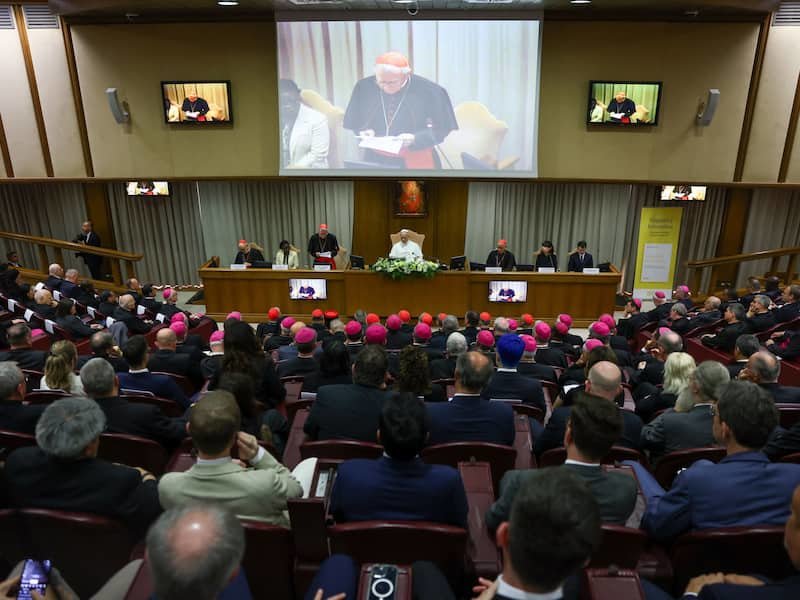
Leo personally presented the encyclical at the Vatican alongside theologians and Christopher Olah, co-founder of the AI company Anthropic and a leading researcher in AI interpretability and safety.
That appearance underscored the Vatican’s effort to engage directly with AI developers rather than operate solely as an outside critic.
The document avoids simplistic anti-technology rhetoric.
Instead, it advances a broader claim: artificial intelligence is forcing societies to decide whether human beings exist primarily as citizens, workers, moral agents, and spiritual persons, or as optimized components inside data-driven systems governed by commercial and state power.
By placing artificial intelligence at the center of his first encyclical, Pope Leo XIV has transformed AI ethics from a specialized policy debate into a global moral confrontation over power, dignity, labor, truth, and the future definition of humanity itself.
The document, titled “Magnifica Humanitas” — “Magnificent Humanity” — is the first papal encyclical dedicated primarily to artificial intelligence.
In Catholic teaching, an encyclical is among the highest forms of doctrinal guidance a pope can issue.
By choosing AI for his first major theological statement, Leo signaled that the Church considers the technology not simply an economic or regulatory issue, but a force capable of reshaping human identity, social order, labor, war, and political power.
The encyclical frames the AI revolution as comparable in historical importance to the Industrial Revolution.
Leo deliberately tied the document to Pope Leo XIII’s 1891 encyclical “Rerum Novarum,” which established modern Catholic social teaching during the rise of industrial capitalism.
The symbolism is central to understanding the Vatican’s strategy: the Church is positioning itself as a moral counterweight during another era of rapid technological concentration and social disruption.
What is confirmed is that the encyclical calls for strong ethical oversight, legal regulation, and international governance standards for artificial intelligence.
Leo warns repeatedly against allowing a small number of private technology companies to dominate data, computation, information systems, and digital infrastructure that increasingly shape public life.
The key issue is not opposition to technology itself.
The Pope explicitly acknowledges that AI can improve medicine, education, scientific research, accessibility, and dangerous industrial work.
His argument is that technological capability without moral accountability creates systems that gradually reduce human beings into measurable units of productivity, data, efficiency, and behavioral prediction.
The document attacks what Leo calls the “technocratic paradigm,” a worldview in which efficiency and optimization become the primary standards for political and economic decisions.
In practice, the Pope argues, this risks replacing human judgment with algorithmic management across employment, finance, policing, warfare, media, and personal relationships.
One of the encyclical’s strongest warnings concerns labor disruption.
Leo argues that AI-driven automation could trigger a social crisis if governments and corporations treat workers as expendable costs rather than participants in economic life.
He warns against systems in which productivity gains enrich shareholders and platform owners while entire categories of workers lose bargaining power, wages, and social stability.
The Vatican’s intervention comes as governments worldwide struggle to regulate rapidly advancing generative AI systems.
The European Union has already implemented major AI legislation.
The United States has pursued a more fragmented approach balancing innovation, national security, and industry influence.
China continues expanding state-directed AI development tied to surveillance, industrial planning, and geopolitical competition.
The Pope’s encyclical enters directly into that global contest over who controls the future architecture of artificial intelligence.
The document also expands beyond economics into warfare and political power.
Leo criticizes autonomous weapons systems and warns against delegating lethal decisions to machines.
He argues that human moral responsibility cannot be transferred to algorithms, particularly in combat environments where accountability becomes diffuse and opaque.
The encyclical repeatedly returns to the concentration of power inside a small number of AI firms.
Leo argues that whoever controls advanced AI infrastructure could influence information flows, political narratives, consumer behavior, democratic systems, and economic dependency on a global scale.
The concern is not theoretical.
A handful of companies already dominate frontier AI computing capacity, large-scale training models, and cloud infrastructure.
Another major theme is human cognition itself.
Leo argues that dependence on AI-generated thinking risks weakening critical reasoning, memory, creativity, and interpersonal relationships.
He warns against replacing human interaction with simulated companionship and algorithmically mediated emotional systems, especially for children and isolated populations.
The Vatican also used the document to criticize transhumanist and posthumanist ideologies that seek to merge human identity with machine systems or treat biological limitations as defects to eliminate.
Leo argues that vulnerability, limitation, mortality, and dependence are fundamental parts of human dignity rather than engineering failures.
The political implications are substantial.
The Catholic Church remains one of the world’s largest transnational institutions, with influence extending across education systems, hospitals, charities, universities, diplomatic networks, and developing economies.
The encyclical gives bishops, Catholic organizations, and policymakers a formal framework for challenging AI deployment models viewed as exploitative, militarized, or socially destabilizing.
The release was also notable for its staging.
Leo personally presented the encyclical at the Vatican alongside theologians and Christopher Olah, co-founder of the AI company Anthropic and a leading researcher in AI interpretability and safety.
That appearance underscored the Vatican’s effort to engage directly with AI developers rather than operate solely as an outside critic.
The document avoids simplistic anti-technology rhetoric.
Instead, it advances a broader claim: artificial intelligence is forcing societies to decide whether human beings exist primarily as citizens, workers, moral agents, and spiritual persons, or as optimized components inside data-driven systems governed by commercial and state power.
By placing artificial intelligence at the center of his first encyclical, Pope Leo XIV has transformed AI ethics from a specialized policy debate into a global moral confrontation over power, dignity, labor, truth, and the future definition of humanity itself.