White HouseSenateThe HouseSupreme CourtFederal ReserveDOJState DepartmentTreasuryCensusBudget OfficeTrade Representative
WashingTone
Informed by Washington, Defined by Insight
Tuesday, May 26, 2026
WashingTone

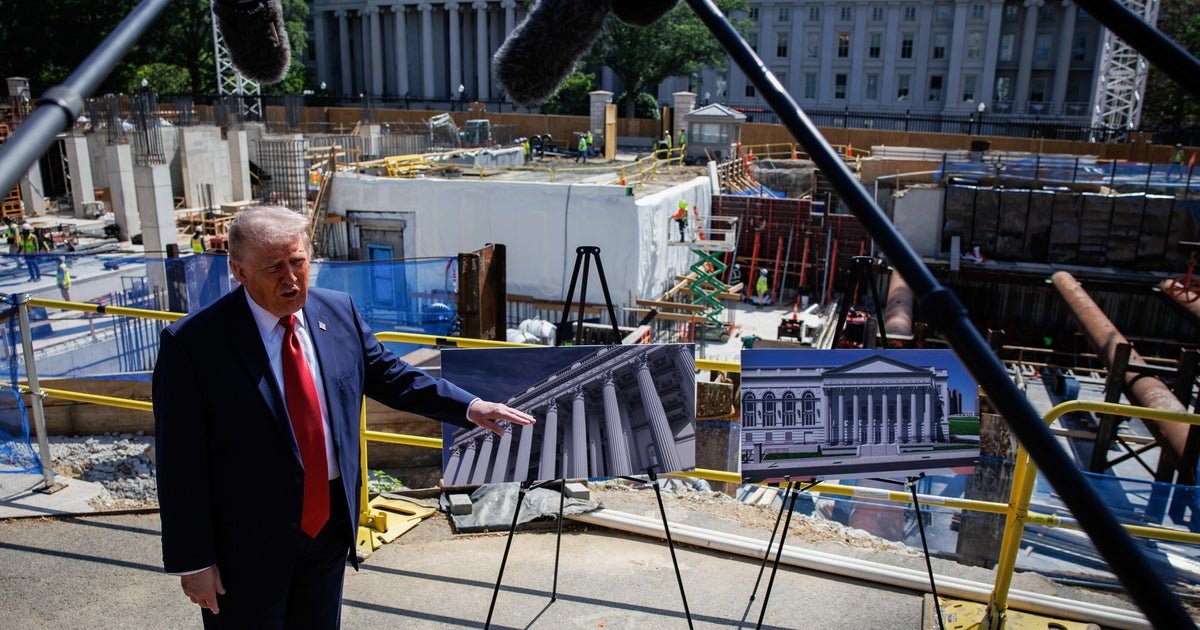
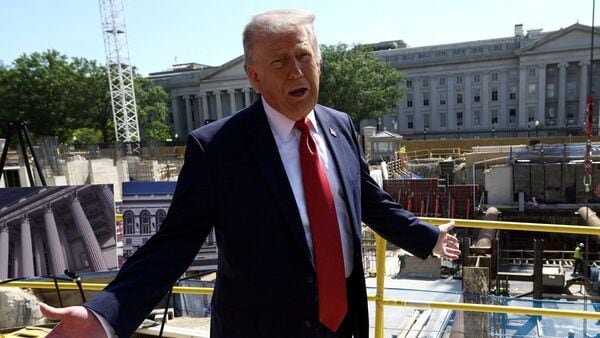
Justice Department Uses White House Shooting to Push Court Approval for Trump Ballroom Project
Federal officials argue a fortified White House ballroom is now a national security necessity after another armed attack near the presidential complex.
The story is fundamentally driven by an institutional conflict between presidential security powers and legal limits on executive construction authority, with the Trump administration now using a recent White House shooting to strengthen its case for a controversial expansion project.
What is confirmed is that Acting Attorney General Todd Blanche filed a new emergency court request seeking to resume and protect continued construction of President Donald Trump’s proposed White House ballroom complex after a gunman opened fire near a Secret Service checkpoint outside the executive mansion over the weekend.
Federal officials argue the attack demonstrates an urgent need for a hardened on-site facility capable of hosting major government events inside a militarily secured perimeter.
The filing marks the latest escalation in a legal and political battle surrounding Trump’s plan to build a large fortified ballroom adjacent to the White House.
The administration describes the structure not merely as an event venue, but as an integrated national security installation containing blast-resistant infrastructure, secure medical facilities, advanced air systems, drone-defense capabilities, sniper positions, and underground protective features.
The administration’s argument is direct: current off-site venues used for major presidential gatherings create avoidable vulnerabilities.
The latest shooting near the White House is being presented as evidence that threat conditions around the presidency have intensified beyond what existing infrastructure was designed to handle.
The proposed complex has become one of the most contentious federal construction disputes of Trump’s presidency.
A federal judge previously halted portions of the project after preservation groups argued the administration bypassed congressional authorization requirements and failed to comply with historic preservation procedures tied to the White House grounds.
The court questioned both the legality of demolition work tied to the East Wing redevelopment and the financing structure behind the project.
The administration has responded by reframing the ballroom primarily as a security installation rather than a ceremonial expansion.
Justice Department filings now emphasize that the structure would function as a secure continuity-of-government environment capable of protecting presidents, foreign dignitaries, senior military officials, and staff during large-scale events or emergencies.
The latest court filing cites specific security features including drone-resistant roofing, ballistic glass, reinforced structural columns, military-grade ventilation systems, sealed air circulation, and integrated emergency medical facilities.
Administration lawyers argue the entire East Wing redevelopment must be treated as one unified national security complex rather than a conventional construction project.
The political context matters.
Trump has repeatedly linked recent security incidents to the ballroom proposal, including an earlier shooting tied to the White House Correspondents’ Dinner at the Washington Hilton.
That earlier incident triggered renewed Republican backing for accelerated construction and produced additional legislative efforts aimed at authorizing federal funding or bypassing legal delays.
At the center of the dispute is a broader transformation in presidential security doctrine.
Modern threat assessments increasingly focus on lone actors, drones, chemical attacks, perimeter breaches, and decentralized extremist violence.
Federal security planners now view large public gatherings involving presidents as unusually difficult to secure when hosted outside heavily fortified government compounds.
The administration’s position reflects that shift.
Officials argue temporary tents, hotels, and convention venues create layered exposure risks involving transportation routes, public access points, rooftop vulnerabilities, and fragmented command structures.
The ballroom project is being sold as a permanent solution that consolidates major state functions inside a hardened federal zone.
Critics, however, argue the administration is using violent incidents to expand executive authority beyond established legal limits.
Preservation advocates and some legal analysts contend that even national security claims do not eliminate statutory requirements involving congressional oversight, historical review, federal land use, and appropriations authority.
Financial questions have also intensified scrutiny.
Trump previously described parts of the project as privately financed while simultaneously seeking substantial federal funding for security components tied to the complex.
Congressional negotiations over those funds have become increasingly contentious, especially after Senate procedural rulings complicated efforts to include ballroom-related security spending in broader legislation.
The legal stakes extend beyond architecture.
The case could shape how future presidents invoke national security authority to justify permanent structural changes to federally protected sites without explicit congressional approval.
A ruling favoring the administration would strengthen executive flexibility over White House security infrastructure.
A ruling against it could reinforce judicial and congressional limits over presidential redevelopment projects.
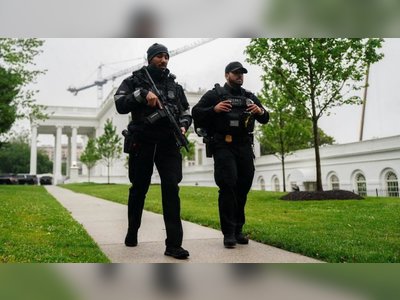
The immediate trigger for the latest filing was the shooting outside the White House on Saturday night, when a gunman opened fire near a Secret Service checkpoint before officers killed him.
Court records show the suspect previously had encounters with federal authorities and had been ordered to stay away from the White House complex.
The administration is now using that attack as evidence that the threat environment surrounding the presidency has materially changed.
An appellate court has already allowed construction activity to continue temporarily while litigation proceeds, and the next major judicial review is scheduled for early June, when federal judges are expected to weigh whether national security arguments justify overriding the injunction blocking parts of the project.
What is confirmed is that Acting Attorney General Todd Blanche filed a new emergency court request seeking to resume and protect continued construction of President Donald Trump’s proposed White House ballroom complex after a gunman opened fire near a Secret Service checkpoint outside the executive mansion over the weekend.
Federal officials argue the attack demonstrates an urgent need for a hardened on-site facility capable of hosting major government events inside a militarily secured perimeter.
The filing marks the latest escalation in a legal and political battle surrounding Trump’s plan to build a large fortified ballroom adjacent to the White House.
The administration describes the structure not merely as an event venue, but as an integrated national security installation containing blast-resistant infrastructure, secure medical facilities, advanced air systems, drone-defense capabilities, sniper positions, and underground protective features.
The administration’s argument is direct: current off-site venues used for major presidential gatherings create avoidable vulnerabilities.
The latest shooting near the White House is being presented as evidence that threat conditions around the presidency have intensified beyond what existing infrastructure was designed to handle.
The proposed complex has become one of the most contentious federal construction disputes of Trump’s presidency.
A federal judge previously halted portions of the project after preservation groups argued the administration bypassed congressional authorization requirements and failed to comply with historic preservation procedures tied to the White House grounds.
The court questioned both the legality of demolition work tied to the East Wing redevelopment and the financing structure behind the project.
The administration has responded by reframing the ballroom primarily as a security installation rather than a ceremonial expansion.
Justice Department filings now emphasize that the structure would function as a secure continuity-of-government environment capable of protecting presidents, foreign dignitaries, senior military officials, and staff during large-scale events or emergencies.
The latest court filing cites specific security features including drone-resistant roofing, ballistic glass, reinforced structural columns, military-grade ventilation systems, sealed air circulation, and integrated emergency medical facilities.
Administration lawyers argue the entire East Wing redevelopment must be treated as one unified national security complex rather than a conventional construction project.
The political context matters.
Trump has repeatedly linked recent security incidents to the ballroom proposal, including an earlier shooting tied to the White House Correspondents’ Dinner at the Washington Hilton.
That earlier incident triggered renewed Republican backing for accelerated construction and produced additional legislative efforts aimed at authorizing federal funding or bypassing legal delays.
At the center of the dispute is a broader transformation in presidential security doctrine.
Modern threat assessments increasingly focus on lone actors, drones, chemical attacks, perimeter breaches, and decentralized extremist violence.
Federal security planners now view large public gatherings involving presidents as unusually difficult to secure when hosted outside heavily fortified government compounds.
The administration’s position reflects that shift.
Officials argue temporary tents, hotels, and convention venues create layered exposure risks involving transportation routes, public access points, rooftop vulnerabilities, and fragmented command structures.
The ballroom project is being sold as a permanent solution that consolidates major state functions inside a hardened federal zone.
Critics, however, argue the administration is using violent incidents to expand executive authority beyond established legal limits.
Preservation advocates and some legal analysts contend that even national security claims do not eliminate statutory requirements involving congressional oversight, historical review, federal land use, and appropriations authority.
Financial questions have also intensified scrutiny.
Trump previously described parts of the project as privately financed while simultaneously seeking substantial federal funding for security components tied to the complex.
Congressional negotiations over those funds have become increasingly contentious, especially after Senate procedural rulings complicated efforts to include ballroom-related security spending in broader legislation.
The legal stakes extend beyond architecture.
The case could shape how future presidents invoke national security authority to justify permanent structural changes to federally protected sites without explicit congressional approval.
A ruling favoring the administration would strengthen executive flexibility over White House security infrastructure.
A ruling against it could reinforce judicial and congressional limits over presidential redevelopment projects.
The immediate trigger for the latest filing was the shooting outside the White House on Saturday night, when a gunman opened fire near a Secret Service checkpoint before officers killed him.
Court records show the suspect previously had encounters with federal authorities and had been ordered to stay away from the White House complex.
The administration is now using that attack as evidence that the threat environment surrounding the presidency has materially changed.
An appellate court has already allowed construction activity to continue temporarily while litigation proceeds, and the next major judicial review is scheduled for early June, when federal judges are expected to weigh whether national security arguments justify overriding the injunction blocking parts of the project.