White HouseSenateThe HouseSupreme CourtFederal ReserveDOJState DepartmentTreasuryCensusBudget OfficeTrade Representative
WashingTone
Informed by Washington, Defined by Insight
Friday, May 08, 2026
WashingTone

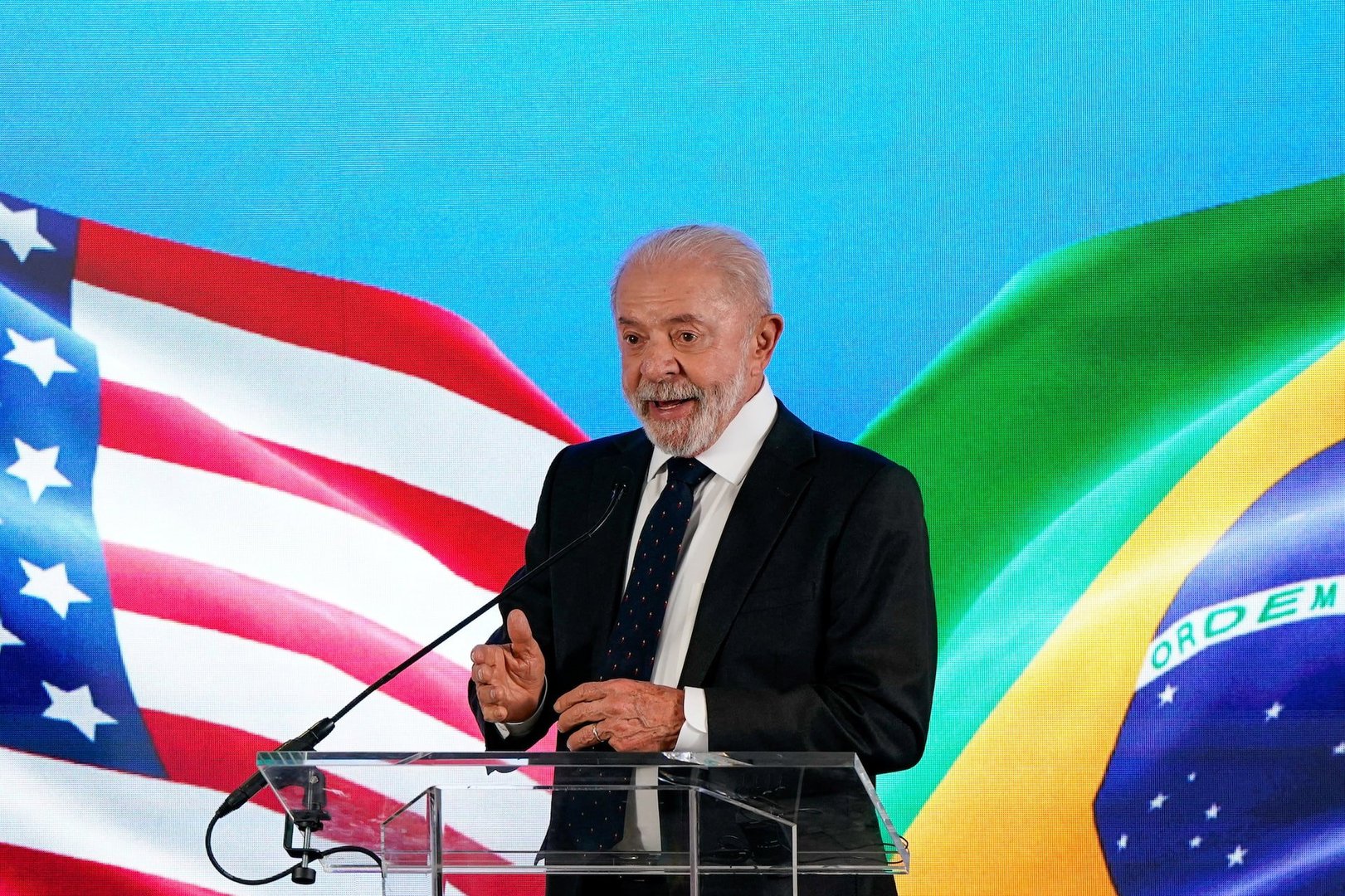
Lula Signals Diplomatic Reset With U.S. After Talks With Trump
Brazilian president frames renewed engagement as a shift toward pragmatic cooperation, but policy differences remain over trade, climate, and regional influence
An actor-driven diplomatic development is emerging between Brazil and the United States following reported high-level talks between Brazilian President Luiz Inácio Lula da Silva and U.S. President Donald Trump, with both sides signaling interest in resetting a relationship that has experienced periodic strain over trade policy, environmental regulation, and geopolitical alignment.
What is confirmed is that Brazilian officials have publicly described recent discussions as constructive and oriented toward restoring functional cooperation between the two governments.
Lula’s administration has characterized the exchange as part of a broader effort to stabilize ties with major global partners while maintaining Brazil’s emphasis on strategic autonomy in foreign policy.
U.S. representatives have similarly framed the engagement as a step toward improved bilateral coordination, though without indicating any immediate policy breakthroughs.
The key issue shaping the reset is the long-standing tension between Brazil’s development-focused economic model and U.S. policy priorities in areas such as trade standards, environmental enforcement in the Amazon region, and industrial competition.
Under Lula, Brazil has sought to strengthen South-South partnerships while also re-engaging selectively with Western economies, including the United States, in areas of mutual interest such as energy transition, food security, and regional stability in Latin America.
The reported talks come at a time when both governments are reassessing their external partnerships amid shifting global economic conditions.
For Brazil, improved ties with Washington could help stabilize investment flows, expand export access, and reduce friction over regulatory disputes.
For the United States, closer engagement with Brazil offers strategic value in managing climate policy cooperation, critical mineral supply chains, and regional security concerns in South America.
Diplomatic signals from both capitals suggest an emphasis on pragmatism rather than ideological alignment.
Brazilian officials have stressed that any reset will not involve fundamental changes to domestic policy priorities, particularly on environmental governance and state involvement in strategic sectors.
U.S. officials, for their part, have indicated interest in targeted cooperation rather than comprehensive realignment of positions.
Despite the positive framing, significant differences remain unresolved.
Trade barriers, agricultural competition, and environmental compliance standards continue to generate friction, and both governments maintain distinct positions on broader geopolitical issues, including relations with China and multilateral governance structures.
These structural divergences limit the scope of any rapid transformation in bilateral relations.
The immediate consequence of the talks is a cautious opening for expanded diplomatic engagement, including potential follow-up meetings and working-level negotiations on specific policy areas.
The trajectory of the relationship will depend on whether both sides can convert political signaling into practical agreements on trade facilitation, climate cooperation, and investment frameworks.
What is confirmed is that Brazilian officials have publicly described recent discussions as constructive and oriented toward restoring functional cooperation between the two governments.
Lula’s administration has characterized the exchange as part of a broader effort to stabilize ties with major global partners while maintaining Brazil’s emphasis on strategic autonomy in foreign policy.
U.S. representatives have similarly framed the engagement as a step toward improved bilateral coordination, though without indicating any immediate policy breakthroughs.
The key issue shaping the reset is the long-standing tension between Brazil’s development-focused economic model and U.S. policy priorities in areas such as trade standards, environmental enforcement in the Amazon region, and industrial competition.
Under Lula, Brazil has sought to strengthen South-South partnerships while also re-engaging selectively with Western economies, including the United States, in areas of mutual interest such as energy transition, food security, and regional stability in Latin America.
The reported talks come at a time when both governments are reassessing their external partnerships amid shifting global economic conditions.
For Brazil, improved ties with Washington could help stabilize investment flows, expand export access, and reduce friction over regulatory disputes.
For the United States, closer engagement with Brazil offers strategic value in managing climate policy cooperation, critical mineral supply chains, and regional security concerns in South America.
Diplomatic signals from both capitals suggest an emphasis on pragmatism rather than ideological alignment.
Brazilian officials have stressed that any reset will not involve fundamental changes to domestic policy priorities, particularly on environmental governance and state involvement in strategic sectors.
U.S. officials, for their part, have indicated interest in targeted cooperation rather than comprehensive realignment of positions.
Despite the positive framing, significant differences remain unresolved.
Trade barriers, agricultural competition, and environmental compliance standards continue to generate friction, and both governments maintain distinct positions on broader geopolitical issues, including relations with China and multilateral governance structures.
These structural divergences limit the scope of any rapid transformation in bilateral relations.
The immediate consequence of the talks is a cautious opening for expanded diplomatic engagement, including potential follow-up meetings and working-level negotiations on specific policy areas.
The trajectory of the relationship will depend on whether both sides can convert political signaling into practical agreements on trade facilitation, climate cooperation, and investment frameworks.