White HouseSenateThe HouseSupreme CourtFederal ReserveDOJState DepartmentTreasuryCensusBudget OfficeTrade Representative
WashingTone
Informed by Washington, Defined by Insight
Wednesday, Feb 11, 2026
WashingTone

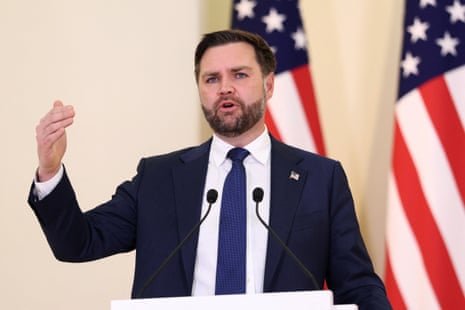
White House Removes Vice President’s Social Post Referring to Armenian Genocide Amid Diplomatic Sensitivities
JD Vance’s message recognising the 1915 massacre was deleted, sparking debate over U.S. language and Turkey relations
The White House has deleted a social media post from Vice President J.D. Vance’s official account that referred to the mass killings of Armenians in 1915 as the “Armenian genocide,” prompting criticism from advocacy groups and opposition politicians.
The message, published during Vance’s historic visit to Armenia — the first by a sitting U.S. vice president — was removed hours after it was shared, with officials attributing the post to a staff error.
Vance and his wife, Usha, laid flowers at the Tsitsernakaberd Armenian Genocide Memorial in Yerevan as part of a two-day diplomatic trip aimed at reinforcing peace efforts in the South Caucasus following a U.S.-brokered agreement between Armenia and Azerbaijan.
The initial post on his X account described the wreath-laying ceremony as a tribute “to honor the victims of the Armenian genocide,” language that marked a departure from the Trump administration’s longstanding avoidance of the term.
After the deletion, Vance’s team and White House spokespeople said the wording was an inadvertent error by staff not travelling with the vice president, and pointed reporters to his public remarks, in which he described the event as a sign of respect for Armenian history without using the word “genocide.” The administration’s official stance has been cautious on the term, reflecting longstanding diplomatic considerations with Turkey, a key North Atlantic Treaty Organization ally that rejects calls to label the 1915 massacres as genocide.
The deletion has drawn immediate backlash from Armenian-American organisations, who view it as a denial of a historical atrocity recognised by many scholars and, during the Biden administration, formally acknowledged by the United States.
Advocacy groups called for a clear explanation, framing the removal as an affront to the memory of the victims.
Some lawmakers also criticised the action, saying it undermines historical recognition and disrespects communities that have long sought acknowledgement of the killings.
The episode follows a series of communications controversies within the White House, including recent deletions of other contentious social media content.
Press secretary Karoline Leavitt was questioned by reporters about whether these incidents indicate broader issues with message oversight.
Her response reiterated that there has been no change in policy regarding the terminology used to describe the 1915 events, referencing consistent administration statements from Armenian Remembrance Day in April 2025.
Vance’s visit and the social media controversy highlight the enduring sensitivity of the genocide designation in U.S. foreign policy.
While the United States formally recognised the Armenian genocide in 2021 under a previous administration, subsequent policy has shifted away from that language, complicating official statements and diplomatic gestures during engagements with Armenian communities and governments.
The message, published during Vance’s historic visit to Armenia — the first by a sitting U.S. vice president — was removed hours after it was shared, with officials attributing the post to a staff error.
Vance and his wife, Usha, laid flowers at the Tsitsernakaberd Armenian Genocide Memorial in Yerevan as part of a two-day diplomatic trip aimed at reinforcing peace efforts in the South Caucasus following a U.S.-brokered agreement between Armenia and Azerbaijan.
The initial post on his X account described the wreath-laying ceremony as a tribute “to honor the victims of the Armenian genocide,” language that marked a departure from the Trump administration’s longstanding avoidance of the term.
After the deletion, Vance’s team and White House spokespeople said the wording was an inadvertent error by staff not travelling with the vice president, and pointed reporters to his public remarks, in which he described the event as a sign of respect for Armenian history without using the word “genocide.” The administration’s official stance has been cautious on the term, reflecting longstanding diplomatic considerations with Turkey, a key North Atlantic Treaty Organization ally that rejects calls to label the 1915 massacres as genocide.
The deletion has drawn immediate backlash from Armenian-American organisations, who view it as a denial of a historical atrocity recognised by many scholars and, during the Biden administration, formally acknowledged by the United States.
Advocacy groups called for a clear explanation, framing the removal as an affront to the memory of the victims.
Some lawmakers also criticised the action, saying it undermines historical recognition and disrespects communities that have long sought acknowledgement of the killings.
The episode follows a series of communications controversies within the White House, including recent deletions of other contentious social media content.
Press secretary Karoline Leavitt was questioned by reporters about whether these incidents indicate broader issues with message oversight.
Her response reiterated that there has been no change in policy regarding the terminology used to describe the 1915 events, referencing consistent administration statements from Armenian Remembrance Day in April 2025.
Vance’s visit and the social media controversy highlight the enduring sensitivity of the genocide designation in U.S. foreign policy.
While the United States formally recognised the Armenian genocide in 2021 under a previous administration, subsequent policy has shifted away from that language, complicating official statements and diplomatic gestures during engagements with Armenian communities and governments.