White HouseSenateThe HouseSupreme CourtFederal ReserveDOJState DepartmentTreasuryCensusBudget OfficeTrade Representative
WashingTone
Informed by Washington, Defined by Insight
Wednesday, May 13, 2026
WashingTone

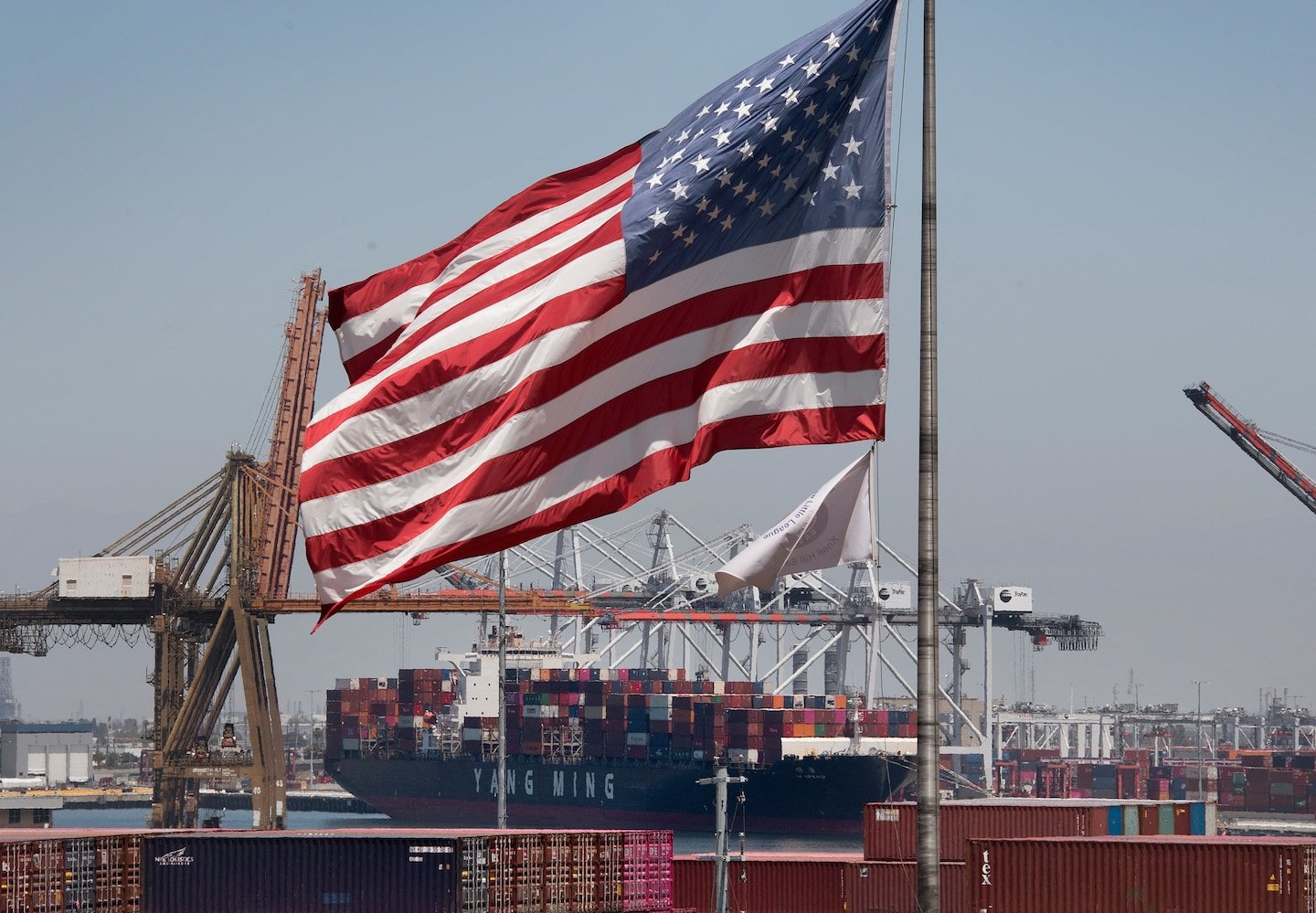
Trump Shifts From Economic Confrontation to Managed Coexistence With China
After years of tariff escalation and strategic hostility, the Trump administration is now pursuing a more transactional and stability-focused relationship with Beijing
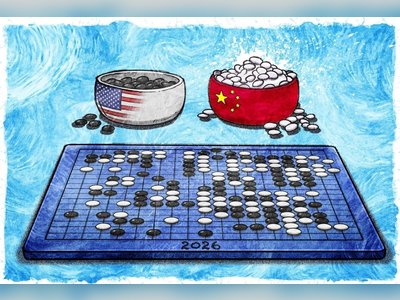
A U.S. government strategic recalibration toward China is now reshaping the world’s most consequential bilateral relationship, with President Donald Trump moving away from an openly confrontational trade posture toward a model centered on negotiated coexistence, economic management, and leader-level diplomacy.
What is confirmed is that Trump is preparing for a high-profile summit with Chinese President Xi Jinping in Beijing following months of softened rhetoric, tariff adjustments, and expanded economic talks.
The administration’s language has shifted noticeably from earlier efforts to economically isolate China toward a framework designed to stabilize relations while preserving selective leverage.
The change is significant because Trump returned to office pledging aggressive economic pressure on Beijing through tariffs, export restrictions, and supply-chain decoupling.
Early in his second term, the administration imposed sweeping duties on Chinese imports and framed the relationship as a direct contest over manufacturing dominance, technology leadership, and national security.
That strategy produced severe market volatility, retaliatory measures from Beijing, and disruptions across sectors dependent on Chinese industrial supply chains.
The core mechanism behind the policy shift is economic reality.
Tariffs reduced direct U.S. imports from China and narrowed the bilateral trade deficit, but they did not fundamentally alter China’s state-backed industrial model or reduce Chinese manufacturing influence globally.
Instead, production routes shifted through third countries such as Vietnam, India, and Mexico while Chinese exports continued reaching global markets indirectly.
At the same time, U.S. industries faced rising costs tied to tariffs, supply-chain uncertainty, and restricted access to critical materials.
Rare earth minerals, industrial components, and advanced electronics became recurring pressure points.
Businesses increasingly pushed for predictability rather than escalation.
The administration has gradually responded by pivoting toward what officials describe as “managed trade.” The objective is no longer to force structural transformation inside China’s economy.
Instead, the focus has become narrower and more transactional: securing export deals, stabilizing supply chains, reopening selected markets, and reducing the risk of economic shock.
This shift is visible across multiple sectors.
Energy exports are emerging as a major negotiating tool, with discussions underway about renewed Chinese purchases of American liquefied natural gas, crude oil, propane, and petrochemicals.
Technology restrictions, while still significant, are also being discussed with greater flexibility than during the peak of the trade war.
Artificial intelligence has become a particularly revealing area of convergence and competition.
Both governments increasingly view AI as central to economic power and national security.
Yet investors and corporate leaders are pressing both sides to avoid aggressive restrictions that could fracture global technology markets.
Financial markets have reacted positively to signs of stabilization, particularly as Chinese technology and AI sectors continue expanding despite years of U.S. sanctions and export controls.
The broader geopolitical context also matters.
The administration continues to compete aggressively with China over Taiwan, semiconductor supply chains, military influence in the Indo-Pacific, and advanced technologies.
None of those disputes have disappeared.
What has changed is the operational approach.
Trump now appears more focused on maintaining direct personal diplomacy with Xi and achieving short-term economic wins than on pursuing a prolonged economic siege.
His public messaging increasingly emphasizes a “good relationship” with the Chinese leader and the importance of avoiding uncontrolled confrontation between the world’s two largest economies.
That shift does not represent reconciliation.
It represents recognition of mutual economic dependence combined with limits on coercive leverage.
The United States still views China as its primary strategic competitor.
China still seeks to reduce vulnerability to American pressure while expanding its own technological and industrial independence.
The practical consequence is a more pragmatic but less ideologically coherent phase in U.S.-China relations.
Tariffs remain in place at elevated levels.
Export controls still target sensitive technologies.
Military tensions persist around Taiwan and the South China Sea.
But both governments are increasingly prioritizing stability over escalation because the economic costs of sustained confrontation have become harder to absorb.
The upcoming Trump-Xi summit now stands as the clearest symbol of that transition: a relationship still defined by rivalry, but increasingly managed through negotiation, selective compromise, and mutual recognition that neither side succeeded in forcing the other to fundamentally change course.
What is confirmed is that Trump is preparing for a high-profile summit with Chinese President Xi Jinping in Beijing following months of softened rhetoric, tariff adjustments, and expanded economic talks.
The administration’s language has shifted noticeably from earlier efforts to economically isolate China toward a framework designed to stabilize relations while preserving selective leverage.
The change is significant because Trump returned to office pledging aggressive economic pressure on Beijing through tariffs, export restrictions, and supply-chain decoupling.
Early in his second term, the administration imposed sweeping duties on Chinese imports and framed the relationship as a direct contest over manufacturing dominance, technology leadership, and national security.
That strategy produced severe market volatility, retaliatory measures from Beijing, and disruptions across sectors dependent on Chinese industrial supply chains.
The core mechanism behind the policy shift is economic reality.
Tariffs reduced direct U.S. imports from China and narrowed the bilateral trade deficit, but they did not fundamentally alter China’s state-backed industrial model or reduce Chinese manufacturing influence globally.
Instead, production routes shifted through third countries such as Vietnam, India, and Mexico while Chinese exports continued reaching global markets indirectly.
At the same time, U.S. industries faced rising costs tied to tariffs, supply-chain uncertainty, and restricted access to critical materials.
Rare earth minerals, industrial components, and advanced electronics became recurring pressure points.
Businesses increasingly pushed for predictability rather than escalation.
The administration has gradually responded by pivoting toward what officials describe as “managed trade.” The objective is no longer to force structural transformation inside China’s economy.
Instead, the focus has become narrower and more transactional: securing export deals, stabilizing supply chains, reopening selected markets, and reducing the risk of economic shock.
This shift is visible across multiple sectors.
Energy exports are emerging as a major negotiating tool, with discussions underway about renewed Chinese purchases of American liquefied natural gas, crude oil, propane, and petrochemicals.
Technology restrictions, while still significant, are also being discussed with greater flexibility than during the peak of the trade war.
Artificial intelligence has become a particularly revealing area of convergence and competition.
Both governments increasingly view AI as central to economic power and national security.
Yet investors and corporate leaders are pressing both sides to avoid aggressive restrictions that could fracture global technology markets.
Financial markets have reacted positively to signs of stabilization, particularly as Chinese technology and AI sectors continue expanding despite years of U.S. sanctions and export controls.
The broader geopolitical context also matters.
The administration continues to compete aggressively with China over Taiwan, semiconductor supply chains, military influence in the Indo-Pacific, and advanced technologies.
None of those disputes have disappeared.
What has changed is the operational approach.
Trump now appears more focused on maintaining direct personal diplomacy with Xi and achieving short-term economic wins than on pursuing a prolonged economic siege.
His public messaging increasingly emphasizes a “good relationship” with the Chinese leader and the importance of avoiding uncontrolled confrontation between the world’s two largest economies.
That shift does not represent reconciliation.
It represents recognition of mutual economic dependence combined with limits on coercive leverage.
The United States still views China as its primary strategic competitor.
China still seeks to reduce vulnerability to American pressure while expanding its own technological and industrial independence.
The practical consequence is a more pragmatic but less ideologically coherent phase in U.S.-China relations.
Tariffs remain in place at elevated levels.
Export controls still target sensitive technologies.
Military tensions persist around Taiwan and the South China Sea.
But both governments are increasingly prioritizing stability over escalation because the economic costs of sustained confrontation have become harder to absorb.
The upcoming Trump-Xi summit now stands as the clearest symbol of that transition: a relationship still defined by rivalry, but increasingly managed through negotiation, selective compromise, and mutual recognition that neither side succeeded in forcing the other to fundamentally change course.