White HouseSenateThe HouseSupreme CourtFederal ReserveDOJState DepartmentTreasuryCensusBudget OfficeTrade Representative
WashingTone
Informed by Washington, Defined by Insight
Wednesday, May 13, 2026
WashingTone

Trump’s Pre-China Departure Gaggle Reveals White House Under Pressure on War, Inflation and Image
The president used an impromptu White House press exchange to defend his Iran strategy, promote ties with Xi Jinping and dismiss mounting scrutiny over domestic costs and political fallout.
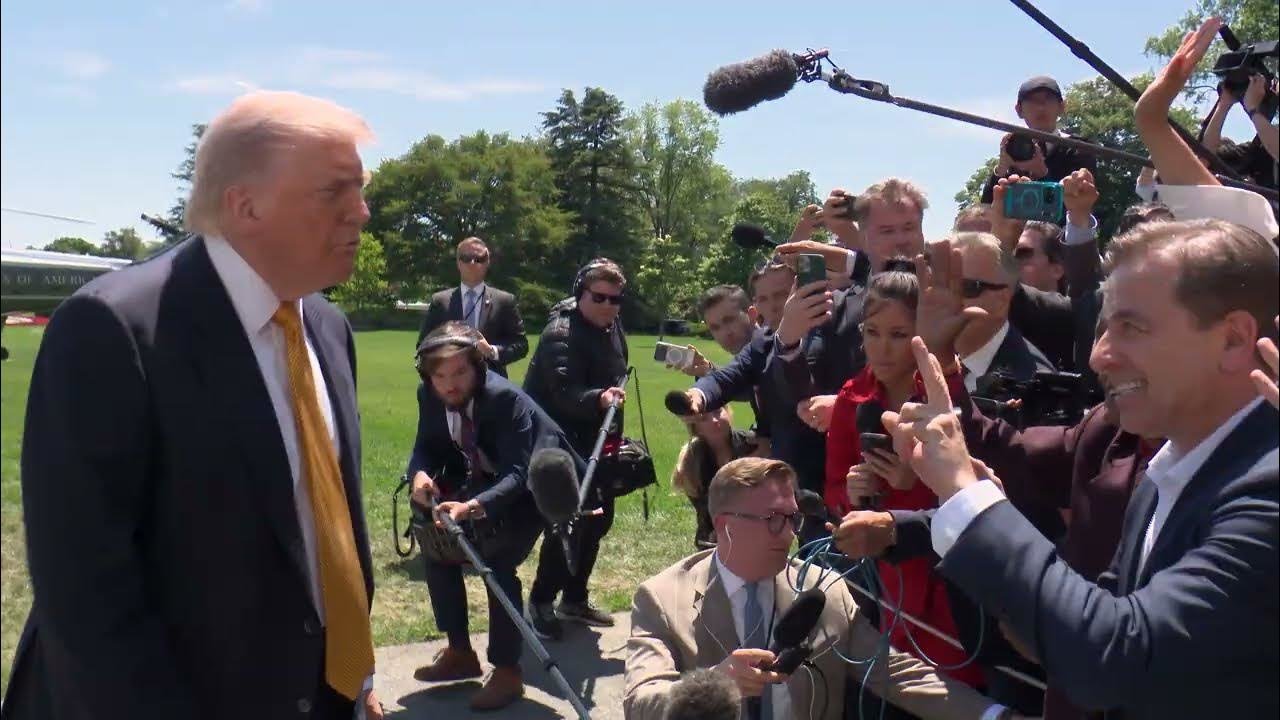
The Trump White House’s communications strategy has become increasingly centered on improvised press encounters that blend diplomacy, domestic politics and confrontation, and President Donald Trump’s May 12 exchange with reporters before departing for Beijing showed how tightly those issues are now intertwined.
The president used the South Lawn gaggle to frame his trip to China as a high-level diplomatic opening with Chinese President Xi Jinping while simultaneously defending his administration’s handling of the Iran conflict, escalating military costs and rising economic anxiety at home.
What is confirmed is that Trump departed Washington for Beijing amid intensifying geopolitical pressure tied to the Iran war, growing concern over energy prices and renewed questions about the administration’s broader foreign policy direction.
The trip comes at a moment when the White House is trying to stabilize relations with China even as military planners warn about strategic overstretch and supply-chain vulnerability tied to prolonged regional conflict.
Trump repeatedly emphasized his personal relationship with Xi during the exchange, saying the two leaders “get along” and describing the visit as an opportunity for major economic and diplomatic progress.
The comments marked a notable tonal shift from the administration’s earlier confrontational posture toward Beijing, which had focused heavily on tariffs, industrial competition and military rivalry.
The change reflects a broader recalibration inside the administration.
With oil prices under pressure from instability around Iran and the Strait of Hormuz, the White House increasingly views stable relations with China as economically useful rather than politically optional.
China remains one of the world’s largest energy importers and a critical actor in global manufacturing, shipping and financial markets.
At the same time, Trump continued to adopt an uncompromising position toward Iran.
He reiterated that Iran “will not have a nuclear weapon,” signaling that the administration remains committed to military and economic pressure despite rising bipartisan concern in Congress about the cost and duration of the conflict.
The exchange also highlighted growing tension between the White House and the press corps.
During questioning about the rapidly expanding cost of a proposed White House ballroom project, Trump sharply insulted a reporter after she challenged his characterization of the project’s budget.
The ballroom controversy has become politically symbolic because its estimated cost has reportedly doubled from early projections.
Critics argue the administration is promoting expensive prestige construction projects while Americans face inflation pressure linked to war spending, shipping disruptions and higher fuel costs.
Trump defended the project by arguing that the expansion reflects a larger and higher-quality design rather than financial mismanagement.
But the exchange reinforced a broader pattern in which the administration increasingly treats critical questioning as politically hostile rather than institutionally routine.
Economic pressure formed a major undercurrent throughout the gaggle.
Inflation concerns have intensified as energy markets react to instability in the Middle East.
Administration officials have argued that military operations against Iran are necessary to prevent a larger long-term security threat, but lawmakers from both parties have begun questioning whether the economic consequences are becoming politically unsustainable.
Trump appeared dismissive when pressed on how the war is affecting ordinary Americans financially.
That response has drawn attention because consumer concerns over fuel prices, borrowing costs and broader inflation remain among the administration’s biggest domestic vulnerabilities heading into the next election cycle.
The press appearance also occurred amid wider turbulence inside the federal government.
Multiple agencies are facing leadership turnover, including renewed scrutiny surrounding the Food and Drug Administration and broader concerns about politicization across federal institutions.
The administration nevertheless continues to project confidence.
Trump framed the China trip as evidence that the United States remains in a position of strategic strength and argued that his personal diplomacy can stabilize major-power relations even during wartime conditions.
That claim is now central to the White House’s political argument.
Trump’s team increasingly portrays the president as uniquely capable of managing simultaneous crises through direct leader-to-leader negotiation, transactional diplomacy and public pressure campaigns.
Supporters view the approach as pragmatic and flexible.
Critics argue it produces inconsistent policy signals, weakens institutional coordination and elevates personal relationships above long-term strategic planning.
The immediate consequence of the May 12 gaggle is that it clarified the administration’s current priorities: containing economic fallout from the Iran conflict, avoiding simultaneous confrontation with China and maintaining political control of the domestic narrative through direct presidential messaging.
The Beijing trip now carries significance beyond standard diplomacy.
It has become a test of whether the administration can simultaneously manage war costs, geopolitical rivalry and domestic economic stress without losing political support at home or strategic leverage abroad.
The president used the South Lawn gaggle to frame his trip to China as a high-level diplomatic opening with Chinese President Xi Jinping while simultaneously defending his administration’s handling of the Iran conflict, escalating military costs and rising economic anxiety at home.
What is confirmed is that Trump departed Washington for Beijing amid intensifying geopolitical pressure tied to the Iran war, growing concern over energy prices and renewed questions about the administration’s broader foreign policy direction.
The trip comes at a moment when the White House is trying to stabilize relations with China even as military planners warn about strategic overstretch and supply-chain vulnerability tied to prolonged regional conflict.
Trump repeatedly emphasized his personal relationship with Xi during the exchange, saying the two leaders “get along” and describing the visit as an opportunity for major economic and diplomatic progress.
The comments marked a notable tonal shift from the administration’s earlier confrontational posture toward Beijing, which had focused heavily on tariffs, industrial competition and military rivalry.
The change reflects a broader recalibration inside the administration.
With oil prices under pressure from instability around Iran and the Strait of Hormuz, the White House increasingly views stable relations with China as economically useful rather than politically optional.
China remains one of the world’s largest energy importers and a critical actor in global manufacturing, shipping and financial markets.
At the same time, Trump continued to adopt an uncompromising position toward Iran.
He reiterated that Iran “will not have a nuclear weapon,” signaling that the administration remains committed to military and economic pressure despite rising bipartisan concern in Congress about the cost and duration of the conflict.
The exchange also highlighted growing tension between the White House and the press corps.
During questioning about the rapidly expanding cost of a proposed White House ballroom project, Trump sharply insulted a reporter after she challenged his characterization of the project’s budget.
The ballroom controversy has become politically symbolic because its estimated cost has reportedly doubled from early projections.
Critics argue the administration is promoting expensive prestige construction projects while Americans face inflation pressure linked to war spending, shipping disruptions and higher fuel costs.
Trump defended the project by arguing that the expansion reflects a larger and higher-quality design rather than financial mismanagement.
But the exchange reinforced a broader pattern in which the administration increasingly treats critical questioning as politically hostile rather than institutionally routine.
Economic pressure formed a major undercurrent throughout the gaggle.
Inflation concerns have intensified as energy markets react to instability in the Middle East.
Administration officials have argued that military operations against Iran are necessary to prevent a larger long-term security threat, but lawmakers from both parties have begun questioning whether the economic consequences are becoming politically unsustainable.
Trump appeared dismissive when pressed on how the war is affecting ordinary Americans financially.
That response has drawn attention because consumer concerns over fuel prices, borrowing costs and broader inflation remain among the administration’s biggest domestic vulnerabilities heading into the next election cycle.
The press appearance also occurred amid wider turbulence inside the federal government.
Multiple agencies are facing leadership turnover, including renewed scrutiny surrounding the Food and Drug Administration and broader concerns about politicization across federal institutions.
The administration nevertheless continues to project confidence.
Trump framed the China trip as evidence that the United States remains in a position of strategic strength and argued that his personal diplomacy can stabilize major-power relations even during wartime conditions.
That claim is now central to the White House’s political argument.
Trump’s team increasingly portrays the president as uniquely capable of managing simultaneous crises through direct leader-to-leader negotiation, transactional diplomacy and public pressure campaigns.
Supporters view the approach as pragmatic and flexible.
Critics argue it produces inconsistent policy signals, weakens institutional coordination and elevates personal relationships above long-term strategic planning.
The immediate consequence of the May 12 gaggle is that it clarified the administration’s current priorities: containing economic fallout from the Iran conflict, avoiding simultaneous confrontation with China and maintaining political control of the domestic narrative through direct presidential messaging.
The Beijing trip now carries significance beyond standard diplomacy.
It has become a test of whether the administration can simultaneously manage war costs, geopolitical rivalry and domestic economic stress without losing political support at home or strategic leverage abroad.