White HouseSenateThe HouseSupreme CourtFederal ReserveDOJState DepartmentTreasuryCensusBudget OfficeTrade Representative
WashingTone
Informed by Washington, Defined by Insight
Sunday, Apr 26, 2026
WashingTone

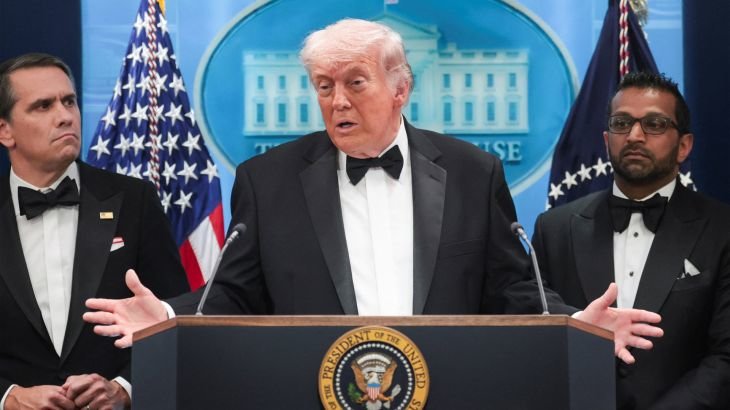
Unverified Shooting Claim at White House Correspondents’ Gala Prompts Confusion Over Security Narrative
Statements attributed to a White House Correspondents’ Dinner-related incident involving a law enforcement officer remain unconfirmed, with no consolidated official account establishing what occurred
A claim circulating about a shooting incident involving a law enforcement officer at a White House Correspondents’ Association-related gala has not been independently confirmed by official security agencies, leaving the situation defined by incomplete, inconsistent, and unverified public information.
The dominant issue is not the event itself but the breakdown between public claims and verified institutional reporting standards that normally govern high-level security incidents involving protected government figures and venues.
What is typically required for confirmation in such cases is a coordinated public acknowledgment from responsible agencies, most notably federal protective services and venue-linked security authorities.
These confirmations generally establish whether an incident occurred, the location and timing, whether injuries were sustained, and whether any protective perimeter was breached.
In the absence of such confirmation, individual statements or secondary claims cannot be treated as established fact.
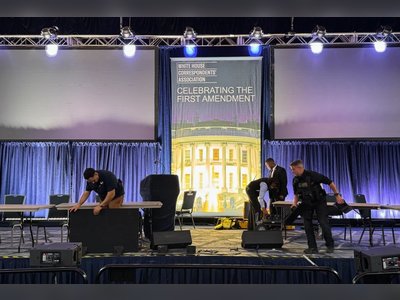
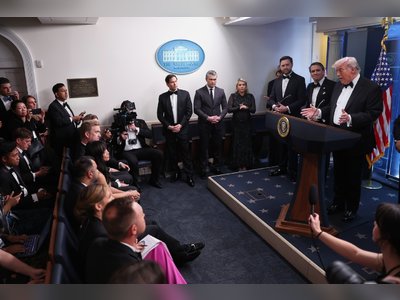
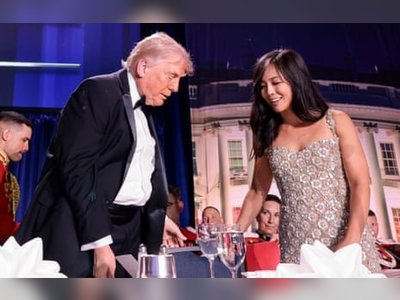
The White House Correspondents’ Association Dinner is one of the most tightly controlled annual political events in the United States, bringing together the president, senior officials, members of Congress, and journalists inside a secured hotel environment.
Security for the event is coordinated through layered federal and contracted systems, with controlled access points, credential verification, screening procedures, and an inner protective perimeter managed by federal protective units.
Because of this structure, any serious security breach or violent incident would normally trigger immediate, multi-agency communication and rapid confirmation of key facts, including whether protective protocols were activated and whether any individuals were injured.
When such confirmation is absent, it typically indicates that either no verified incident has been formally recorded or that information is still being processed and has not reached public disclosure thresholds.
In high-profile security environments, false or unverified claims can circulate quickly due to the convergence of political attention, media presence, and social amplification.
This creates a recurring challenge for institutions tasked with separating confirmed operational events from unverified narratives, especially when the alleged incident involves protected figures or major political venues.
The immediate consequence of unresolved claims of this type is heightened public uncertainty around security conditions at major political gatherings, even when no official confirmation exists.
Security agencies typically respond by reviewing communication protocols and ensuring that any emerging incident reports are validated through established verification chains before public acknowledgment.
As of the latest available institutional framework, no consolidated official account has been released establishing that a shooting occurred at the event in question, and standard procedures for confirming or denying such incidents remain the mechanism through which clarity will ultimately be established.
The dominant issue is not the event itself but the breakdown between public claims and verified institutional reporting standards that normally govern high-level security incidents involving protected government figures and venues.
What is typically required for confirmation in such cases is a coordinated public acknowledgment from responsible agencies, most notably federal protective services and venue-linked security authorities.
These confirmations generally establish whether an incident occurred, the location and timing, whether injuries were sustained, and whether any protective perimeter was breached.
In the absence of such confirmation, individual statements or secondary claims cannot be treated as established fact.
The White House Correspondents’ Association Dinner is one of the most tightly controlled annual political events in the United States, bringing together the president, senior officials, members of Congress, and journalists inside a secured hotel environment.
Security for the event is coordinated through layered federal and contracted systems, with controlled access points, credential verification, screening procedures, and an inner protective perimeter managed by federal protective units.
Because of this structure, any serious security breach or violent incident would normally trigger immediate, multi-agency communication and rapid confirmation of key facts, including whether protective protocols were activated and whether any individuals were injured.
When such confirmation is absent, it typically indicates that either no verified incident has been formally recorded or that information is still being processed and has not reached public disclosure thresholds.
In high-profile security environments, false or unverified claims can circulate quickly due to the convergence of political attention, media presence, and social amplification.
This creates a recurring challenge for institutions tasked with separating confirmed operational events from unverified narratives, especially when the alleged incident involves protected figures or major political venues.
The immediate consequence of unresolved claims of this type is heightened public uncertainty around security conditions at major political gatherings, even when no official confirmation exists.
Security agencies typically respond by reviewing communication protocols and ensuring that any emerging incident reports are validated through established verification chains before public acknowledgment.
As of the latest available institutional framework, no consolidated official account has been released establishing that a shooting occurred at the event in question, and standard procedures for confirming or denying such incidents remain the mechanism through which clarity will ultimately be established.