White HouseSenateThe HouseSupreme CourtFederal ReserveDOJState DepartmentTreasuryCensusBudget OfficeTrade Representative
WashingTone
Informed by Washington, Defined by Insight
Saturday, May 02, 2026
WashingTone

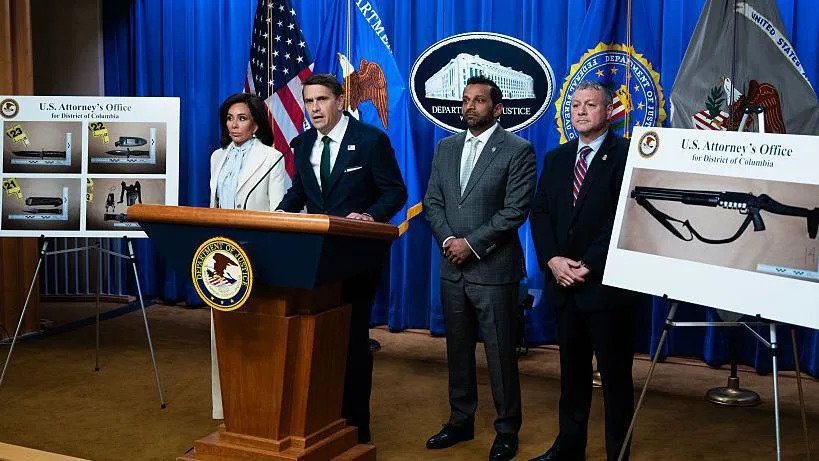
Secret Service Officer Shot During Trump Event Breach: What Investigators Now Believe Happened
Early confusion over a Washington Hilton security incident has given way to a clearer but still sensitive assessment of how a gunman breached a checkpoint and struck an officer during a Trump-related event.
A security breach during a high-profile political event in Washington escalated into a shooting involving a Secret Service Uniformed Division officer, prompting an immediate and complex investigation into how the officer was struck.
The incident occurred at the Washington Hilton hotel during a major political gathering linked to a Trump-related press event, when an armed man identified as Cole Tomas Allen attempted to force entry through a security-controlled area.
What is confirmed is that Allen was armed with multiple weapons and engaged security personnel at close range, triggering a rapid exchange of gunfire.
The officer was hit in the chest during the confrontation but survived due to protective ballistic equipment.
That outcome is not in dispute.
The central question that followed was whether the round that struck the officer came from the attacker or from friendly fire during the chaotic exchange involving multiple agents.
Early official descriptions of the incident were incomplete, noting only that shots were fired and that the officer was injured during the engagement.
This lack of precision, combined with the complexity of the scene, led to initial uncertainty.
Several agents discharged their weapons in a confined space, and the gunman fired at least once while advancing toward a secured zone.
These conditions created the possibility of crossfire injury, which quickly became a focus of early analysis.
As forensic review progressed, investigators began reconstructing the sequence of fire using ballistic evidence, weapon discharge patterns, and witness accounts from security personnel.
The evolving assessment indicates that the most likely source of the shot that struck the officer was the gunman himself.
This interpretation is now the prevailing view among investigators, who assess that Allen’s shotgun fire coincided with the moment the officer was hit.
The alternative theory — that the officer was struck by friendly fire — has been examined but has not been supported by the current evidentiary record.
Investigators have instead emphasized the difficulty of the environment, where multiple armed officers responded simultaneously to an immediate threat at close range.
The case highlights the operational risks faced in high-density protective security environments, particularly during sudden breaches involving firearms.
It also underscores how initial official statements in fast-moving incidents can evolve as forensic reconstruction replaces real-time reporting.
Allen has been taken into custody and faces federal charges tied to the armed breach and assault on federal officers.
The investigation into the precise ballistic chain of events remains part of ongoing evidentiary review, but current findings align on a single conclusion: the injury to the Secret Service officer occurred during gunfire initiated by the attacker, not accidental discharge by responding agents.
The incident occurred at the Washington Hilton hotel during a major political gathering linked to a Trump-related press event, when an armed man identified as Cole Tomas Allen attempted to force entry through a security-controlled area.
What is confirmed is that Allen was armed with multiple weapons and engaged security personnel at close range, triggering a rapid exchange of gunfire.
The officer was hit in the chest during the confrontation but survived due to protective ballistic equipment.
That outcome is not in dispute.
The central question that followed was whether the round that struck the officer came from the attacker or from friendly fire during the chaotic exchange involving multiple agents.
Early official descriptions of the incident were incomplete, noting only that shots were fired and that the officer was injured during the engagement.
This lack of precision, combined with the complexity of the scene, led to initial uncertainty.
Several agents discharged their weapons in a confined space, and the gunman fired at least once while advancing toward a secured zone.
These conditions created the possibility of crossfire injury, which quickly became a focus of early analysis.
As forensic review progressed, investigators began reconstructing the sequence of fire using ballistic evidence, weapon discharge patterns, and witness accounts from security personnel.
The evolving assessment indicates that the most likely source of the shot that struck the officer was the gunman himself.
This interpretation is now the prevailing view among investigators, who assess that Allen’s shotgun fire coincided with the moment the officer was hit.
The alternative theory — that the officer was struck by friendly fire — has been examined but has not been supported by the current evidentiary record.
Investigators have instead emphasized the difficulty of the environment, where multiple armed officers responded simultaneously to an immediate threat at close range.
The case highlights the operational risks faced in high-density protective security environments, particularly during sudden breaches involving firearms.
It also underscores how initial official statements in fast-moving incidents can evolve as forensic reconstruction replaces real-time reporting.
Allen has been taken into custody and faces federal charges tied to the armed breach and assault on federal officers.
The investigation into the precise ballistic chain of events remains part of ongoing evidentiary review, but current findings align on a single conclusion: the injury to the Secret Service officer occurred during gunfire initiated by the attacker, not accidental discharge by responding agents.