White HouseSenateThe HouseSupreme CourtFederal ReserveDOJState DepartmentTreasuryCensusBudget OfficeTrade Representative
WashingTone
Informed by Washington, Defined by Insight
Thursday, Feb 05, 2026
WashingTone

Pulitzer-Winning Art Critic Sebastian Smee Among Hundreds Laid Off by The Washington Post
World-renowned critic and other key arts staff cut as the iconic newspaper implements sweeping newsroom reductions
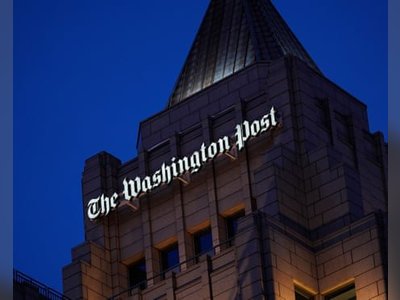
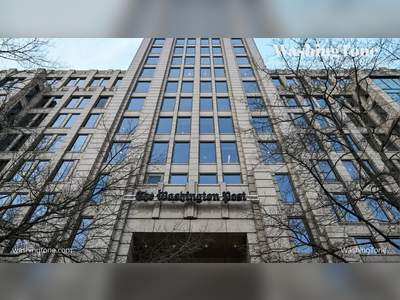
Sebastian Smee, the Pulitzer Prize-winning art critic for The Washington Post, has been laid off as part of a sweeping round of staff cuts that have decimated significant portions of the newspaper’s editorial operations.
Layoff notices began arriving on Wednesday, February four, after weeks of anticipation about a major restructuring, as the Post informed employees that approximately one-third of its workforce would be eliminated in what management described as a necessary repositioning for the future.
Smee, an Australian-born critic who joined the Post in January two thousand eighteen and won journalism’s highest honour in two thousand eleven, was among the high-profile journalists affected.
His departure represents a notable blow to the paper’s arts coverage, which has historically influenced national discourse on visual and cultural criticism.
In addition to Smee, several colleagues in the Arts section — including film, pop, classical and theatre critics as well as visual arts editors and reporters — were also cut.
Only a few senior critics, such as Philip Kennicott, remain on staff.
The layoffs form part of a broader purge that eliminated entire departments, including Books and Sports, and reduced foreign and local reporting capacities.
The Post’s executive editor described the changes as difficult but necessary amid industry-wide challenges and shifting audience trends.
The cuts have drawn widespread concern from media observers and former newsroom leaders, who argue that such reductions risk weakening the depth and breadth of coverage at one of America’s most influential news organisations.
Staff photographers were also let go in the wave of reductions, leaving questions about how the paper will maintain its visual storytelling.
Some laid-off journalists have shared their departure publicly, underscoring the emotional and professional impact of the job losses.
The Post’s leadership has not publicly detailed plans for rebuilding arts and culture coverage, even as the restructuring highlights broader financial pressures facing legacy newsrooms in the digital era.
Layoff notices began arriving on Wednesday, February four, after weeks of anticipation about a major restructuring, as the Post informed employees that approximately one-third of its workforce would be eliminated in what management described as a necessary repositioning for the future.
Smee, an Australian-born critic who joined the Post in January two thousand eighteen and won journalism’s highest honour in two thousand eleven, was among the high-profile journalists affected.
His departure represents a notable blow to the paper’s arts coverage, which has historically influenced national discourse on visual and cultural criticism.
In addition to Smee, several colleagues in the Arts section — including film, pop, classical and theatre critics as well as visual arts editors and reporters — were also cut.
Only a few senior critics, such as Philip Kennicott, remain on staff.
The layoffs form part of a broader purge that eliminated entire departments, including Books and Sports, and reduced foreign and local reporting capacities.
The Post’s executive editor described the changes as difficult but necessary amid industry-wide challenges and shifting audience trends.
The cuts have drawn widespread concern from media observers and former newsroom leaders, who argue that such reductions risk weakening the depth and breadth of coverage at one of America’s most influential news organisations.
Staff photographers were also let go in the wave of reductions, leaving questions about how the paper will maintain its visual storytelling.
Some laid-off journalists have shared their departure publicly, underscoring the emotional and professional impact of the job losses.
The Post’s leadership has not publicly detailed plans for rebuilding arts and culture coverage, even as the restructuring highlights broader financial pressures facing legacy newsrooms in the digital era.