White HouseSenateThe HouseSupreme CourtFederal ReserveDOJState DepartmentTreasuryCensusBudget OfficeTrade Representative
WashingTone
Informed by Washington, Defined by Insight
Monday, Feb 16, 2026
WashingTone

Federal Agents Withdraw From Minnesota as Operation Metro Surge Winds Down, Leaving Limited Security Force
White House border official confirms over one thousand immigration officers have left the Twin Cities, with a modest federal contingent remaining temporarily amid ongoing enforcement and community tensions
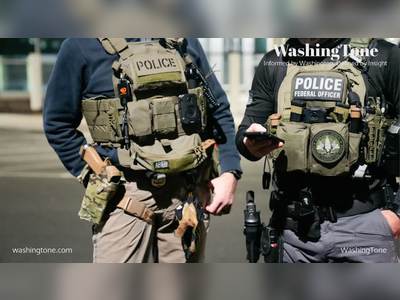
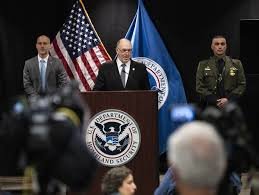
More than one thousand federal immigration enforcement agents have left Minnesota’s Minneapolis–Saint Paul area as part of a planned drawdown of the Trump administration’s largest domestic immigration operation, a senior White House official said Sunday.
The departure marks a significant reduction in the federal footprint following weeks of heightened enforcement actions that drew intense public scrutiny and local opposition.
Despite the ongoing withdrawal, a limited number of agents will remain in the region for a short period to provide security and support continued investigative work, the official said.
Border czar Tom Homan, who oversees the federal effort dubbed Operation Metro Surge, confirmed on a national television programme that several hundred additional personnel are expected to depart in the coming days.
He described the remaining contingent as a “small force” to be kept on the ground temporarily in order to protect agents and assist in situations that might escalate or compromise safety and coordination with local authorities.
Operation Metro Surge, initiated in early December and expanded through January, deployed several thousand agents from U.S. Immigration and Customs Enforcement and Customs and Border Protection across Minnesota.
Federal authorities have said the effort resulted in more than four thousand arrests nationwide, including in Minnesota, and was aimed at targeting individuals unlawfully present in the country and alleged to have committed serious crimes.
The operation became a flashpoint after two U.S. citizens were fatally shot during enforcement actions, prompting widespread protests and intensifying debate over immigration enforcement practices.
The drawdown follows an earlier reduction announced by Homan that withdrew about seven hundred agents from the Twin Cities, but thousands remained through last week.
Homan said this latest shift reflects a return to a more normal operational posture while maintaining a presence that can respond to “agitators” and volatile situations.
He also indicated that some agents will stay to pursue ongoing investigations, including allegations of fraud linked to local facilities.
Local leaders have welcomed the reduction in federal forces but have urged that a full end to the surge come swiftly.
The sustained presence of even a limited contingent has continued to fuel discussion about the impact of the federal operation on community safety, civil liberties, and the relationship between state and federal authorities.
Officials in Washington have maintained that enforcement remains a nationwide priority and that decisions on future deployments will depend on evolving conditions and coordination with state and local partners.
The departure marks a significant reduction in the federal footprint following weeks of heightened enforcement actions that drew intense public scrutiny and local opposition.
Despite the ongoing withdrawal, a limited number of agents will remain in the region for a short period to provide security and support continued investigative work, the official said.
Border czar Tom Homan, who oversees the federal effort dubbed Operation Metro Surge, confirmed on a national television programme that several hundred additional personnel are expected to depart in the coming days.
He described the remaining contingent as a “small force” to be kept on the ground temporarily in order to protect agents and assist in situations that might escalate or compromise safety and coordination with local authorities.
Operation Metro Surge, initiated in early December and expanded through January, deployed several thousand agents from U.S. Immigration and Customs Enforcement and Customs and Border Protection across Minnesota.
Federal authorities have said the effort resulted in more than four thousand arrests nationwide, including in Minnesota, and was aimed at targeting individuals unlawfully present in the country and alleged to have committed serious crimes.
The operation became a flashpoint after two U.S. citizens were fatally shot during enforcement actions, prompting widespread protests and intensifying debate over immigration enforcement practices.
The drawdown follows an earlier reduction announced by Homan that withdrew about seven hundred agents from the Twin Cities, but thousands remained through last week.
Homan said this latest shift reflects a return to a more normal operational posture while maintaining a presence that can respond to “agitators” and volatile situations.
He also indicated that some agents will stay to pursue ongoing investigations, including allegations of fraud linked to local facilities.
Local leaders have welcomed the reduction in federal forces but have urged that a full end to the surge come swiftly.
The sustained presence of even a limited contingent has continued to fuel discussion about the impact of the federal operation on community safety, civil liberties, and the relationship between state and federal authorities.
Officials in Washington have maintained that enforcement remains a nationwide priority and that decisions on future deployments will depend on evolving conditions and coordination with state and local partners.