White HouseSenateThe HouseSupreme CourtFederal ReserveDOJState DepartmentTreasuryCensusBudget OfficeTrade Representative
WashingTone
Informed by Washington, Defined by Insight
Friday, Mar 13, 2026
WashingTone

0:00
0:00
Economic Data Suggest U.S. Economy Was Losing Momentum Before Iran Conflict
Revised figures show slower growth, persistent inflation and weakening job creation even before energy shocks from the Middle East war began to ripple through markets
New economic data indicates that the United States economy was already showing signs of strain before the outbreak of war involving Iran sent global energy prices sharply higher and intensified financial uncertainty.
Revisions to government statistics show that economic growth slowed significantly toward the end of 2025. The economy expanded at an annual rate of just 0.7 percent in the fourth quarter, roughly half the previously reported pace and far below the rapid growth recorded earlier in the year.
The downgrade reflected weaker consumer spending, slower business investment and reduced exports.
The updated figures suggest that the economic picture was more fragile than many policymakers and investors had assumed.
Consumer spending, which drives much of the U.S. economy, softened as households faced rising living costs and higher borrowing rates.
Businesses also scaled back some investment plans as financial conditions tightened.
The labor market was another area showing signs of cooling momentum.
Job growth had slowed dramatically in the months leading up to the conflict, with hiring averaging fewer than ten thousand new positions per month across 2025. While unemployment remained relatively low, the sluggish pace of hiring raised concerns about the durability of the expansion.
Inflation pressures had also proven difficult to eliminate.
Measures of underlying price growth remained above the Federal Reserve’s two-percent target, leaving central bank officials cautious about lowering interest rates even as growth began to slow.
Against that already delicate backdrop, the war in the Middle East has introduced a new source of economic pressure.
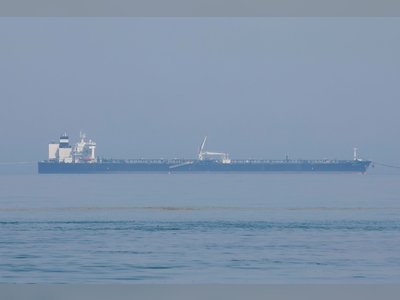
The conflict has disrupted shipping routes through the Strait of Hormuz, a vital corridor that normally carries roughly one-fifth of the world’s oil supply.
The resulting surge in crude prices has increased fuel costs and threatens to push inflation higher once again.
Economists warn that the combination of slower growth and renewed price pressures could create conditions resembling stagflation, a challenging scenario in which inflation rises while economic activity weakens.
Higher energy costs also risk squeezing household budgets, potentially reducing consumer spending even further.
Financial markets have reacted cautiously to the new data.
Some investors interpret the weaker growth figures as increasing the likelihood that interest rates could eventually be reduced to support the economy.
Others warn that persistent inflation may limit the Federal Reserve’s ability to respond quickly.
The economic outlook now depends heavily on how long the conflict in the Middle East lasts and whether global energy supplies can stabilise.
Analysts say that if disruptions to oil shipments persist, the fragile momentum that existed before the war could weaken further, raising the risk of a broader slowdown.
Revisions to government statistics show that economic growth slowed significantly toward the end of 2025. The economy expanded at an annual rate of just 0.7 percent in the fourth quarter, roughly half the previously reported pace and far below the rapid growth recorded earlier in the year.
The downgrade reflected weaker consumer spending, slower business investment and reduced exports.
The updated figures suggest that the economic picture was more fragile than many policymakers and investors had assumed.
Consumer spending, which drives much of the U.S. economy, softened as households faced rising living costs and higher borrowing rates.
Businesses also scaled back some investment plans as financial conditions tightened.
The labor market was another area showing signs of cooling momentum.
Job growth had slowed dramatically in the months leading up to the conflict, with hiring averaging fewer than ten thousand new positions per month across 2025. While unemployment remained relatively low, the sluggish pace of hiring raised concerns about the durability of the expansion.
Inflation pressures had also proven difficult to eliminate.
Measures of underlying price growth remained above the Federal Reserve’s two-percent target, leaving central bank officials cautious about lowering interest rates even as growth began to slow.
Against that already delicate backdrop, the war in the Middle East has introduced a new source of economic pressure.
The conflict has disrupted shipping routes through the Strait of Hormuz, a vital corridor that normally carries roughly one-fifth of the world’s oil supply.
The resulting surge in crude prices has increased fuel costs and threatens to push inflation higher once again.
Economists warn that the combination of slower growth and renewed price pressures could create conditions resembling stagflation, a challenging scenario in which inflation rises while economic activity weakens.
Higher energy costs also risk squeezing household budgets, potentially reducing consumer spending even further.
Financial markets have reacted cautiously to the new data.
Some investors interpret the weaker growth figures as increasing the likelihood that interest rates could eventually be reduced to support the economy.
Others warn that persistent inflation may limit the Federal Reserve’s ability to respond quickly.
The economic outlook now depends heavily on how long the conflict in the Middle East lasts and whether global energy supplies can stabilise.
Analysts say that if disruptions to oil shipments persist, the fragile momentum that existed before the war could weaken further, raising the risk of a broader slowdown.